
Fine-Scale Proximity to Offshore Wind Turbine Foundations Increases Biomass of Demersal Fish Species
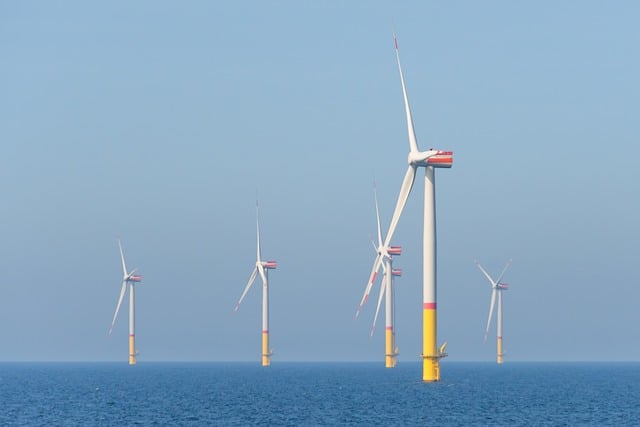
Offshore wind turbines have become more than energy generators; they act as complex marine structures influencing local ecosystems. Evidence from field studies shows that fine-scale proximity to turbine foundations increases the biomass of demersal fish species, particularly cod, flatfish, and wrasse. These effects arise from habitat creation, altered hydrodynamics, and trophic enrichment around artificial structures. The interaction between foundation design and seabed ecology determines how demersal communities respond spatially and temporally. Among all types of wind energy systems, offshore installations—especially fixed-bottom designs—display the strongest localized biomass enhancement near turbine bases.
Overview of Wind Energy Types and Offshore Deployment
The expansion of offshore wind power has diversified the structural approaches used to capture wind energy efficiently in different marine environments. Each system type interacts uniquely with physical and biological components of the sea.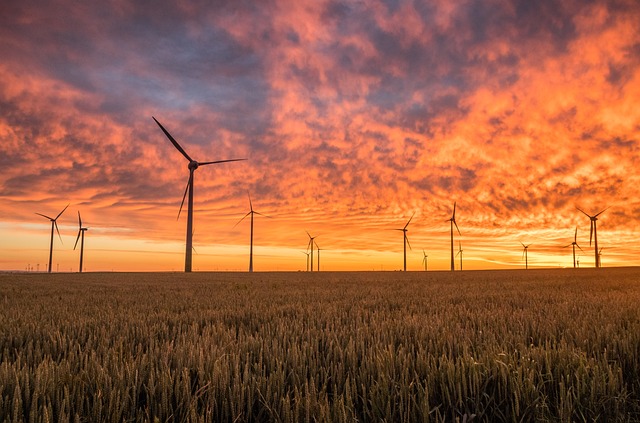
Classification of Wind Energy Systems
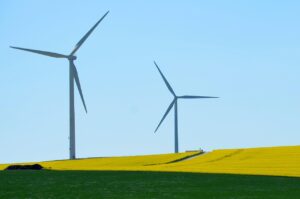
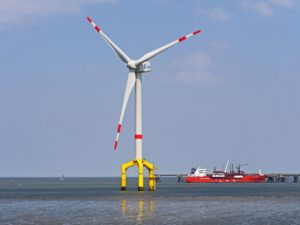
Wind energy systems are categorized as onshore, nearshore, or offshore depending on their location relative to the coastline. Onshore turbines are land-based and experience minimal marine influence, while nearshore systems operate in shallow coastal zones. Offshore turbines function in open waters where deeper foundations or floating platforms are required. Fixed-bottom technologies such as monopiles and jackets anchor directly into the seabed, whereas floating turbines rely on mooring lines connected to anchors. These configurations define how much seabed area is disturbed and how structural loads are distributed across substrates.
Structural Characteristics Relevant to Marine Ecosystems
The materials used for turbine foundations—steel monopiles, gravity bases, or lattice jackets—alter benthic habitats differently. Steel surfaces attract biofouling organisms like mussels and barnacles that form dense colonies, while concrete gravity bases modify sediment composition around their perimeter. The scale of turbine arrays influences regional current flow and sediment transport patterns, which can affect nutrient distribution across benthic zones. Additionally, underwater noise from pile driving and electromagnetic fields from cables vary by installation depth and foundation type.
Ecological Interactions Between Offshore Wind Structures and Demersal Fish Biomass
The ecological footprint of offshore wind farms extends beyond physical occupation of space; it reshapes food webs through habitat modification and hydrodynamic change.
Habitat Modification Around Turbine Foundations
Turbine foundations act as artificial reefs that create new microhabitats for demersal species such as cod (Gadus morhua), flatfish (Pleuronectidae), and wrasse (Labridae). Biofouling communities composed of algae, bivalves, and crustaceans enhance local food availability through trophic enrichment. Increased substrate complexity provides shelter for juvenile fish against predation and strong currents. Over time, these areas develop into self-sustaining reef ecosystems supporting higher biomass compared to surrounding soft sediments.
Influence of Hydrodynamic Alterations on Fish Distribution
Wake effects behind turbine columns modify near-bed currents, concentrating planktonic prey in low-flow zones where demersal feeders aggregate. Reduced flow velocities encourage sediment deposition beneficial for species feeding on benthic invertebrates. Conversely, turbine-induced turbulence can redistribute nutrients within the benthic boundary layer, stimulating localized productivity that supports higher trophic levels.
Comparative Effects of Different Wind Energy Types on Demersal Fish Communities
Different types of wind energy technologies create distinct ecological outcomes depending on their mechanical design and seafloor interaction intensity.
Fixed-Bottom Turbines and Their Ecological Footprint
Fixed-bottom turbines such as monopiles generate localized zones of increased biomass due to stable hard substrates favoring sessile organisms. Gravity-based systems alter a wider sediment area but may produce variable species responses depending on grain size changes. Jacket structures offer vertical complexity with multiple crossbars that provide attachment surfaces for diverse invertebrate assemblages supporting mixed demersal communities.
Floating Turbine Systems and Pelagic-Benthic Coupling
Floating turbines introduce minimal direct disturbance to the seabed because their anchors occupy limited space compared to fixed installations. Mooring cables affect midwater hydrodynamics by creating slight turbulence that influences pelagic prey movement patterns indirectly linked to demersal feeding behavior below. Although floating systems have a smaller artificial reef effect, they maintain connectivity between pelagic and benthic habitats through organic matter fluxes.
Spatial Scale Considerations in Assessing Biomass Variation Near Turbines
Spatial scale determines how researchers interpret biomass changes—from immediate proximity effects at tens of meters to cumulative patterns across entire wind farms.
Fine-Scale Proximity Gradients Around Foundations
Biomass typically peaks within 10–50 meters from turbine bases where habitat enhancement is strongest. Attraction gradients vary among species: sedentary flatfish remain closer to substrates while mobile predators like cod patrol broader areas around structures. Seasonal cycles influence stability; during high productivity months, fish density near foundations increases due to abundant prey availability.
Broader Ecosystem Connectivity Beyond Individual Turbines
At larger scales, cumulative interactions among multiple turbines influence regional population dynamics by forming networks of artificial reef patches that facilitate gene flow among subpopulations. Spatial modeling integrating hydrodynamic data with acoustic telemetry helps predict movement corridors linking these habitats across wind farm clusters.
Methodological Approaches for Quantifying Biomass Responses to Wind Energy Development
Accurate quantification requires combining acoustic technologies with direct sampling methods to capture both behavioral patterns and community composition shifts.
Acoustic Survey Techniques for Demersal Biomass Estimation
Multibeam sonar mapping detects fine-scale aggregations around foundation structures by measuring acoustic backscatter intensity differences between fish schools and seabed features. Coupling sonar data with environmental sensors such as current profilers refines interpretation by correlating biomass peaks with hydrodynamic conditions.
Benthic Sampling and Visual Observation Methods
Bottom trawl surveys collect specimens at varying distances from turbines to assess changes in species composition relative to control sites. Underwater video transects record habitat use behaviors including sheltering or feeding near structural elements. Long-term monitoring programs spanning operational lifetimes capture gradual ecological shifts caused by colonization succession or sediment stabilization processes.
Implications for Sustainable Offshore Wind Development and Marine Resource Management
Balancing renewable energy goals with marine biodiversity protection requires adaptive frameworks guided by continuous ecological monitoring.
Balancing Renewable Energy Expansion with Fisheries Productivity
Knowledge about habitat enhancement informs site selection during planning stages so that new projects align with existing fishing grounds without compromising productivity. Adaptive management integrates biological indicators into operational decision-making while promoting coexistence between energy infrastructure and fisheries sectors through transparent stakeholder collaboration.
Future Research Directions in Wind-Fish Interactions
Comparative studies across foundation types will refine understanding of structure-specific impacts under varying oceanographic conditions. Incorporating ecosystem-scale models can forecast long-term responses under climate variability scenarios affecting both wind resources and fish distributions. Advances in sensor miniaturization will allow continuous observation of dynamic interactions between fish schools and turbine structures at unprecedented resolution.
FAQ
Q1: What are the main types of wind energy systems?
A: They include onshore systems located on land, nearshore setups close to coasts, and offshore installations placed in open seas using fixed-bottom or floating foundations.
Q2: Why do demersal fish gather near turbine foundations?
A: The foundations create artificial reefs offering food sources from biofouling organisms and shelter spaces enhancing survival rates.
Q3: How does hydrodynamic change affect fish around turbines?
A: Altered currents concentrate prey items near low-flow zones while turbulence redistributes nutrients supporting benthic productivity.
Q4: Are floating turbines less impactful on seabed ecosystems?
A: Yes, because they require minimal anchoring areas compared with fixed-bottom designs but still influence midwater dynamics linked to demersal feeding activity.
Q5: Which methods best measure biomass variation near turbines?
A: Combining multibeam sonar mapping with trawl surveys provides comprehensive data on both spatial distribution patterns and community composition shifts around offshore wind structures.