
Scientists Publish Findings on Silicon Efficiency in 500W Solar Panel Cells
Recent research on 500W solar panel technology has confirmed that silicon-based photovoltaic (PV) cells are approaching their theoretical efficiency limits through structural and material innovations. The studies highlight that improvements in wafer design, doping precision, and surface passivation have collectively pushed the performance boundaries of commercial modules. Scientists now view the 500W benchmark as not just a milestone but a new baseline for industrial production, indicating that high-efficiency solar generation can coexist with scalable manufacturing and sustainable materials.
Advances in 500W Solar Panel Research
The evolution of the 500W solar panel reflects a decade-long pursuit of maximizing energy output without compromising cost or durability. Researchers have shifted focus from incremental wattage gains to holistic system optimization, where every micron of silicon contributes to higher conversion rates.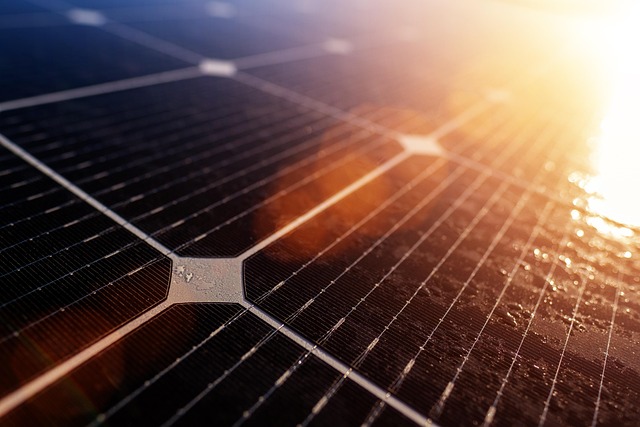
Overview of Recent Scientific Developments
Researchers are increasingly concentrating on optimizing silicon utilization to achieve higher wattage panels. The transition toward 500W modules marks a significant leap in PV performance, representing not only improved cell efficiency but also refined system integration. Studies emphasize balancing efficiency, cost, and sustainability—three pillars that define next-generation module design. Many laboratories now test hybrid architectures combining monocrystalline wafers with advanced coatings to push conversion rates beyond 22%.
Technological Drivers Behind the 500W Milestone
The attainment of the 500W threshold stems from several concurrent technological advances. Refinements in wafer thickness and surface passivation have minimized recombination losses while improving light absorption. Advanced doping techniques further enhance charge carrier mobility, enabling faster electron transport across the cell lattice. Moreover, multi-busbar and half-cut cell designs distribute current more evenly, reducing resistive losses and improving overall module reliability under variable irradiance conditions.
Silicon Efficiency and Its Redefinition in Modern Cells
With silicon remaining the dominant photovoltaic material worldwide, researchers are redefining how far its efficiency can be stretched before hitting physical limits. The focus has turned toward both intrinsic material purity and external structural engineering.
Theoretical Limits of Silicon-Based Photovoltaics
The Shockley–Queisser limit defines the maximum theoretical efficiency for single-junction silicon cells at around 29%. Current commercial panels operate near two-thirds of this threshold. Ongoing research explores structural innovations—such as bifacial configurations and selective emitters—to approach this limit without adding excessive complexity to production lines. Material purity and defect control remain decisive factors; even minor lattice dislocations can severely impact long-term power retention.
Mechanisms Enhancing Silicon Efficiency in 500W Panels
Surface texturing plays a vital role by increasing light trapping within the wafer, effectively reducing optical losses. Passivated emitter rear contact (PERC) technology minimizes electron-hole recombination at the rear surface, allowing more photons to be converted into electricity. Hydrogenation processes further enhance crystalline quality by neutralizing defects within the silicon lattice, leading to improved stability over decades of field exposure.
Structural Innovations Enabling High-Power Output
Achieving sustained high output requires architectural innovation beyond raw material improvements. Engineers now employ layered designs and refined interconnections to extract every possible watt from each square meter.
Multi-Junction and Tandem Cell Architectures
Combining silicon with perovskite or other semiconductors allows broader spectral absorption across visible and near-infrared bands. Tandem configurations generate higher voltage outputs while maintaining manageable thermal loads—a critical factor for large-scale installations operating under intense sunlight. Precision in layer alignment ensures electrical continuity between subcells, preventing current mismatch that could otherwise degrade performance.
Design Optimization for Reduced Resistive Losses
Enhanced metallization patterns reduce series resistance across cells by shortening electron travel paths. Transparent conductive oxides serve as efficient current collectors without blocking incident light. Meanwhile, innovations in interconnection—such as shingled layouts or conductive adhesives—reduce shading effects and mitigate thermal hotspots that often lead to early module degradation.
Manufacturing Implications of 500W Efficiency Standards
The shift toward ultra-high-power modules has profound implications for manufacturing practices, influencing everything from wafer slicing to final quality control protocols.
Material Utilization and Production Scalability
Thinner wafers now dominate production lines because they cut down silicon consumption while preserving mechanical integrity through improved support structures. Automation in cutting and assembly guarantees consistency at industrial scales where even micrometer deviations affect yield rates. Recycling initiatives are being integrated into fabrication workflows to recover valuable materials like silver paste and polysilicon kerf waste.
Quality Control and Performance Testing Protocols
Advanced electroluminescence imaging enables early detection of microcracks before lamination, preventing latent failures after installation. Accelerated aging tests simulate decades of environmental stress—UV exposure, humidity cycles, temperature swings—to validate reliability claims under IEC standards. Data-driven monitoring systems track yield variations across production batches, providing feedback loops for continuous process improvement.
Impact on Photovoltaic System Design and Deployment
As 500W panels become standard offerings, their influence extends beyond factories into how systems are designed, installed, and maintained across utility-scale projects.
Integration into Utility and Commercial Installations
Higher panel efficiency allows developers to deploy more compact arrays within limited land areas—a key advantage for urban rooftops or constrained industrial sites. Reduced balance-of-system costs improve project economics by lowering cabling needs per kilowatt-hour produced. Compatibility with existing inverter platforms ensures smooth integration into both new builds and retrofit upgrades.
Thermal Management and Durability Considerations
Improved encapsulation materials protect cells from moisture ingress and UV-induced degradation under high irradiance conditions typical in desert climates. Thermal dissipation features such as aluminum backplates or ventilated mounting frames help maintain optimal operating temperatures, preserving output consistency throughout hot seasons. Long-term field data collected via remote sensors inform predictive maintenance strategies that extend service life beyond warranty periods.
Future Directions in Silicon-Based Solar Research
Despite nearing physical efficiency ceilings, silicon continues to evolve through hybridization with emerging materials that promise new performance horizons.
Emerging Materials Complementing Silicon Efficiency Gains
Perovskite-silicon tandem structures currently attract strong academic interest due to their potential to surpass existing single-junction limits with efficiencies exceeding 30%. Nanostructured coatings enhance photon absorption while minimizing reflection losses—an area where nanophotonics meets practical engineering. Quantum dot integration may eventually enable tunable spectral response across varying light conditions, opening applications beyond terrestrial photovoltaics such as space-based energy harvesting.
Anticipated Trends in Industrial Adoption
Manufacturers are investing heavily in hybrid production lines capable of handling both traditional silicon wafers and next-generation tandem stacks within unified facilities. Standardization efforts led by IEC committees aim to harmonize testing methods globally so that performance ratings remain consistent across markets. As economies of scale mature, cost-per-watt metrics will continue declining, making 500W-class modules not an exception but an industry norm within this decade.
FAQ
Q1: What makes a 500W solar panel different from conventional models?
A: It delivers higher power density through advanced cell architecture like half-cut designs and superior passivation layers while maintaining similar dimensions as lower-rated modules.
Q2: How close are current panels to the theoretical limit?
A: Most high-end commercial panels operate around two-thirds of the Shockley–Queisser limit for single-junction silicon cells.
Q3: Why is hydrogenation important for solar cell longevity?
A: It neutralizes crystal defects inside silicon wafers that would otherwise cause gradual efficiency loss over time.
Q4: Are perovskite-silicon tandems commercially available yet?
A: They remain largely at pilot scale though several manufacturers plan limited releases within two years pending stability validation under IEC tests.
Q5: How do thinner wafers affect durability?
A: While thinner wafers reduce material use, improved support frames and encapsulants offset fragility concerns during handling and operation.