
Vietnamese People Still Hesitant to Embrace Solar Power: Association
Vietnam’s solar revolution has transformed its energy landscape, yet public adoption remains uneven. Despite rapid capacity growth and strong policy support, many Vietnamese households and small businesses remain cautious about switching to solar power. The CleanEnergyAssociation attributes this hesitation to economic barriers, technical challenges, and social perceptions that still favor conventional energy sources. While large-scale solar farms thrive, rooftop installations lag behind expectations. Strengthening education, financing, and regulatory clarity could be key to unlocking Vietnam’s full solar potential.
Overview of Solar Power Adoption in Vietnam
Vietnam’s solar story is one of remarkable acceleration tempered by uneven participation. Over the past decade, the country has moved from negligible capacity to becoming one of Southeast Asia’s renewable leaders.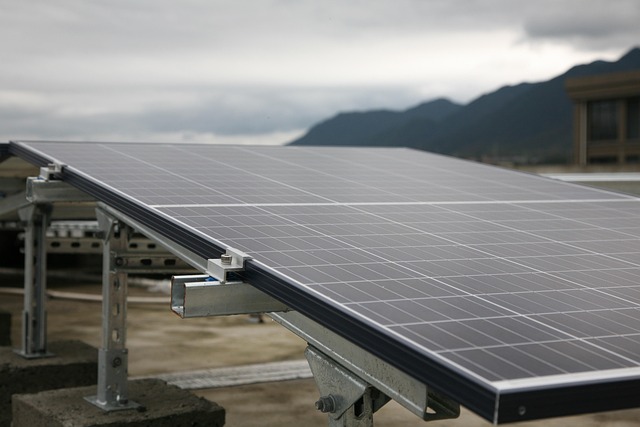
Current Status of Solar Energy Development
Vietnam’s installed solar capacity surged from under 100 MW in 2015 to more than 16 GW by 2023, driven by feed-in tariff programs and private investment. This exponential growth positioned Vietnam as a regional frontrunner in renewable deployment. Government incentives such as Decision No. 13/2020/QD-TTg offered attractive tariffs for rooftop systems, spurring thousands of installations nationwide. Solar now accounts for roughly one-quarter of the nation’s total power generation mix during peak periods, easing pressure on coal-fired plants and reducing emissions intensity.
Role of the CleanEnergyAssociation in Promoting Solar Power
The CleanEnergyAssociation serves as an industry coalition advocating for cleaner energy transitions across Vietnam. Its mission centers on promoting renewable adoption through policy dialogue, investor engagement, and public outreach. The association collaborates closely with government agencies to align national targets with private sector capabilities. It also partners with financial institutions to design green financing models that lower entry barriers for small-scale investors. Beyond advocacy, it conducts training workshops for developers and technicians to enhance project quality standards.
Factors Behind Public Hesitancy Toward Solar Power
Despite visible progress at the utility level, many citizens remain reluctant to invest in rooftop or community-based systems. Their hesitation stems from intertwined economic, technical, and policy factors that shape consumer behavior.
Economic Barriers Affecting Adoption
High upfront costs remain a major deterrent for households and small enterprises. Even as module prices fall globally, installation expenses—especially for quality components—can exceed local affordability thresholds. Access to credit is limited; few banks offer long-term loans tailored for residential solar systems without collateral. Payback periods often stretch beyond five years, which discourages investment among consumers seeking quicker returns. Without consistent subsidy schemes or tax reliefs, the financial appeal of solar remains fragile.
Technical and Infrastructure Challenges
Grid integration poses another challenge. Standards vary between provinces, leading to inconsistent connection procedures and delays in commissioning projects. Many regions face grid congestion during midday peaks when solar output surges beyond demand capacity. Skilled labor shortages further complicate matters; rural areas lack certified installers capable of ensuring safety compliance under IEC standards. Vietnam’s humid tropical climate also affects system longevity—corrosion and heat stress can reduce panel efficiency unless proper materials are used.
Regulatory and Policy Uncertainties
Policy volatility undermines investor confidence. Frequent revisions of feed-in tariffs have created uncertainty over long-term profitability for both rooftop and utility-scale projects. Licensing processes remain opaque; developers often face unclear documentation requirements or overlapping jurisdiction between provincial departments. Implementation delays at local levels slow down project approvals even after central policies are issued, discouraging smaller players who lack administrative resources.
Social Perceptions and Cultural Influences on Solar Adoption
Beyond economics and regulation lies a subtler obstacle: public perception shaped by cultural norms and information gaps.
Public Awareness and Understanding of Renewable Energy Benefits
Many citizens still associate reliable electricity with traditional grid supply rather than decentralized sources like rooftop solar. Education campaigns on environmental benefits have yet to reach rural communities effectively. Some perceive solar systems as fragile or unreliable during cloudy seasons despite advances in storage technology. Social networks play a decisive role—when respected community leaders endorse renewable solutions, adoption tends to rise quickly within their circles.
Consumer Trust in Technology Providers and Installers
Trust remains fragile due to market saturation with unverified suppliers offering low-cost but poor-quality equipment. The absence of unified certification frameworks makes it difficult for consumers to distinguish reputable providers from opportunistic traders. Transparent warranties covering performance degradation over time are rare but essential for building long-term confidence. Reliable after-sales support—especially maintenance services—can determine whether early adopters become advocates or skeptics.
Market Dynamics Shaping the Future of Solar Energy in Vietnam
Vietnam’s next growth phase will likely depend on how effectively private capital aligns with supportive policy reforms and technological innovation.
Role of Private Sector Investment and Foreign Partnerships
International developers continue entering Vietnam’s market with advanced technology transfer agreements that raise performance benchmarks across the industry. Joint ventures between local firms and foreign investors help achieve economies of scale while improving project financing structures through blended capital models recognized by institutions like the Asian Development Bank (ADB). Expanding domestic manufacturing capacity could further reduce dependency on imported modules while creating skilled employment opportunities.
Emerging Trends in Rooftop Solar Solutions
Industrial parks increasingly view rooftop systems as cost-saving assets amid rising electricity tariffs from the national grid operator EVN. Urban households are exploring compact designs integrated into building facades or carports where space is limited. Smart grid integration allows real-time monitoring of consumption patterns through IoT platforms compliant with IEEE 2030 standards, improving energy management efficiency. Blockchain-based peer-to-peer trading pilots are also emerging in Ho Chi Minh City industrial zones, signaling new business models for distributed generation.
Strategic Recommendations from the CleanEnergyAssociation
The CleanEnergyAssociation emphasizes that sustainable growth requires both structural reforms and societal engagement rather than isolated incentives.
Enhancing Policy Frameworks for Sustainable Growth
A stable tariff regime extending beyond short-term cycles would reassure investors planning multi-year projects. Simplifying administrative steps—from site registration to grid connection—could shorten development timelines significantly. Encouraging research partnerships between universities and manufacturers may foster innovation in high-temperature-resistant PV materials suited for Vietnam’s climate while supporting domestic value chains.
Strengthening Public Engagement and Education Initiatives
Expanding outreach campaigns focused on financial savings rather than abstract environmental goals could resonate more strongly with middle-income families evaluating rooftop investments. Establishing regional training centers under joint supervision by technical universities would address workforce shortages across installation sectors. Media storytelling that highlights successful neighborhood-level projects can normalize solar ownership as both practical and aspirational within Vietnamese culture.
FAQ
Q1: Why are many Vietnamese households still hesitant about adopting solar power?
A: High initial costs, limited financing access, inconsistent regulations, and lingering doubts about reliability contribute to public reluctance despite strong national incentives.
Q2: How significant is Vietnam’s current solar contribution to its energy mix?
A: During peak daylight hours, solar generation can supply nearly one-quarter of total electricity demand nationwide according to data tracked by international energy agencies such as IRENA.
Q3: What role does the CleanEnergyAssociation play in advancing renewables?
A: It acts as a bridge between policymakers, investors, and communities—promoting fair regulations, technical training programs, and awareness initiatives supporting clean energy expansion.
Q4: What technical issues affect rooftop installations most?
A: Grid congestion during midday peaks, lack of certified installers following IEC standards, and material degradation caused by humidity all impact system performance over time.
Q5: Which trends will shape Vietnam’s future solar market?
A: Growth will hinge on industrial rooftop deployment, smart grid integration using IoT analytics, localized manufacturing expansion, and innovative peer-to-peer trading platforms built on blockchain infrastructure.