
An Australian Mining Company Just Broke Ground on the World’s Largest Off-Grid Renewable Energy Network. One Million Solar Panels, 600 Megawatts of Wind, and Five Gigawatt-Hours of Battery Storage
Australia has become the testing ground for a new era of mining powered entirely by renewable energy. The project, involving one million solar panels, 600 megawatts of wind capacity, and five gigawatt-hours of battery storage, marks a turning point where clean energy companies and miners converge to decarbonize heavy industry. This initiative demonstrates that large-scale resource extraction can operate off-grid while maintaining reliability and profitability. The model is expected to influence mining operations globally, setting a precedent for how renewables can replace fossil fuel dependency in remote industrial zones.
The Intersection of Clean Energy and Modern Mining
The global mining sector is undergoing structural change as investors and regulators demand measurable sustainability outcomes. Clean energy companies now play a pivotal role in transforming extraction processes that were once synonymous with high emissions and environmental degradation.
The Shift Toward Sustainable Mining Operations
Mining firms face rising expectations to reduce carbon intensity across entire value chains. Integrating clean energy is no longer optional; it defines corporate resilience and social license to operate. Off-grid renewable systems allow mines located far from national grids to function independently from diesel or gas power. These systems not only cut emissions but also simplify logistics by removing the need for continuous fuel transport.
The Role of Clean Energy Companies in Driving Change
Partnerships between miners and clean energy companies have become catalysts for rapid innovation. By combining expertise in resource management with renewable technology design, these collaborations create new standards for operational efficiency. Technology transfer from the renewable sector—such as predictive maintenance tools or advanced grid controllers—has improved uptime and reduced costs across mine sites. Joint ventures also reshape procurement models, where long-term power purchase agreements align sustainability targets with financial predictability.
Off-Grid Innovation: A New Paradigm for Resource Extraction
The shift toward autonomous renewable networks represents more than an energy transition; it’s a redefinition of industrial infrastructure. Off-grid systems are now engineered to deliver continuous power with minimal human intervention, even in harsh environments.
Off-Grid Renewable Energy Systems in Mining
Off-grid networks combine solar arrays, wind farms, and large-scale batteries into integrated microgrids capable of sustaining entire operations. They replace diesel generators that once dominated remote mining regions. Advanced control software balances generation from variable sources to maintain consistent supply. This approach reduces both operational emissions and maintenance downtime while improving safety by limiting manual fuel handling.
Key Components of Large-Scale Off-Grid Networks
Solar Power Integration
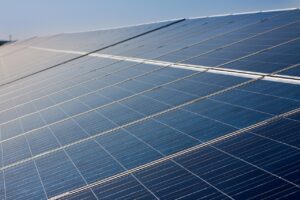
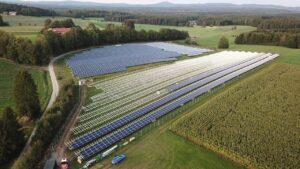
Photovoltaic installations provide stable daytime electricity across vast desert landscapes common in Australia’s mining belts. Modular solar arrays make expansion straightforward as production scales up or new pits open nearby. Their simplicity also means fewer moving parts compared to traditional turbines, reducing maintenance costs over time.
Wind Energy Contribution
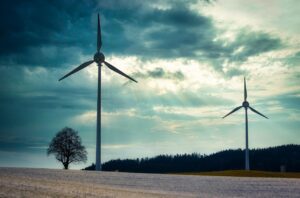
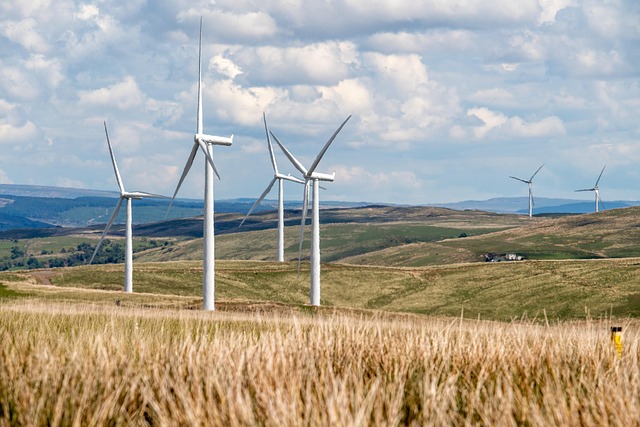
Wind turbines complement solar generation during night hours or cloudy conditions, ensuring 24-hour coverage. Hybrid configurations smooth fluctuations caused by weather variability, creating a more predictable output profile essential for process-heavy industries like mineral refining.
Battery Storage Systems
Battery banks at gigawatt-hour scale act as both stabilizers and emergency reserves. They absorb excess daytime energy for use during peak demand periods or low-wind intervals. Beyond backup roles, they enhance grid stability by regulating frequency and voltage within microgrids—critical for sensitive equipment used in automated mining fleets.
Case Example: Australia’s Groundbreaking Off-Grid Renewable Network
This Australian initiative stands as a global benchmark for renewable-powered heavy industry. Its design merges cutting-edge technology with commercial pragmatism, proving that sustainability can coexist with industrial-scale productivity.
Overview of the Project’s Scale and Ambition
The network integrates one million solar panels alongside 600 megawatts of wind generation capacity supported by five gigawatt-hours of battery storage. Such scale demonstrates technical feasibility for fully off-grid industrial operations previously thought impossible without fossil fuels. It signals a broader shift where clean energy companies become infrastructure partners rather than mere suppliers.
Technological Framework Behind the System Architecture
Smart grid coordination enables real-time interaction between solar, wind, and storage assets distributed across large territories. Predictive analytics forecast demand patterns based on production schedules and weather data, allowing proactive load management. Integration with autonomous haul trucks and drilling systems further enhances productivity while reducing idle time caused by energy fluctuations.
Economic and Environmental Implications of Off-Grid Mining Innovation
Beyond environmental gains, off-grid renewables reshape cost structures across the mining lifecycle—from exploration through closure planning—by providing price stability absent in volatile fuel markets.
Cost Efficiency and Long-Term Value Creation
Although initial investment remains significant, long-term economics favor renewables due to lower operating expenses and reduced exposure to fuel price shocks. Eliminating diesel logistics cuts transportation risk while simplifying supply chains in remote areas. Over time, these savings improve net present value calculations and attract institutional investors seeking ESG-aligned assets.
Reduction of Carbon Footprint and Ecological Impact
Replacing fossil-based generation dramatically lowers greenhouse gas emissions per ton mined. Cleaner air quality benefits surrounding communities while minimizing particulate pollution typical near diesel plants. Moreover, smaller physical footprints from modular renewable setups reduce land disturbance compared to conventional power stations—supporting biodiversity conservation around mine leases.
Challenges in Implementing Off-Grid Renewable Solutions for Mining Operations
Despite progress, deploying such complex networks at isolated locations still faces multiple hurdles involving technology maturity, regulation, and finance.
Technical Barriers and Infrastructure Constraints
Remote geography complicates logistics for transporting heavy equipment like turbine blades or battery containers. Maintenance crews must operate under extreme temperature swings that shorten component life cycles. Synchronizing independent microgrids requires advanced algorithms capable of maintaining frequency stability without central grid support—a challenge still being refined through field trials.
Policy, Regulatory, and Financial Considerations
Hybrid projects often fall between existing regulatory categories designed either for utilities or small-scale renewables. Permitting delays can slow deployment timelines significantly. Financing models must accommodate long payback horizons typical for capital-intensive infrastructure; however, government incentives such as tax credits or green bonds increasingly bridge this gap by improving project bankability among major lenders.
The Strategic Role of Clean Energy Companies in Redefining Mining’s Future
Clean energy companies are no longer peripheral players—they are strategic architects shaping how minerals will be extracted in coming decades through collaborative innovation ecosystems.
Innovation Pathways Through Collaboration
Joint ventures accelerate commercialization of new technologies like containerized battery units or modular hydrogen systems suitable for remote deployment. Shared research programs explore improvements in microgrid scalability while addressing site-specific challenges such as dust accumulation on panels or salt corrosion near coastal mines.
Building a Blueprint for Scalable Sustainable Mining Models
Integration Across Global Mining Regions
Lessons learned from Australian projects are now informing developments across Africa’s copper belts, South America’s lithium triangle, and Arctic iron ore zones where grid access remains limited but renewable potential is vast.
Future Outlook for Renewable-Powered Extraction Sites
Emerging hydrogen solutions could soon replace diesel entirely within heavy machinery fleets as electrolyzer efficiency improves. Meanwhile, advancements in solid-state batteries promise higher density storage that will extend operating autonomy even further—making full decarbonization technically achievable within the next decade if current trends persist.
FAQ
Q1: What makes Australia’s off-grid renewable network unique?
A: It combines massive solar capacity with large-scale wind generation and multi-gigawatt-hour storage into one coordinated system capable of powering heavy industry without external grid connections.
Q2: How do clean energy companies benefit from partnering with miners?
A: They gain access to long-term contracts that stabilize revenue streams while demonstrating their technology’s reliability under demanding industrial conditions.
Q3: Are off-grid systems reliable enough for continuous mining operations?
A: Yes; modern control software maintains steady output through predictive balancing between generation sources and battery reserves even during variable weather patterns.
Q4: What are the main economic advantages of switching to renewables?
A: Reduced fuel transport costs, insulation from price volatility, lower maintenance needs, and improved investor confidence due to stronger ESG performance metrics.
Q5: Could this model apply outside Australia?
A: Absolutely; similar frameworks can adapt to any resource-rich region with strong solar or wind potential where extending national grids remains uneconomical or environmentally disruptive.