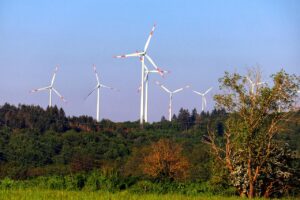

Global Solar and Wind Generation Surpass Gas for the First Time
Global electricity generation has entered a new era. For the first time, combined solar and wind output has overtaken gas-fired power in total generation share. This shift signals not just a milestone but a structural transformation of the global energy system. Wind renewable energy now stands as both a technological and economic force reshaping markets, policies, and investment strategies. The trend reflects years of innovation, cost declines, and policy alignment under climate goals. The energy transition is no longer theoretical—it is happening at scale.
The Global Energy Transition Landscape
The global energy landscape is undergoing a profound reconfiguration as nations pivot toward renewable sources. This transition is not uniform but driven by converging economic, environmental, and political pressures that are redefining how power systems operate.
Overview of the Shift Toward Renewable Energy Sources
Renewables are expanding their footprint in the global mix as fossil fuels lose dominance. Governments are setting aggressive decarbonization targets while private capital accelerates clean technology deployment. Technological advances in battery storage, grid management, and digital forecasting have made intermittent resources like wind more dependable. Economic competitiveness now favors renewables in many regions where levelized costs undercut traditional thermal generation.
Key Milestones in Renewable Energy Growth
Recent data show that global solar and wind generation surpassed gas-fired power for the first time—a symbolic yet practical milestone that confirms a tipping point in energy history. This achievement underscores sustained policy support and maturing technologies across continents. Regional variations remain: Europe’s offshore wind corridors lead capacity growth, while Asia’s solar installations dominate utility-scale expansion.
Wind Renewable Energy as a Catalyst for Change
Wind renewable energy plays an outsized role in achieving net-zero goals worldwide. Its scalability, resource abundance, and declining costs make it central to national strategies seeking to decarbonize electricity systems without compromising reliability.
The Role of Wind Power in Global Energy Systems
Wind contributes substantially to carbon reduction by displacing coal and gas generation. Both offshore and onshore projects complement solar variability through geographic diversity and seasonal balance. Effective grid integration—using flexible transmission networks and advanced forecasting—enhances reliability even during low-wind periods.
Technological Advancements in Wind Energy
Turbine technology has evolved rapidly: rotor diameters exceeding 200 meters are now common in offshore arrays, capturing stronger winds at higher altitudes. Improved materials extend component lifespans while digital monitoring systems enable predictive maintenance that cuts downtime. Hybrid configurations combining wind with solar or battery storage help stabilize supply profiles across daily demand cycles.
Economic Competitiveness of Wind Renewable Energy
The levelized cost of energy for wind continues to decline globally due to scale economies and competitive auctions. In many markets, new wind projects deliver electricity cheaper than fossil fuel plants even without subsidies. Innovative financing models—such as green bonds or corporate power purchase agreements—are further driving private investment into large-scale developments.
Comparing Wind, Solar, and Gas Generation Dynamics
The interplay among these three major energy sources defines current market behavior. Each brings unique operational characteristics that shape system flexibility and investment flows.
Performance Trends Across Major Energy Sources
Solar and wind maintain strong growth trajectories despite variability challenges inherent to weather-dependent resources. Gas remains valuable for balancing but faces declining utilization rates as renewables expand base-load roles through hybridization with storage technologies.
Regional Disparities in Generation Mixes
Europe leads global wind penetration thanks to mature policy frameworks like feed-in tariffs and carbon pricing schemes. Asia dominates solar growth through massive manufacturing capacity and state-backed investment programs. North America shows balanced diversification with rising renewable shares supported by tax incentives.
Policy, Market, and Infrastructure Drivers Behind the Shift
Policy direction remains decisive for renewable adoption rates, while financial innovation ensures scalability beyond public funding limits.
Government Policies Encouraging Renewable Expansion
National commitments under international climate accords have established clear long-term signals for investors. Instruments such as production tax credits, carbon pricing mechanisms, and renewable portfolio standards continue to stimulate project pipelines across continents.
Investment Trends in Global Energy Infrastructure
Institutional investors are shifting portfolios toward low-carbon assets amid growing ESG mandates. Green bonds fund transmission upgrades essential for connecting remote wind farms to urban load centers. Private equity participation is expanding as returns stabilize through predictable auction frameworks.
Challenges and Strategic Considerations for Future Growth
Despite progress, integrating high shares of variable renewables presents technical and logistical hurdles requiring coordinated planning across stakeholders.
Integrating Variable Renewables into Power Grids
Advanced meteorological forecasting improves dispatch planning for intermittent generation. Storage solutions—from lithium-ion batteries to pumped hydro—help smooth fluctuations between supply peaks and troughs. Smart grids using real-time sensors balance loads efficiently across distributed networks.
Addressing Supply Chain and Resource Constraints
Manufacturing scalability depends on reliable access to critical raw materials such as rare earth elements used in turbine magnets. Geopolitical tensions can disrupt sourcing channels; thus diversification strategies are vital. Recycling initiatives targeting blades and composite materials aim to close loops within a circular economy framework.
Long-Term Outlook for Wind Renewable Energy in the Global Mix
Wind’s future trajectory appears robust as technology matures further and integration challenges diminish through digital control systems.
Projected Growth Trajectories Through 2035 and Beyond
Offshore corridors along the North Sea, East Asia coastlines, and U.S. Atlantic seaboard will see continued capacity additions through 2035. Coupling wind with green hydrogen production offers new decarbonization pathways for industrial sectors hard to electrify directly.
Strategic Implications for Industry Stakeholders
Utilities must evolve operational models emphasizing flexibility over baseload predictability. Policymakers should harmonize cross-border grid codes to facilitate transnational trade in clean electricity. Technology developers will need constant innovation—from floating platforms to recyclable blades—to stay competitive as markets mature globally.
FAQ
Q1: Why did global solar and wind generation surpass gas-fired power?
A: Cost reductions, supportive policy frameworks, and rapid technological improvements allowed renewables to expand faster than fossil-based capacity additions.
Q2: How does wind renewable energy contribute to grid stability?
A: Through hybrid systems combining storage or solar resources plus advanced forecasting tools that align output with demand fluctuations.
Q3: What regions lead global wind development?
A: Europe dominates offshore deployment while China leads onshore installations by total capacity added annually.
Q4: Are fossil fuels still necessary during this transition?
A: Yes, gas remains important for short-term balancing until large-scale storage becomes more economical at system level.
Q5: What future innovations could further boost wind competitiveness?
A: Floating turbines enabling deeper-water sites, improved blade recycling processes, and digital twins enhancing predictive maintenance efficiency will drive next-phase performance gains.