
Polish Gov’t Flags Low Domestic Share in Offshore Wind as It Rolls Out Local Content Framework
Poland’s offshore wind ambitions face a structural challenge: the country’s domestic wind turbine manufacturing base remains limited. The government’s new local content framework signals a strategic pivot toward building industrial capacity at home, aiming to reduce import dependency and strengthen supply chain resilience. For Poland to meet its 2030 offshore targets, aligning domestic production with policy incentives will be crucial. Experts see this as a defining step for Poland to evolve from an energy importer into a regional offshore manufacturing hub.
The Strategic Role of Domestic Wind Turbine Production in Poland’s Offshore Wind Ambitions
Poland’s offshore wind industry is moving from concept to construction, but local participation remains low. The government now seeks to integrate domestic manufacturing into its renewable expansion plans.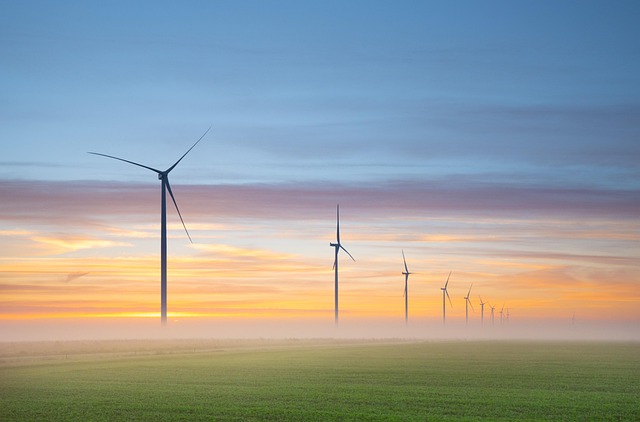
Assessing Poland’s Offshore Wind Energy Targets
Poland aims for up to 11 GW of installed offshore wind capacity by 2040, with interim goals of around 5.9 GW by 2030. These targets align with the broader EU decarbonization strategy and the Baltic Sea regional cooperation agenda. Domestic wind turbine production plays a central role in achieving these objectives, not only to meet capacity but also to secure economic returns within national borders. Currently, several major projects—such as those led by PGE Baltica and Ørsted—are under development, backed by multi-billion-euro investments from both public and private sectors.
Evaluating the Domestic Share in the Offshore Supply Chain
The domestic share in Poland’s offshore supply chain remains below 30 percent, with most high-value components like nacelles and blades imported from Western Europe or Asia. Polish firms are active mainly in steel structures and port logistics but face challenges meeting international certification standards such as IEC 61400 for turbine components. EU market competition adds pressure, as established manufacturers from Denmark and Germany dominate the supply landscape.
Policy Frameworks Supporting Local Content Development
A coherent policy framework is emerging to stimulate local participation while maintaining compliance with EU regulations on competition and state aid.
The Polish Government’s Local Content Framework
The new local content policy sets measurable targets for domestic contribution across project phases—from design to assembly—and introduces reporting mechanisms for developers. It encourages investment in domestic wind turbine facilities near ports like Gdynia and Szczecin, which are being adapted for large-scale component handling. Compliance will be monitored through periodic audits, while incentives include tax credits and preferential access to grid connection auctions for projects exceeding local content thresholds.
Regulatory Alignment with European Energy Policy
EU state aid rules under Article 107 of the Treaty on the Functioning of the European Union restrict direct subsidies that distort competition but allow targeted support for green industries under the Temporary Crisis and Transition Framework (TCTF). Poland must balance industrial promotion with these constraints. Lessons from France’s offshore tenders—where local content was encouraged through scoring criteria rather than mandates—offer useful guidance for Warsaw’s approach.
Industrial Capacity and Technological Readiness in Poland
Building competitive manufacturing capacity requires assessing current capabilities across production facilities, workforce skills, and R&D ecosystems.
Assessing Manufacturing Capabilities for Wind Turbines and Components
Poland hosts several heavy industry plants capable of producing towers and foundations; however, full-scale turbine assembly lines remain absent. Existing factories in Gdańsk and Elbląg could be upgraded to accommodate larger rotor diameters exceeding 100 meters. Skilled labor availability is moderate but constrained by competition from automotive and shipbuilding sectors.
Opportunities for Innovation and Technology Transfer
Collaboration between Polish firms and established OEMs such as Siemens Gamesa or Vestas can accelerate technology transfer. Joint ventures focusing on blade molding or digital monitoring systems would help close capability gaps. Research institutions like Gdańsk University of Technology already contribute through materials testing programs aimed at improving composite durability under marine conditions.
Economic Implications of Strengthening Domestic Production
Expanding domestic wind turbine production has broad economic implications beyond energy security—it reshapes labor markets and trade balances.
Job Creation and Regional Economic Development
Each gigawatt of offshore capacity can generate thousands of jobs across engineering, fabrication, transport, installation, and maintenance services. Coastal regions such as Pomerania stand to benefit most due to proximity to ports and existing maritime expertise. Over time, these clusters could evolve into permanent industrial ecosystems supporting both domestic deployment and export activities.
Cost Competitiveness and Export Potential
Localizing production may initially raise costs due to limited economies of scale but can reduce logistics expenses long term. Once domestic facilities mature, Poland could export towers or secondary components to neighboring Baltic markets like Lithuania or Finland. Financial tools including green bonds issued by state-owned banks can support early-stage competitiveness while attracting private capital.
Infrastructure Requirements for an Integrated Offshore Ecosystem
Infrastructure readiness determines whether local manufacturing gains translate into real deployment advantages.
Port Infrastructure and Logistics Capabilities
Ports such as Gdynia are being upgraded with deep-water quays capable of handling next-generation turbines above 15 MW capacity. However, storage areas remain limited, requiring coordination among port authorities, developers, and suppliers to streamline logistics chains from factory gate to installation vessel.
Grid Integration and Transmission Upgrades
Connecting offshore generation requires high-voltage subsea cables linked to onshore substations designed according to ENTSO-E grid codes. Investments exceeding €3 billion are planned through national operator PSE for grid reinforcement along the northern corridor. Domestic engineering firms are increasingly involved in cable laying projects using advanced monitoring systems compliant with EU interoperability standards.
Strategic Outlook for Poland’s Offshore Wind Industry Development
The next decade will determine whether Poland becomes a mere project host or an industrial leader within the Baltic region’s energy transformation.
Scenarios for Achieving High Domestic Content Ratios
Achieving higher domestic shares depends on synchronized policy execution—supporting training programs while securing long-term orders that justify factory investments. A gradual path starting with secondary components before scaling up full turbine assembly appears most realistic without delaying project timelines.
Long-Term Vision: Positioning Poland as a Regional Offshore Hub
Poland’s geographical location along the Baltic coast gives it natural advantages: deep ports, skilled maritime labor, and proximity to EU markets seeking low-carbon technologies. Developing export-oriented clusters around turbine manufacturing could anchor broader industrial diversification aligned with Europe’s net-zero ambitions by 2050.
FAQ
Q1: What is Poland’s main goal with its new local content framework?
A: It aims to boost domestic participation in offshore wind projects by encouraging investment in local manufacturing facilities and supply chain integration.
Q2: How much offshore wind capacity does Poland plan by 2030?
A: Around 5.9 GW of installed capacity is targeted by 2030 as part of its broader renewable energy strategy.
Q3: Which Polish regions benefit most from offshore wind development?
A: Coastal areas such as Pomerania and West Pomerania gain significant economic benefits due to port access and existing industrial bases.
Q4: What challenges do Polish manufacturers face in entering the offshore supply chain?
A: They must meet stringent international quality standards while competing against established European suppliers with greater experience.
Q5: Can Poland become an exporter of wind turbine components?
A: Yes, once domestic facilities scale up production efficiently, Poland could export towers or substructures across the Baltic region.