
Why li-ion storage matters now
Li-ion storage has become a central part of renewable energy integration. For utilities, developers, commercial sites, and energy planners, its value is not simply that it stores electricity. It can respond in seconds, shift solar output into evening demand, reduce peak loads, and provide grid services that conventional generators cannot deliver as quickly.
In 2026, the main question is no longer whether lithium-ion batteries can support power systems. The more useful question is where they create the most value, where they are technically limited, and how safety, duration, chemistry, and lifecycle cost should guide project decisions. You can also explore more in Storage.

For more background on related technologies and market updates, visit our Storage coverage.
Public data show why the topic is timely. The U.S. Energy Information Administration reported on August 7, 2026 that U.S. utility-scale battery storage reached nearly 52 GW of nameplate capacity by June 2026, after averaging 70% annual growth over the previous three years. The International Energy Agency has also identified batteries as a major enabler of solar and wind deployment, noting in its battery transition analysis that energy storage capacity must expand sharply by 2030 to support global clean power goals.
What li-ion storage is and how it works
Li-ion storage refers to energy storage systems that use lithium-ion battery cells to charge, store, and discharge electrical energy. In stationary power applications, the battery is only one part of a larger battery energy storage system. A complete system typically includes cells, modules, racks or containers, a battery management system, thermal management, fire detection and mitigation equipment, power conversion equipment, transformers, controls, and dispatch software.
The basic process is straightforward. During charging, electrical energy moves lithium ions through an electrolyte and stores energy chemically inside the cell. During discharge, the process reverses and produces electrical power for a load or the grid. Lithium-ion is attractive for power systems because it combines relatively high round-trip efficiency, rapid response, modular construction, and large manufacturing scale from the electric vehicle and consumer electronics industries.
Cells, modules, racks, and controls
A stationary system is built in layers. Cells are grouped into modules, modules are assembled into racks, and racks are integrated into enclosures or containers. The battery management system monitors voltage, current, temperature, state of charge, and state of health. The power conversion system converts direct current from the battery into alternating current for the grid, or the reverse during charging.
Controls are just as important as hardware. A battery used for frequency regulation may cycle frequently for short intervals, while a solar-shifting battery may charge during midday and discharge for several evening hours. Those duty cycles affect degradation, thermal stress, warranty terms, and expected revenue.
Power capacity and energy capacity are different
One common source of confusion is the difference between power and energy. Power capacity, measured in kilowatts or megawatts, describes how much electricity a system can deliver at a given moment. Energy capacity, measured in kilowatt-hours or megawatt-hours, describes how long it can deliver that power.
For example, a 100 MW battery with 400 MWh of energy capacity is commonly described as a four-hour system. It can discharge at full rated power for roughly four hours before reaching its operating limit. A 100 MW battery with 100 MWh of energy capacity is better suited to shorter-duration services. This distinction matters because headlines often report battery capacity in GW, while project economics depend heavily on both MW and MWh.
Where lithium-ion batteries create the most value
Lithium-ion systems are strongest where fast response, modularity, and daily cycling have economic value. They are not a universal replacement for every form of generation or every type of long-duration storage, but they are useful in several high-growth applications.
Grid support and ancillary services
Battery systems can inject or absorb power quickly, making them useful for frequency regulation, reserves, voltage support, and other grid-stability services. The EIA has described rapid response as a key performance characteristic of battery storage, particularly for maintaining power quality over short time intervals. This helps explain why utility-scale batteries were first deployed in some markets as ancillary-service assets before moving more deeply into energy shifting and capacity applications.
Solar shifting and evening peak reduction
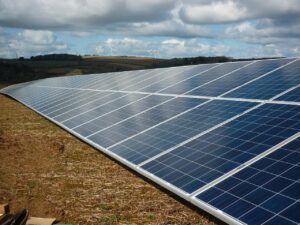
Solar power often peaks during midday, while electricity demand and prices can rise later in the afternoon or evening. Li-ion storage helps move part of that solar output into higher-value hours. The EIA Annual Energy Outlook 2026 states that storage growth is closely linked with solar growth because diurnal storage is well matched to the daily shape of solar production and evening demand.
Co-located solar-plus-storage projects can share interconnection infrastructure and use a common control strategy. Co-location also raises design questions: whether the battery charges only from the solar plant or from the grid, how interconnection limits are managed, and how tax, market, and operating rules treat the stored energy.
Commercial and industrial peak management
Behind-the-meter systems at commercial and industrial sites can reduce demand charges, improve resilience, support on-site solar consumption, or provide backup power for selected loads. The economics depend on the local tariff, load profile, battery cycling limits, and whether the system can participate in demand response or grid services. A battery installed mainly for rare backup events will usually need a different design than one expected to cycle nearly every day.
Chemistry choices and cost trends
Most stationary li-ion storage projects are evaluated on chemistry, safety profile, supply chain, and lifecycle cost, not energy density alone. Weight and volume are critical for electric vehicles. Stationary systems can often accept a larger footprint if the chemistry offers lower cost, longer cycle life, or reduced exposure to certain minerals.
Lithium iron phosphate, or LFP, has gained share in stationary storage because it avoids nickel and cobalt, generally offers strong cycle life, and has favorable thermal stability compared with high-nickel chemistries. Nickel manganese cobalt, or NMC, remains important in many battery markets, especially where energy density is a priority. In grid storage projects, however, LFP is often preferred when space constraints are less severe.
| Factor | LFP | NMC |
|---|---|---|
| Main appeal | Cost, cycle life, thermal stability, no nickel or cobalt | Higher energy density and established use in many EV platforms |
| Stationary storage fit | Strong fit for many utility-scale and commercial projects | Useful where compactness matters more |
| Supply chain exposure | Lower exposure to nickel and cobalt markets | Higher exposure to nickel and cobalt pricing |
| Design tradeoff | Usually lower energy density | Often higher energy density but with different cost and safety considerations |
Cost trends also support wider deployment, although prices can shift with raw material markets, manufacturing utilization, trade policy, and regional supply conditions. BloombergNEF reported in December 2024 that average lithium-ion battery pack prices fell 20% from 2023 to a record low of $115 per kWh. The IEA has also reported that battery demand in the energy sector reached 1 TWh in 2024 across electric vehicles and storage applications. These figures point to scale and competition, but project buyers should not treat cell or pack prices as the same as fully installed storage system cost.
A complete project includes engineering, permitting, civil works, enclosures, power conversion, transformers, fire safety systems, grid interconnection, controls, warranty coverage, financing, and operations. A low cell price can improve economics, but it does not automatically make every storage project profitable. See also: clean energy.
Safety, standards, and operating limits
Safety is one of the most important issues in lithium-ion storage. The main technical concern is thermal runaway, a failure condition in which a cell overheats and can trigger heat, gas release, fire, or propagation to neighboring cells if not controlled. Research from national laboratories and standards bodies has repeatedly focused on propagation behavior because the risk is not only a single cell failure, but how a module, rack, or container behaves under fault conditions.
Design controls that reduce risk
Responsible system design uses multiple layers of protection. These can include cell qualification, module spacing, thermal monitoring, battery management software, ventilation, gas detection, deflagration control, fire detection, suppression strategies, emergency shutdown procedures, and site access planning for first responders. The right design depends on chemistry, enclosure type, system size, indoor or outdoor location, and local code requirements.
Operating discipline is also essential. Overcharging, extreme temperatures, poor maintenance, damaged cells, and inadequate monitoring can increase risk. Procurement reviews should therefore cover more than cell data sheets. Buyers should also examine factory quality control, commissioning procedures, software controls, emergency response plans, and long-term service arrangements.
Codes and tests that matter
In North America, NFPA 855 is a key installation standard for stationary energy storage systems. UL 9540 addresses energy storage system and equipment safety, while UL 9540A is widely used to evaluate thermal runaway fire propagation characteristics. ANSI/CAN/UL 9540A:2026 was published on March 13, 2026 and is designed to generate data that supports installation instructions, separation distances, and fire or explosion protection decisions.
These standards do not eliminate risk by themselves. They provide a structured framework for testing, installation, documentation, and approval. Authorities having jurisdiction, insurers, fire departments, project owners, and integrators may all have additional requirements depending on site conditions.
How buyers should evaluate a li-ion storage project
A good storage decision starts with the use case. A system designed for solar time shifting may need a different duration and warranty structure than a system designed for frequency regulation or emergency backup. Before selecting a battery, buyers should define the operating profile, expected cycles per year, discharge duration, depth of discharge, performance guarantees, and revenue assumptions.
- Define the primary use case before selecting chemistry or container size.
- Compare power capacity in MW and energy capacity in MWh, not one without the other.
- Ask how degradation affects usable capacity over the contract life.
- Review round-trip efficiency under expected operating conditions, not only nameplate values.
- Check whether warranty terms match the intended cycling profile.
- Confirm applicable fire, electrical, interconnection, and building code requirements early.
- Evaluate controls, cybersecurity, monitoring, and service response, not only battery cells.
Buyers should also separate capital cost from lifecycle value. A cheaper battery can become expensive if it degrades faster, cannot perform the required duty cycle, faces permitting delays, or lacks bankable warranty support. Conversely, a higher-cost system may be more attractive if it provides more usable energy, lower operating risk, or better integration with market software.
What could limit lithium-ion storage growth
Li-ion storage is growing quickly, but several constraints remain. Interconnection queues can delay projects even when batteries are available. Transformer supply, permitting, land use concerns, fire safety reviews, and grid market rules can all affect deployment speed. In some regions, revenue uncertainty is also a major issue because energy arbitrage spreads, ancillary-service prices, and capacity market rules may change as more batteries enter the market.
Duration is another practical limit. Lithium-ion batteries are highly competitive for fast response and short-duration storage, especially in the one-to-four-hour range and increasingly for longer daily shifting applications. For multi-day storage, seasonal balancing, or very long-duration backup, other technologies may become more appropriate. Pumped hydro, compressed air, flow batteries, thermal storage, hydrogen-based systems, and emerging sodium-ion batteries are all being evaluated for different roles. The likely outcome is not one winning technology, but a portfolio in which lithium-ion handles high-cycle, short-duration work while other resources address longer-duration needs.
Recycling and second-life strategies will also matter as installed capacity ages. Battery recycling can recover valuable materials and reduce waste, but collection systems, economics, chemistry differences, and regulation will shape how quickly recycling scales. For stationary storage buyers, end-of-life planning should be part of procurement rather than an afterthought.
Frequently asked questions
Is li-ion storage the same as a battery energy storage system?
Not exactly. Li-ion storage describes the battery chemistry. A battery energy storage system is the full installation, including batteries, power conversion, controls, safety systems, enclosures, and grid connection equipment. Many BESS projects use lithium-ion batteries, but not all battery storage technologies are lithium-ion.
How long can a lithium-ion storage system discharge power?
Common utility-scale systems are often designed for one to four hours, though longer configurations are possible if more energy capacity is added. The discharge time depends on the ratio of MWh to MW. A higher energy-to-power ratio provides longer duration but increases cost and space requirements.
Is LFP better than NMC for stationary storage?
LFP is often favored for stationary projects because of cost, cycle life, and thermal-stability advantages, while NMC can offer higher energy density. The better choice depends on project footprint, safety requirements, supply chain preferences, duty cycle, and total lifecycle cost.
What safety standards should project teams know?
NFPA 855, UL 9540, and UL 9540A are among the most important references for stationary energy storage safety in North America. Local fire codes, electrical codes, utility interconnection standards, and insurer requirements may also apply.
Will sodium-ion replace li-ion storage?
Sodium-ion batteries may become useful in some stationary applications because they use abundant materials and could offer cost advantages. However, lithium-ion has a large manufacturing base, bankability, established standards, and extensive operating experience. A more realistic near-term view is that sodium-ion may complement lithium-ion rather than replace it across the storage market.