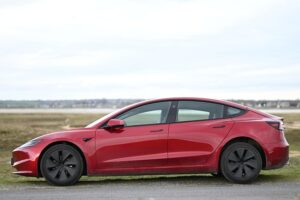

MG Has a New Electric Sedan, and It Looks Familiar
MG’s latest electric sedan signals a confident step into the mainstream EV market. Its design echoes familiar silhouettes seen across global electric lineups, yet it carries a distinct MG identity rooted in practicality and value. The car balances aerodynamic efficiency with brand heritage, aiming to attract mid-tier buyers seeking performance without luxury-level pricing. With competitive range figures, modern connectivity, and an accessible mg electric car price, MG positions itself as a challenger to established EV players.
Overview of MG’s New Electric Sedan Design
The new MG electric sedan arrives as part of the brand’s broader electrification strategy, merging global design cues with regional sensibilities. Its appearance feels recognizable because it deliberately aligns with current EV aesthetics—smooth surfaces, coupe-like rooflines, and minimal ornamentation—while maintaining MG’s British-inspired proportions.
Design Philosophy and Market Positioning
MG’s design philosophy focuses on blending aerodynamic function with emotional appeal. The sedan’s proportions favor airflow efficiency, reducing drag while preserving visual balance. This approach follows the global EV trend toward clean lines and simplified surfaces that communicate technological sophistication. In market terms, the model targets consumers positioned between mass-market practicality and premium aspiration—buyers who value both performance and affordability.
Exterior and Interior Design Elements
The exterior features a closed front fascia typical of EVs, integrated LED lighting signatures, and flush door handles that enhance airflow management. The absence of a traditional grille underscores its electric identity while improving drag coefficients. Inside, the cabin adopts sustainable materials such as recycled textiles and soft-touch composites. A wide digital dashboard integrates driver information with infotainment functions, emphasizing intuitive interaction over complexity.
Technical Specifications and Performance Metrics
Beyond its looks, MG’s new sedan is engineered for balanced performance rather than outright speed. It builds upon modular EV architecture that allows flexibility in powertrain configurations.
Powertrain Architecture and Battery Technology
The vehicle employs a high-density lithium-ion battery pack positioned low within the chassis for better weight distribution. Buyers can choose between single-motor rear-wheel-drive or dual-motor all-wheel-drive setups. Each configuration benefits from liquid-cooled thermal management systems that maintain efficiency even under demanding conditions or varying climates.
Range, Charging Capabilities, and Efficiency
Under WLTP testing standards, the sedan achieves a competitive driving range comparable to rivals like Hyundai Ioniq 6 or BYD Seal. Fast-charging capability enables 10–80% recharge in roughly half an hour using DC infrastructure. Regenerative braking contributes to real-world efficiency by recapturing kinetic energy during deceleration.
Comparative Analysis of MG Electric Car Price Against Market Competitors
As competition intensifies across electric sedans, pricing becomes central to consumer decisions. MG leverages its cost-efficient manufacturing base to position its model below many direct rivals without compromising core technology.
Benchmarking Against Similar Electric Sedans
When compared with Tesla Model 3, Polestar 2, and BYD Seal within similar price brackets, MG’s offering emphasizes value through standard features like adaptive safety systems and connected infotainment at a lower mg electric car price point. While power outputs may trail top-end competitors slightly, the balance between cost and functionality remains compelling for pragmatic buyers.
Evaluating Value Proposition Relative to Price Point
Evaluating cost-per-kWh shows MG delivers strong value relative to segment norms. Warranty coverage typically extends up to eight years on battery components—a reassurance often found only in higher-priced models. Maintenance costs remain low due to simplified mechanical systems inherent in EVs, while access to expanding charging networks adds long-term convenience for owners.
Technological Integration and Digital Ecosystem Support
Technology defines modern automotive competitiveness as much as mechanical engineering does. MG recognizes this by embedding digital continuity across hardware and software layers.
Software Architecture and Connectivity Features
The in-car operating system supports over-the-air updates that refine performance parameters or introduce new features post-purchase. Smartphone integration allows remote monitoring of charging status or climate control preconditioning through dedicated mobile applications. Compatibility with smart home ecosystems extends usability beyond the vehicle itself.
Advanced Driver Assistance Systems (ADAS) Implementation
MG integrates Level 2+ driver assistance functions including adaptive cruise control, lane centering assist, blind-spot detection, and automated parking aids. Sensor fusion technology combines radar arrays with high-resolution cameras for precise environmental perception. The system architecture remains scalable for future regulatory advancements toward semi-autonomous operation.
Market Strategy and Consumer Perception Dynamics
MG’s strategic direction reflects its ambition to evolve from an affordable heritage brand into a credible global EV contender.
Pricing Strategy Within MG’s Broader EV Portfolio
Pricing consistency across markets highlights MG’s attempt at global standardization while maintaining local affordability through partial production localization in key regions such as Southeast Asia or Europe. This approach helps stabilize supply chains while keeping mg electric car price accessible without eroding perceived quality.
Expert Perspectives on Design Familiarity and Brand Evolution
Industry analysts note that the sedan’s resemblance to other contemporary models is intentional rather than derivative—it aligns with aerodynamic optimization trends observed throughout the EV sector. For MG, this continuity bridges its combustion-era design DNA with modern electric identity, cultivating consumer trust through familiarity rather than radical reinvention.
Long-Term Outlook for MG’s Electric Sedan Segment Expansion
The introduction of this sedan marks not just a product launch but also a foundation for future scalability within MG’s electrified lineup.
Anticipated Technological Upgrades in Future Iterations
Future iterations are expected to adopt next-generation battery chemistries such as solid-state cells offering higher energy density per kilogram. Continuous software refinement through OTA updates will further personalize driving dynamics and interface responsiveness over time.
Implications for MG’s Competitive Standing in the Global EV Market
By coupling affordable pricing with credible technology partnerships for battery sourcing and digital systems integration, MG strengthens its foothold particularly in emerging markets where cost-sensitive electrification is accelerating fastest. Sustained innovation will determine whether it can maintain momentum against entrenched competitors like Tesla or Hyundai in mature regions.
FAQ
Q1: What is the expected mg electric car price range?
A: It is anticipated to fall between mid-market compact sedans and entry-level premium EVs depending on configuration options.
Q2: How far can the new MG electric sedan travel on one charge?
A: Under WLTP testing conditions it delivers a competitive range similar to most mid-size electric sedans currently available.
Q3: Does the vehicle support fast charging?
A: Yes, it supports DC fast charging capable of replenishing most of its capacity within approximately thirty minutes.
Q4: What kind of driver assistance features are included?
A: The model includes adaptive cruise control, lane centering assist, automatic emergency braking, and parking automation systems.
Q5: How does this model fit into MG’s long-term strategy?
A: It represents a cornerstone product bridging affordability with advanced technology as part of MG’s transition toward an all-electric portfolio globally.