
Green and clean energy now means more than a broad environmental preference. In 2026, it is a practical energy strategy shaped by record renewable power additions, faster electrification, rising battery storage and closer scrutiny of environmental claims. The latest full-year global data, mainly covering 2025, shows that solar and wind are carrying most of the growth, while grids, storage, permitting and market design increasingly determine how much clean power can actually be used. For businesses, policymakers and readers following clean energy, the key question is no longer whether renewables can scale. It is how green and clean energy can be deployed reliably, affordably and credibly.
What green and clean energy means
The terms green energy, clean energy and renewable energy are often used together, but they are not identical. Renewable energy refers to sources that naturally replenish over short periods, including solar, wind, hydropower, geothermal and certain forms of biomass. Green energy is usually narrower. The U.S. Environmental Protection Agency describes green power as a subset of renewable electricity with the greatest environmental benefit, such as solar, wind, geothermal, biogas, eligible biomass and low-impact small hydroelectric resources in voluntary markets.
Clean energy is broader. The EPA defines clean energy as including renewable energy, energy efficiency and efficient combined heat and power. In wider energy policy, clean energy can also include technologies that cut emissions even when they are not renewable, such as nuclear power, carbon capture in hard-to-abate sectors, heat pumps, electric vehicles and low-emissions hydrogen. This distinction matters because a headline about clean energy growth may include nuclear or efficiency, while a report on renewable capacity may not.
For readers comparing green and clean energy, the practical distinction is straightforward: green energy focuses on low-impact renewable electricity, while clean energy includes the wider set of technologies and practices that reduce pollution and greenhouse gas emissions. The overlap is large, especially around solar and wind, but the terms should not be treated as perfect substitutes.
The 2025 data behind the 2026 energy transition
The most important recent shift is the scale of renewable deployment. According to the International Renewable Energy Agency’s Renewable Capacity Statistics 2026, the world added 692 gigawatts of renewable power capacity in 2025, the largest annual increase to date. IRENA reported that renewables accounted for 49% of global installed power capacity by the end of 2025 and made up 85.6% of annual global power additions.
The International Energy Agency’s Global Energy Review 2026 gives a slightly different but complementary view because it looks at energy demand and electricity generation as well as capacity. The IEA reported that annual global renewable capacity additions reached about 800 gigawatts in 2025, with solar contributing roughly three quarters of the total. It also reported that solar PV generation increased by 600 terawatt-hours in 2025, enough to meet around 70% of global electricity generation growth that year.
| Indicator | Latest reported period | What it shows |
|---|---|---|
| Global renewable capacity additions | 2025 | IRENA reported 692 GW added; IEA reported about 800 GW, reflecting methodological differences and estimates. |
| Share of global installed power capacity from renewables | End of 2025 | IRENA reported 49%, showing renewables are approaching half of worldwide power capacity. |
| Solar PV capacity additions | 2025 | IEA reported solar PV additions surpassed 600 GW for the first time. |
| Wind capacity additions | 2025 | IEA reported wind additions reached around 160 GW after nearly 40% annual growth. |
| U.S. utility-scale electricity generation from renewables | 2025 | EIA reported renewables supplied about 24% of U.S. utility-scale electricity generation. |
These figures do not mean the energy transition is complete. Capacity is not the same as generation, and generation is not the same as total energy use. Solar panels and wind turbines produce electricity when resources are available. Oil, gas and coal still play major roles in transport, industry, heating and electricity systems. Even so, the 2025 data confirms that green and clean energy is now expanding at a scale large enough to affect power markets, investment decisions and grid planning.
Why solar and wind are leading the shift
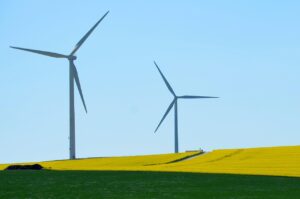
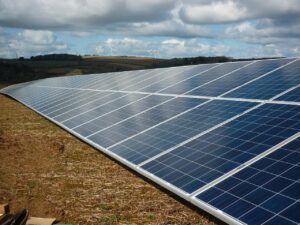
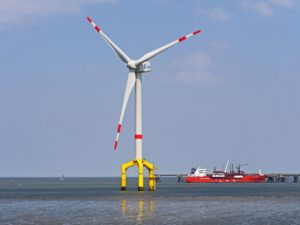
Solar and wind dominate recent renewable growth because they can be built modularly, scaled quickly and installed in many different markets. IRENA reported that solar power accounted for nearly three quarters of renewable additions in 2025, with a record 510 gigawatts added, while wind added 159 gigawatts. The IEA similarly found that solar PV accounted for more than three quarters of new renewable capacity additions worldwide in 2025, followed by wind at about 20%.
Solar has become especially important because deployment ranges from utility-scale plants to commercial rooftops, residential systems and off-grid applications. It can reduce daytime peak demand, diversify electricity supply and support distributed generation. Wind often produces strongly in different hours and seasons than solar, which can improve system balance when both resources are planned together.
Cost is another driver. Lazard’s 2025 Levelized Cost of Energy analysis reported that utility-scale solar and onshore wind remained among the most cost-effective forms of new-build generation on an unsubsidized basis, although costs vary by region, financing, grid connection, resource quality and firming needs. The IEA’s 2025 and 2026 technology analysis also emphasized that many clean energy technologies are increasingly competitive, while warning that enabling infrastructure can become a limiting factor.
This is why solar and wind should not be assessed only as stand-alone technologies. A low-cost solar project that waits years for grid connection does not deliver full value. A wind farm in a congested transmission zone may face curtailment. The next phase of green and clean energy growth depends on matching generation with storage, flexible demand, transmission capacity and market rules.
The grid is becoming the main constraint
As renewable penetration rises, the challenge shifts from building clean generation to integrating it. IRENA’s 2026 capacity report noted that renewable energy is approaching half of global installed power capacity, but also pointed to planning questions around grid flexibility and adaptation to variable renewable power. That distinction is important. A country can add record clean capacity and still struggle if transmission lines, interconnection queues and balancing resources do not keep pace.
Grid integration involves several practical issues:
- Transmission expansion: Large solar and wind resources are often far from demand centers, so new lines are needed to move clean electricity efficiently.
- Interconnection speed: Projects may be fully financed but delayed because grid studies, upgrades or connection approvals take too long.
- Storage and flexibility: Batteries, pumped hydro, demand response and flexible industrial loads help shift electricity from high-generation hours to high-demand hours.
- Curtailment management: When supply exceeds demand or grid capacity, renewable generators may be ordered to reduce output, lowering the value of installed assets.
- Market design: Electricity prices, capacity payments and ancillary service markets need to reward reliability as well as clean generation.
Battery storage is becoming a central part of this system. The IEA reported that battery storage was the fastest-growing power technology in 2025, with capacity additions rising by around 40% to nearly 110 gigawatts. Storage does not replace the need for transmission or firm generation in every system, but it can reduce peak stress, absorb midday solar output and provide fast grid services.
Environmental benefits and real-world limits
The environmental case for green and clean energy remains strong. Electricity from solar, wind and geothermal resources generally avoids direct fuel combustion during operation, reducing greenhouse gas emissions and local air pollutants compared with fossil fuel generation. Efficiency improvements also cut pollution by reducing the total amount of energy that must be produced. See also: EVs.
Credible clean energy analysis also needs to acknowledge limits. Renewable technologies have land, material, water, wildlife and supply-chain impacts. Hydropower can affect river systems and fisheries. Biomass depends heavily on feedstock quality and land-use assumptions. Solar and battery supply chains require minerals, manufacturing energy and end-of-life recycling systems. Wind projects need careful siting to reduce impacts on communities and wildlife.
The right comparison is not whether any energy source has zero impact. No large-scale energy system is impact-free. The useful comparison is lifecycle impact, air pollution, climate impact, cost, reliability and land-use trade-offs across available options. Green and clean energy performs best when projects are sited responsibly, connected efficiently, matched with storage and flexibility, and measured with transparent accounting.
How businesses and communities can evaluate clean energy claims
As clean energy becomes mainstream, claims are becoming more complex. A company may say it uses renewable energy because it buys renewable energy certificates. Another may sign a power purchase agreement for new wind or solar. A factory may install rooftop solar but still rely on fossil-heavy grid electricity at night. Each action can be legitimate, but they do not have the same impact.
Readers should look for four signals of credibility. First, the claim should define the boundary: facility, product, portfolio, electricity use or total energy use. Second, it should state the instrument: on-site generation, utility green tariff, renewable certificate, power purchase agreement or direct project investment. Third, it should clarify timing and geography, because annual matching is different from hourly matching and local procurement is different from distant certificates. Fourth, it should disclose whether the project is additional, meaning it helps bring new clean generation onto the grid rather than only reallocating existing attributes.
For communities, the evaluation is similar, but priorities may differ. A credible local clean energy plan should address affordability, reliability, land use, workforce needs, permitting, community benefits and grid capacity. The most durable projects usually combine environmental value with economic and system value.
What to watch next
The green and clean energy transition is entering a more demanding stage. The early story was about renewable technologies proving they could scale. The current test is whether grids, storage, policies and markets can scale at the same pace. Several indicators will show whether the transition is deepening or slowing.
- Renewable additions: Annual solar and wind installations remain the clearest signal of deployment momentum.
- Clean generation share: Electricity produced matters more than capacity installed, especially in systems with curtailment.
- Storage growth: Battery and long-duration storage additions indicate whether variable renewables can serve more hours of demand.
- Grid investment: Transmission buildout and interconnection reform will determine how much clean power reaches customers.
- Policy stability: Auctions, tax credits, permitting rules and market reforms can accelerate or delay projects.
- Industrial electrification: Heat pumps, electric vehicles, electric boilers and clean hydrogen will shape how much clean electricity demand grows.
The main conclusion is clear. Green and clean energy is no longer a peripheral sustainability topic. It is becoming a core part of power system planning, industrial strategy and energy security. The next gains will depend less on slogans and more on execution: building the right mix of resources, connecting them on time, proving environmental claims and ensuring that cleaner electricity is reliable when people need it.
Frequently asked questions
Is green energy the same as clean energy?
Not exactly. Green energy usually refers to renewable electricity sources with high environmental benefits, such as solar and wind. Clean energy is broader and can include efficiency, low-emissions technologies and other measures that reduce pollution.
Why is solar growing faster than other renewable sources?
Solar is modular, increasingly cost-competitive and suitable for many scales, from rooftops to large power plants. It also benefits from mature manufacturing supply chains, although grid connection and storage needs can limit its value in high-penetration markets.
Does renewable capacity mean renewable electricity generation?
No. Capacity measures the maximum output a system can produce under suitable conditions. Generation measures actual electricity produced over time. Solar and wind capacity must be evaluated alongside resource quality, grid access, curtailment and storage.
Can clean energy replace fossil fuels completely?
Clean energy can replace a large share of fossil fuel use, especially in electricity, transport and heating through renewables and electrification. Harder sectors, including some heavy industry and long-distance transport, may also need efficiency, sustainable fuels, carbon capture or other low-emissions options.
What is the biggest challenge for green and clean energy now?
The biggest challenge is system integration. Building solar and wind is essential, but grids, storage, permitting, market design and demand flexibility increasingly determine whether clean electricity can be delivered reliably and affordably.