
The main wind turbine types in one view
The main types of wind turbines include horizontal-axis turbines, vertical-axis turbines, onshore turbines, offshore fixed-bottom turbines, offshore floating turbines, and small or distributed turbines. These categories do not describe the same attribute. Some refer to rotor orientation, others to project location, foundation design or the way the electricity is used.
For most electricity generation, the three-blade horizontal-axis wind turbine remains the dominant design. Vertical-axis machines are used in more specialized settings, while floating offshore wind is important where water depths make conventional seabed foundations impractical.
Choosing between wind turbine types depends on wind resource, land or seabed conditions, grid access, permitting limits, maintenance strategy and project scale. For more background on the sector, see Econergyzn’s wind energy section.
Horizontal-axis wind turbines
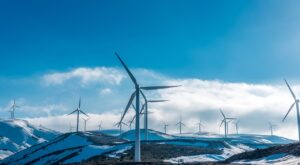
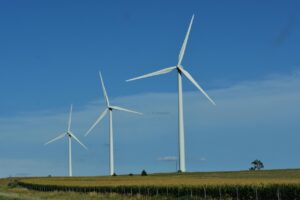
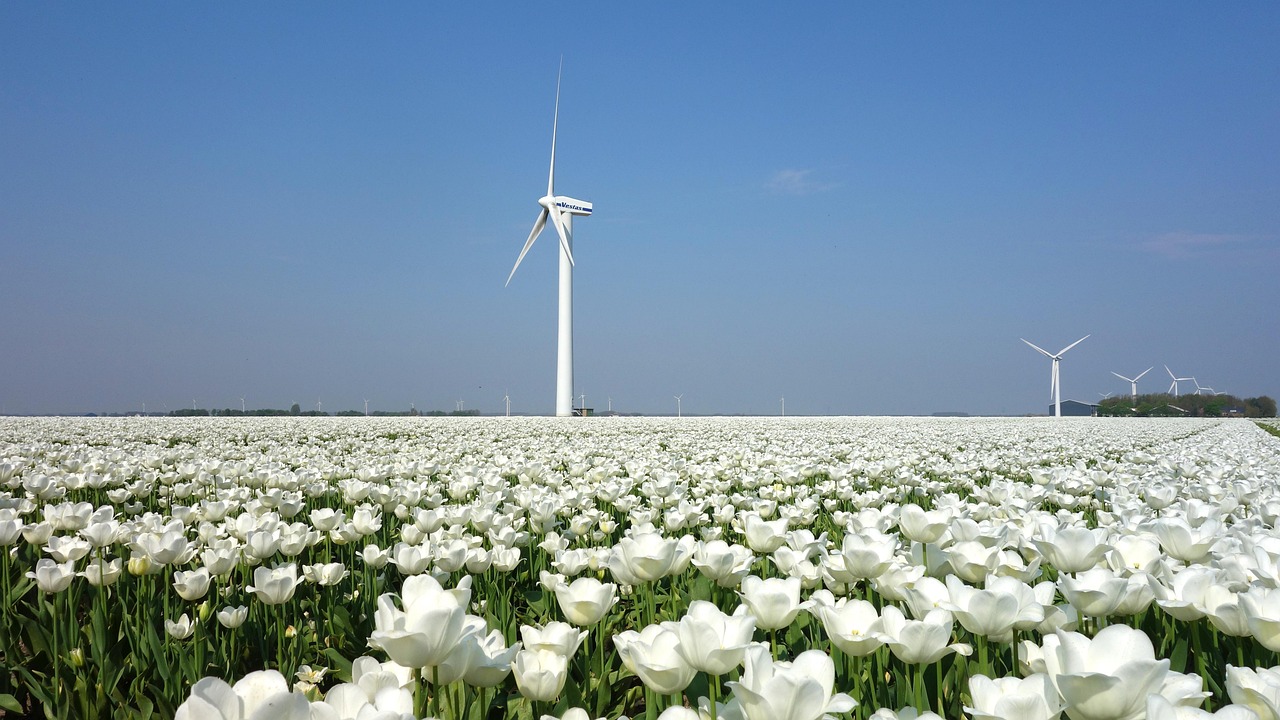
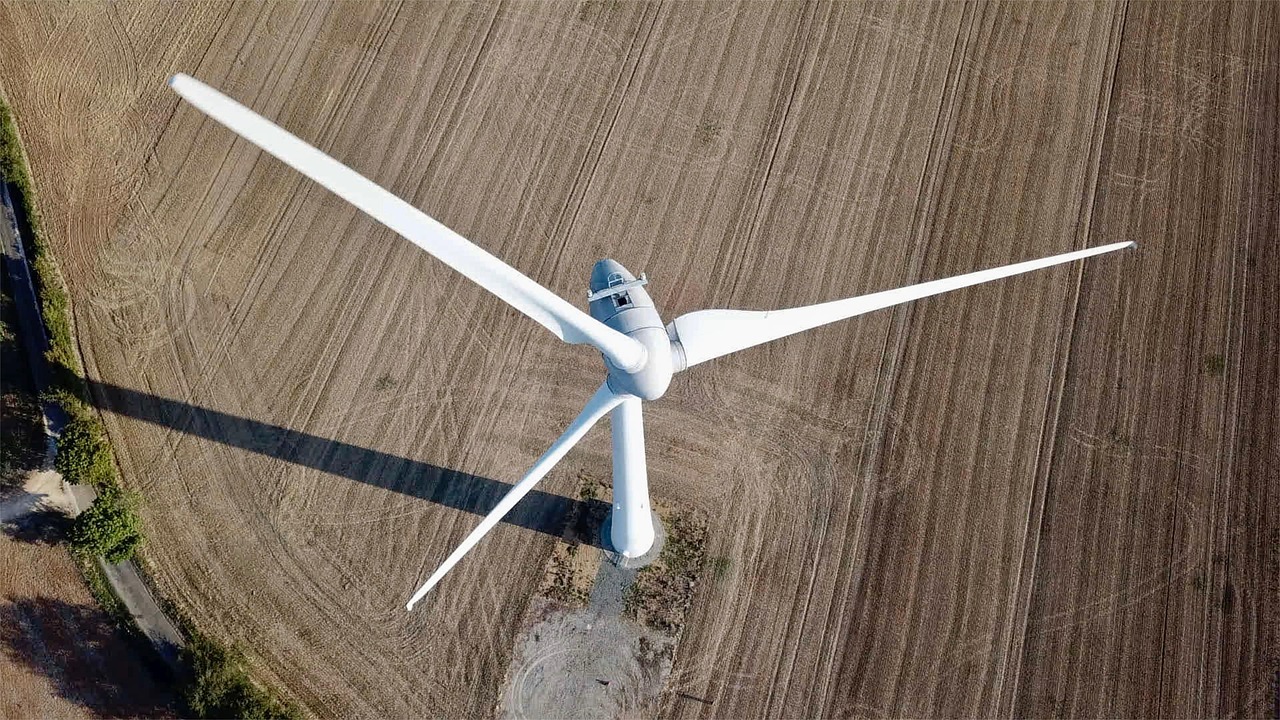
Horizontal-axis wind turbines, often shortened to HAWTs, have a rotor shaft that runs roughly parallel to the ground and faces into or away from the wind. This is the design most people associate with modern wind farms: a tall tower, a nacelle at the top and long blades rotating in a vertical plane.
Most utility-scale horizontal-axis turbines are three-bladed, upwind machines. Upwind means the rotor faces the wind before the airflow reaches the tower. This arrangement helps reduce tower shadow effects and has become the standard configuration for large land-based and offshore projects.
These turbines use aerodynamic lift rather than simple drag. As wind moves over the blades, pressure differences create rotational force, which drives a generator through a gearbox or a direct-drive system. Modern machines also use control systems to adjust blade pitch and rotor direction as wind conditions change.
The main strengths of horizontal-axis turbines are efficiency, scalability and mature supply chains. They can be built with large rotors, tall towers and advanced controls for utility-scale production. Their limitations are practical: they need substantial foundations, cranes or specialized vessels for installation, clear maintenance access and enough spacing to reduce wake losses between turbines.
Upwind and downwind designs
Upwind turbines dominate commercial deployment, but downwind turbines also exist. In a downwind design, the rotor is placed on the opposite side of the tower from the incoming wind. Downwind concepts can offer structural advantages in some research and offshore applications, but they are not the mainstream choice for most current projects. Rotor placement affects loads, noise, yaw control and fatigue behavior, so the distinction is more than a layout detail.
Vertical-axis wind turbines
Vertical-axis wind turbines, or VAWTs, have a main rotor shaft that stands vertically. They can accept wind from different directions without yawing the entire nacelle into the wind, which makes them relevant for complex flow environments. Even so, vertical-axis turbines remain far less common than horizontal-axis turbines in large commercial power generation.
The two most cited vertical-axis families are Darrieus and Savonius turbines. A Darrieus turbine uses curved or straight airfoil blades and is often described as an eggbeater-style design. It relies mainly on lift, which can make it more efficient than drag-based concepts, but it can face starting, fatigue and control challenges.
A Savonius turbine uses scooped surfaces and relies mainly on drag. It is simple and can start at low wind speeds, but its energy conversion efficiency is usually lower than that of lift-based utility turbines.
Vertical-axis designs may be considered for small systems, educational installations, research projects, urban demonstrations or sites where visual profile and changing wind direction are important. For large grid-scale production, the proven performance and economics of horizontal-axis turbines normally make them the preferred option.
Onshore, offshore fixed-bottom and floating turbines
Wind turbines are also classified by installation site. Onshore turbines are built on land. They are generally easier to access than offshore turbines and can use existing roads and transmission networks if the site is suitable. Common constraints include land availability, local permitting, visual impacts, wildlife review, transport limits for long blades and the distance to a suitable grid interconnection point.
Offshore fixed-bottom turbines are installed in bodies of water where foundations can be attached to the seabed. Common foundation types include monopiles, jackets and gravity-based structures, depending on water depth, seabed conditions and turbine size. Offshore wind sites often have strong and consistent wind resources, but they require marine construction, subsea cables, port logistics and specialized maintenance planning.
Floating offshore turbines use buoyant platforms anchored to the seabed by mooring lines. The turbine itself is still usually a horizontal-axis machine, but the support structure is different. Floating platforms matter because many high-quality offshore wind areas are in deeper waters where fixed-bottom foundations are not practical. The U.S. Department of Energy has noted that a large share of U.S. offshore wind technical potential lies in waters too deep for today’s fixed-bottom foundations, which is why floating wind remains a major research and commercialization focus.
| Type | Typical use | Main advantage | Main limitation |
|---|---|---|---|
| Onshore horizontal-axis | Utility-scale land projects | Mature technology and established supply chain | Land, permitting and transport constraints |
| Offshore fixed-bottom | Shallow to moderate water depths | Strong offshore wind resources | Marine construction and cable complexity |
| Floating offshore | Deeper waters | Access to sites beyond fixed foundations | Higher technical and cost uncertainty |
| Vertical-axis | Niche, small or research uses | Accepts wind from multiple directions | Limited large-scale commercial deployment |
Small, distributed and utility-scale turbines
Wind turbines can also be grouped by scale and by how the electricity is used. Utility-scale turbines feed bulk power into the grid and are installed in wind farms with many machines. These are typically horizontal-axis turbines designed for high annual energy production, grid compliance and long service life. See also: clean energy.
Distributed wind is different. The U.S. Department of Energy describes distributed wind as turbines connected on the customer side of the meter, directly to distribution networks or to microgrids. This category can include a small turbine for a farm, school or remote facility, as well as larger turbines serving a factory, campus or community load. In this context, where the electricity is used is as important as the turbine rating.
Small wind turbines are often used for residential, agricultural, telecommunications, water pumping or off-grid applications. DOE guidance commonly treats single small turbines below 100 kilowatts as suitable for residential, agricultural and small commercial or industrial uses. These systems still require careful site assessment. A small turbine on a turbulent or low-wind site can underperform even if the machine is well designed.
Other classification methods that matter
Rotor orientation and project location are the most visible categories, but wind professionals also classify turbines by drivetrain, control strategy and design class.
- Geared and direct-drive turbines: Geared turbines use a gearbox to increase rotational speed before the generator. Direct-drive turbines remove the main gearbox and use a generator suited to slower rotor speeds.
- Pitch-controlled and stall-regulated turbines: Pitch control changes blade angle to manage power and loads. Stall-regulated machines rely more on blade aerodynamics to limit power in high winds.
- Upwind and downwind rotors: This describes whether the rotor is placed before or after the tower relative to the incoming wind.
- IEC wind classes: International design classes help match turbines to expected wind speed, turbulence and extreme-load conditions. Choosing the wrong class can increase fatigue risk or reduce energy output.
These classifications affect more than engineering specifications. They influence capital cost, maintenance planning, expected energy yield, insurance review and long-term reliability.
How to choose the right turbine type
The right turbine type starts with the site, not the catalog. A project developer or site owner should first confirm the wind resource with measured data or credible modeled data. Average wind speed alone is not enough; turbulence, wind shear, extreme gusts and seasonal patterns also matter.
The physical setting then narrows the options. A rural ridge, an agricultural property, a shallow-water offshore lease and a deep-water offshore area point to very different technologies. On land, road access and crane logistics can limit blade length and tower size. Offshore, water depth and seabed conditions determine whether a fixed-bottom or floating foundation is realistic.
The power use case also matters. A utility-scale project is optimized for wholesale electricity generation. A distributed wind project may prioritize on-site consumption, resilience, microgrid operation or reduced exposure to retail electricity prices. A small off-grid system may need battery storage and hybrid integration with solar or backup generation.
Finally, bankability is a practical filter. A novel turbine may be technically interesting, but lenders, insurers and project owners usually prefer designs with a credible operating record, certified components, available spare parts and qualified service providers. This is one reason the three-blade horizontal-axis turbine remains at the center of the wind industry.
Frequently asked questions
What is the most common type of wind turbine?
The most common type for modern electricity generation is the three-blade horizontal-axis wind turbine. It is used in most large onshore and offshore wind farms because it offers a strong balance of efficiency, scalability and operating experience.
Are vertical-axis wind turbines better for cities?
Not automatically. Vertical-axis turbines can handle changing wind directions, which can help in turbulent urban settings, but city wind is often blocked, slowed or redirected by buildings. Rooftop or urban wind projects need measured site data before performance claims are trusted.
What is the difference between offshore fixed-bottom and floating wind?
Fixed-bottom offshore turbines are attached to foundations built into or on the seabed, usually in shallower waters. Floating turbines sit on buoyant platforms held in place by mooring systems, allowing projects to move into deeper waters.
Are small wind turbines suitable for homes?
They can be suitable when a property has strong wind, enough open space, acceptable zoning rules and a tower high enough to avoid turbulence. In low-wind or obstructed locations, small wind systems may produce much less electricity than expected.
Do different wind turbine types produce different amounts of energy?
Yes. Energy output depends on rotor size, hub height, power curve, wind speed distribution, availability and site conditions. Turbine type matters, but the wind resource and correct siting often have an even larger impact on annual production.