

The practical answer for homeowners
A wind mill for home use is usually a modern small wind turbine, not the older mechanical windmill used to pump water. It can reduce electricity purchased from the grid when the property has strong, clean wind, enough space for a tower, workable zoning, and a clear utility interconnection path. It is a much weaker case on a turbulent suburban roof or a small lot surrounded by trees and buildings.
The U.S. Department of Energy’s WINDExchange guidance treats site quality as the first filter. Its small wind guide notes that a typical U.S. home uses about 10,649 kilowatt-hours per year, and that a turbine in the 5 to 15 kW range may be needed to make a meaningful contribution, depending on local wind speed. In practical terms, the decision is not only whether to buy a turbine. It is whether the site can let that turbine produce useful energy.
For more articles on residential and distributed wind topics, visit our wind energy coverage.
What a home wind system actually includes
A home wind system is more than the rotor visible above the property. A complete installation normally includes the turbine rotor and generator, tower, wiring, controls, an inverter for grid-compatible power, disconnects, foundations, grounding, and sometimes batteries. In grid-connected systems, the turbine offsets power purchased from the utility. In off-grid systems, it must be paired with storage and often another generator or solar array to cover calm periods.
Most residential machines are horizontal-axis turbines with two or three blades. Vertical-axis machines are often marketed for roofs and compact spaces, but homeowners should be careful with performance claims because turbulence near buildings can sharply reduce output and increase mechanical stress. The stronger comparison is not blade style alone. It is certified annual energy, sound data, tower requirements, service access, and the turbine’s power curve at the wind speeds the site actually has.
| Component | Why it matters |
|---|---|
| Turbine and rotor | Captures wind energy; rotor diameter strongly affects annual output. |
| Tower | Raises the rotor above ground-level turbulence and obstacles. |
| Inverter and controls | Convert variable turbine output into usable AC electricity and protect equipment. |
| Foundation and guy wires | Support the system safely under normal and extreme wind loads. |
| Metering or batteries | Measure grid exchange or store energy for off-grid use. |
Site and zoning decide performance before turbine size
Wind speed is the most important economic variable because wind power rises roughly with the cube of wind speed. A small increase in average wind speed can create a much larger increase in annual energy. That is why the same turbine can disappoint at one house and perform well on another property only a few miles away.
Wind resource
DOE guidance says small wind is more likely to be practical where average annual wind speed is at least about 10 mph, or 4.5 meters per second. That figure is a screening number, not a guarantee. A reliable assessment should consider local terrain, nearby obstacles, seasonal wind patterns, and preferably measured wind data at or near the planned hub height. Ridge tops, open farmland, coastal areas, and exposed plains often perform better than wooded valleys or dense neighborhoods.
Tower height and obstacles
For small wind, a taller and better-sited tower is often more valuable than a larger nameplate rating. WINDExchange gives a practical rule of thumb: the bottom of the rotor blades should be at least 30 feet above any obstacle within 300 feet of the tower. Trees, houses, barns, ridges, and even uneven terrain can create turbulence that reduces output and increases wear.
Guyed towers are often less expensive but need enough open radius for guy wires. Self-supporting towers take less ground space and can cost more. Tilt-down towers are useful for smaller turbines because they simplify inspection and maintenance. Homeowners in hurricane, wildfire, or heavy icing regions should also ask installers how the tower and turbine are designed for local hazards.
Permits, setbacks and neighbors
Local zoning can decide whether a home wind project is possible. Common issues include maximum structure height, property-line setbacks, sound limits, shadow flicker, visual impact, aviation rules, and homeowner association restrictions. Because these rules vary by city, county, and utility service territory, they should be checked before ordering equipment. A project that looks attractive on paper can fail if the permitted tower height is too low to reach clean wind.
Sizing a wind mill for home use
Homeowners often start with a simple question: what size wind mill do I need for my house? The useful answer begins with annual energy use, not turbine nameplate capacity. A 5 kW turbine does not produce 5 kW all day. It produces along a power curve, and its annual output depends on how many hours the site spends at each wind speed.
DOE’s small wind guide gives two useful reference points. A typical home uses about 10,649 kWh per year. A turbine rated between 5 and 15 kW may make a significant contribution to that demand, depending on the wind resource. The guide also notes that a 1.5 kW turbine can meet the needs of a home using 300 kWh per month in a location with a 14 mph annual average wind speed. These examples show why small turbines can work well for modest loads or excellent sites, but may underperform when installed in low-wind locations.
A preliminary annual energy estimate sometimes uses the formula AEO = 0.01328 × D² × V³, where AEO is annual energy output in kWh per year, D is rotor diameter in feet, and V is annual average wind speed in mph. This is only a first-pass estimate. Product-specific power curves, air density, tower height, turbulence, downtime, and electrical losses still matter.
| Illustrative case | Annual average wind speed | Estimated annual output |
|---|---|---|
| 12 ft rotor | 10 mph | About 1,912 kWh per year |
| 12 ft rotor | 12 mph | About 3,304 kWh per year |
| 12 ft rotor | 14 mph | About 5,247 kWh per year |
The table shows why average wind speed cannot be treated casually. With the same 12 ft rotor, moving from 10 mph to 12 mph increases the estimate by about 73%. Moving from 10 mph to 14 mph raises it by about 174%. This is also why rooftop turbulence and short towers can erase much of the value suggested by a turbine brochure.
Cost, maintenance and tax considerations
Installed cost varies widely because a home wind system involves civil work, electrical work, permitting, and utility coordination. DOE’s guide cites a capacity-weighted average of $5,120 per kW for small wind projects installed in 2021, based on 16 projects in three states totaling 396 kW. That sample is useful as a reference point, but it should not be treated as a universal quote for a single home. A small residential project may cost more per kW than a larger farm or commercial installation because fixed costs are spread over fewer kilowatts. See also: clean energy.
Operating cost also matters. Small turbines are rotating machines exposed to weather. WINDExchange notes that maintenance can include lubrication, oil changes, brake pad replacement, checking bolts and electrical connections, inspecting corrosion, maintaining guy-wire tension, and replacing worn leading-edge blade tape where applicable. It also states that blades or bearings may need replacement after about 10 years, while a properly installed and maintained machine may last 20 years or longer.
For projects placed in service after 2025, U.S. federal tax treatment is materially different. IRS guidance for the Residential Clean Energy Credit states that new qualified clean energy property, including wind turbines, could qualify for a 30% credit when installed from 2022 through December 31, 2025, and that the credit is not available for property placed in service after December 31, 2025. IRS guidance also explains that paying before the deadline is not enough if original installation is completed after that date. Homeowners should verify state incentives, utility rebates, and personal tax eligibility with qualified professionals before relying on incentives in a payback calculation.
Certification, noise and product claims
Certification is one of the most important filters when comparing a wind mill for home use. The Small Wind Certification Council, now ICC-SWCC, certifies small wind turbines under recognized standards such as ACP 101-1 and legacy AWEA 9.1. Its consumer materials explain that certification provides standardized reporting for performance, durability, and acoustics. They also clarify an important limitation: certification applies to the turbine itself, not necessarily the tower, foundation, or electrical safety listing.
When reviewing products, look for rated annual energy rather than only rated power. Rated power is measured at a specified wind speed and may not reflect normal site conditions. Rated annual energy is more useful because it estimates production over a year at a defined average wind speed. Sound ratings, cut-in speed, cut-out speed, survival wind speed, warranty terms, and service support should also be compared.
Be skeptical of very small rooftop turbines promising large savings in low-wind suburban settings. A machine installed close to a roofline operates in disturbed air. Even if it spins visibly, spinning is not the same as producing meaningful kilowatt-hours. A more credible path is to verify the wind resource first, then select a certified turbine and tower combination that fits the site.
How to evaluate whether home wind is worth it
A practical home wind decision can be organized as a staged checklist. First, review annual electricity use and reduce waste through efficiency upgrades where possible. Second, screen the wind resource using local maps, terrain, nearby stations, and installer knowledge. Third, confirm that zoning allows a tower tall enough to reach cleaner wind. Fourth, ask the utility about interconnection, metering rules, and insurance requirements. Fifth, compare certified turbine data, tower options, installed cost, maintenance plans, and realistic annual output.
| Likely better fit | Likely weaker fit |
|---|---|
| Open rural or coastal property | Dense suburban lot with nearby trees and buildings |
| Average wind around 10 mph or higher | Low-wind site with no measured data |
| Permits allow adequate tower height | Height limits force a short tower |
| High retail electricity price or strong local incentives | Low electricity price and no usable incentives |
| Owner accepts inspection and maintenance needs | Owner expects a maintenance-free appliance |
The strongest home wind projects usually start with a good site rather than a gadget purchase. If the site is exposed and permitting is friendly, a properly sized turbine can offset meaningful electricity over many years. If the site is sheltered, the better investment may be efficiency, solar, batteries, or waiting until conditions change.
Frequently asked questions
Can a small wind turbine power an entire house?
Yes, but only in the right conditions. A home with modest electricity use, strong wind, a tall tower, and a properly sized turbine may offset most or all annual consumption. Many projects are designed to reduce grid purchases rather than eliminate them completely.
Is a rooftop wind turbine a good option?
Usually not for meaningful energy production. Roofs often create turbulent airflow, and turbulence reduces output while increasing stress on the machine. A freestanding tower in clean wind is generally a better technical approach where zoning and space allow it.
How much land do I need for a home wind mill?
There is no universal acreage rule because tower type, setbacks, and local zoning control the answer. Open properties with enough room for tower setbacks and guy wires are much more suitable than small lots. For many homeowners, permitting and tower clearance will be the limiting factors.
Can home wind work with solar and batteries?
Yes. Wind and solar can complement each other because wind may be stronger at night or in seasons when solar output is lower. Off-grid systems often use a hybrid design with solar, wind, batteries, and sometimes a backup generator.
What is the difference between a windmill and a wind turbine?
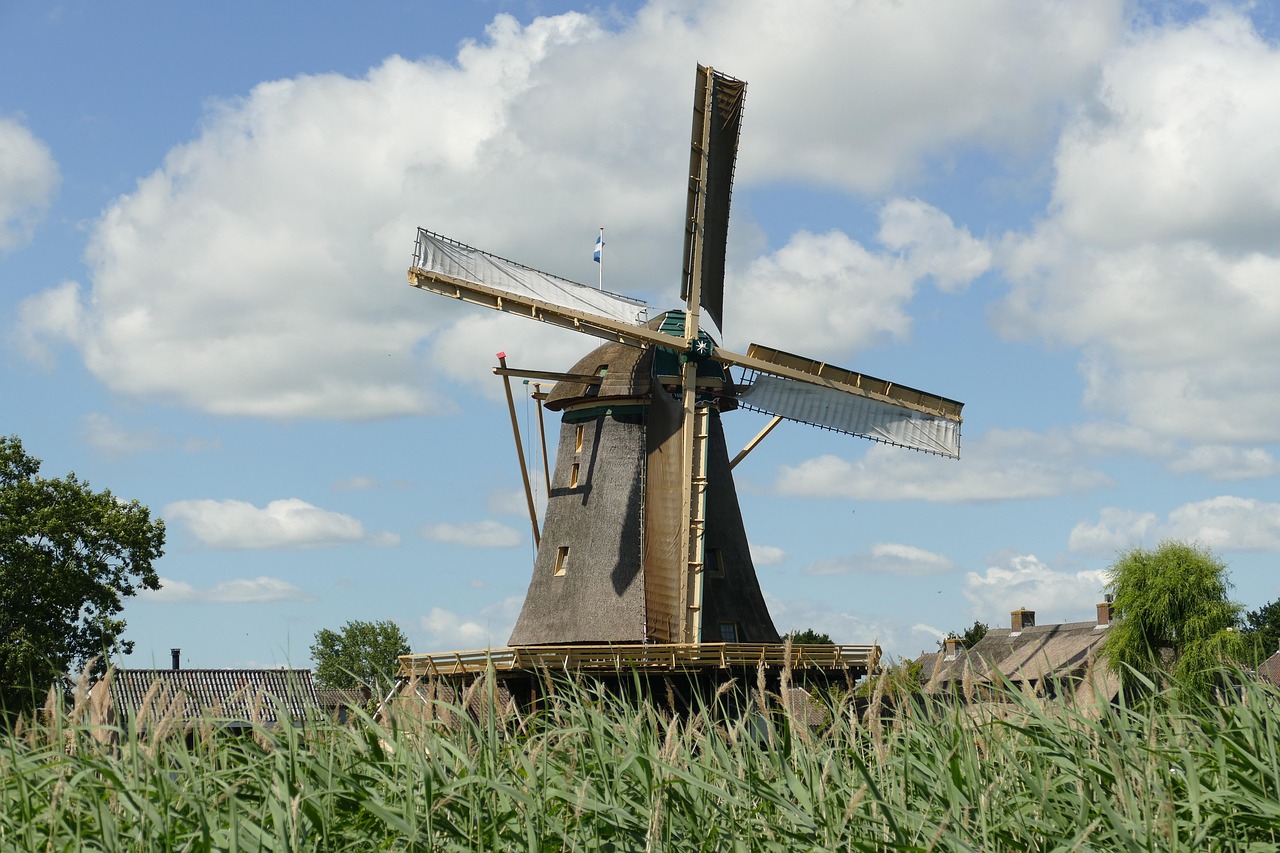
In traditional usage, a windmill converts wind into mechanical work, such as pumping water or milling grain. A modern home wind turbine converts wind into electricity. Many people search for wind mill for home when they mean a small residential wind turbine.