
Why wind solutions now go beyond turbines
Wind solutions in 2026 are increasingly defined by system value, not only by installed megawatts. Turbines remain the most visible part of a project, but many of the harder decisions now sit around grid access, permitting, forecasting, curtailment, storage, supply chains and long-term operations. For developers, utilities and energy buyers, a stronger wind strategy means matching the right turbine and site design with a realistic plan for when, where and how electricity can be delivered. Modern wind solutions are therefore moving from equipment-led procurement toward integrated project design and active grid participation.
Scale is a major reason for this shift. IRENA’s Renewable Capacity Statistics 2026, released in April 2026, reported that global renewable power capacity reached 5,149 GW by the end of 2025, after 692 GW of additions during the year. Wind capacity grew by 14% from 2024, with record additions of 158.7 GW in 2025. The International Energy Agency’s Global Energy Review 2026 similarly estimated that annual wind capacity additions increased by nearly 40% in 2025 to around 160 GW. These figures point to strong momentum, but they also explain why integration has become a central issue for new projects.

What the latest market data says about wind deployment
The current wind market is strong, but uneven. Solar PV still accounts for the largest share of new renewable capacity, while wind remains a core source of large-scale renewable electricity, especially in markets with good land-based resources, offshore zones or strong corporate power purchase demand.
| Indicator | Recent figure | What it means for wind solutions |
|---|---|---|
| Global renewable capacity at end-2025 | 5,149 GW, according to IRENA | Wind projects are being planned inside larger, more complex renewable grids. |
| Wind capacity additions in 2025 | 158.7 GW, according to IRENA | Project execution, manufacturing capacity and grid connection capacity matter as much as turbine availability. |
| Renewable additions in 2025 | About 800 GW, according to the IEA | Wind must compete for grid capacity, capital and permitting resources. |
| Wind and solar generation share in 2025 | 17% of global electricity generation, according to the IEA | Variable renewable output is now large enough to shape power system operations. |
| Onshore wind cost in 2024 | Global average LCOE of USD 0.034/kWh, according to IRENA | Cost competitiveness is strong, but total project value depends on timing, location and grid flexibility. |
Cost data is especially important. IRENA’s Renewable Power Generation Costs in 2024 report found that onshore wind remained one of the lowest-cost options for new electricity generation, with a global average levelized cost of USD 0.034/kWh. Even so, a low generation cost does not automatically translate into easy deployment. A project with excellent wind resources can still face delays or weaker returns if transmission is unavailable, interconnection queues are long, or local permitting remains uncertain.
The main layers of a modern wind solution
A practical wind solution is a stack of decisions across the full project life cycle. Each layer affects bankability, output and long-term performance.
Resource assessment and site design
Resource assessment remains the foundation. Developers use wind measurements, long-term weather data, terrain analysis and wake modelling to estimate production and reduce uncertainty. The objective is not simply to find the windiest location. It is to design a site where turbine spacing, road access, foundation requirements, environmental constraints and grid connection can work together.
Turbine selection and project configuration
Turbine choice depends on wind class, hub height, rotor diameter, transport constraints, climate conditions and maintenance strategy. Larger turbines can reduce the number of machines required for a given capacity, but they may also increase logistics complexity, crane requirements and component risk. Offshore wind adds another layer because foundation type, vessel availability, port infrastructure and seabed conditions can dominate project economics.
Forecasting, control and digital operations
Once a project is operating, forecasting and control systems become central. Better short-term forecasts help grid operators schedule dispatch and reduce balancing costs. Condition monitoring can detect gearbox, blade, generator or pitch-system issues before they become major failures. For owners, these digital tools are not just software add-ons; they help protect availability and revenue.
Repowering and life extension
In mature markets, repowering is becoming a larger part of the wind solutions landscape. Replacing older turbines with newer models can raise output from existing wind sites, especially where grid connections, land rights and community familiarity already exist. Life extension is different: it keeps assets operating beyond the original design life when inspections, component health and regulatory approvals support it. Both approaches can be lower-impact alternatives to building on entirely new sites, although they still require engineering and permitting discipline.
Grid integration is now the decisive challenge
As wind and solar reach higher shares of electricity supply, project value depends more heavily on grid integration. The IEA reported that wind and solar together supplied 17% of global electricity generation in 2025, up from about 5% a decade earlier. That growth changes how power systems are planned and operated.
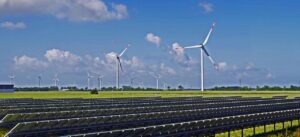
Three integration issues stand out. First, transmission capacity must be available where the best wind resources are located. Many high-quality wind regions are far from demand centers, so a turbine-only approach can leave projects waiting for grid upgrades. Second, curtailment risk becomes more important. If too much electricity is produced at the same time in a congested area, some output may be reduced or priced very low. Third, flexibility becomes valuable. Batteries, demand response, hydropower, interregional transmission, hydrogen production and hybrid solar-wind configurations can all help align renewable output with demand.
This does not mean every wind project needs a battery. Storage should be evaluated against local price patterns, grid rules, ancillary service markets and curtailment risk. In some markets, better forecasting or transmission upgrades may deliver more value than colocated batteries. In others, hybrid projects can improve grid utilization and create a more stable revenue profile.
Onshore and offshore wind need different solutions
Onshore and offshore wind use the same basic energy source, but they require different planning models. Treating them as one category can lead to poor technical, commercial and financing decisions.
| Area | Onshore wind | Offshore wind |
|---|---|---|
| Typical strength | Lower cost, faster construction, mature supply chains in many markets | Stronger and more consistent wind resources, large project scale, proximity to coastal demand centers |
| Main constraint | Land use, permitting, community acceptance and grid access | High capital cost, marine logistics, port capacity, vessel availability and offtake certainty |
| Best-fit solutions | Careful siting, community engagement, repowering, grid studies and predictive maintenance | Integrated port planning, robust contracting, supply chain coordination and long-term revenue structures |
| Risk profile | More distributed, often shaped by local planning rules | More capital intensive, exposed to interest rates and construction bottlenecks |
Recent market signals show why this distinction matters. The IEA’s Renewables 2025 outlook expected cumulative onshore wind additions to grow strongly over 2025-2030, while also noting that offshore wind faced a larger relative downward revision because of cost, supply chain and policy pressures. Offshore wind remains strategically important, but it needs more disciplined risk allocation than the early growth narrative sometimes suggested.
Policy, finance and supply chains shape project quality
Wind economics are sensitive to financing costs because most expenses are paid upfront. When interest rates rise, capital-intensive projects such as offshore wind are affected more than fuel-based generation, where operating costs play a larger role. This is one reason auction design, contract indexation, inflation treatment and offtake credit quality now matter so much. See also: clean energy.
Policy also affects deployment speed. Clear permitting rules, predictable grid connection processes and stable procurement frameworks can lower uncertainty. Sudden rule changes, by contrast, can delay projects even when technology costs are attractive. The IEA has highlighted permitting, grid connection waiting times, supply chain bottlenecks and policy shifts as key factors affecting wind deployment forecasts.
Supply chains remain another practical issue. Blades, towers, nacelles, gearboxes, power electronics, cables and offshore installation vessels all have lead times. Larger turbines can improve energy capture, but rapid scaling can stress manufacturing quality and logistics. Strong wind solutions therefore include supplier due diligence, realistic construction schedules, spare parts planning and contingency strategies.
A practical checklist for evaluating wind solutions
For energy buyers, investors and project teams, the most useful question is not whether wind works. It is whether a specific wind solution is well matched to its site, market and grid conditions. A practical screening process should include the following checks:
- Resource quality: Is the wind regime measured, modelled and validated over a long enough period?
- Grid access: Is there firm interconnection capacity, and what upgrades may be required?
- Revenue model: Will income come from merchant prices, auctions, corporate PPAs, green certificates or a hybrid structure?
- Curtailment exposure: How often might output be reduced because of congestion or oversupply?
- Technology fit: Are the selected turbines proven for the site’s wind class, climate and logistics limits?
- Community and environmental planning: Are visual impact, noise, wildlife, land rights and local benefits addressed early?
- Operations strategy: Are monitoring, maintenance access, spare parts and warranty terms realistic?
- End-of-life planning: Is there a plan for repowering, recycling, decommissioning or life extension?
This checklist helps separate a simple equipment purchase from a bankable wind strategy. It also reflects the direction of the market: the best wind projects are designed around electricity system needs, not only around annual energy production.
What to watch next
Several developments will shape wind solutions through the rest of the decade. Grid buildout is the first. Without faster transmission and interconnection reform, strong wind resources may remain underused. The second is hybridization. Pairing wind with solar, storage or flexible demand can improve the use of grid connections and reduce revenue volatility. The third is repowering. Older wind fleets in Europe, China, India and the United States create opportunities to increase output without opening entirely new development zones.
Offshore wind will also remain important, but the sector is likely to be more selective. Projects with strong seabed data, reliable ports, stable offtake and realistic cost assumptions will be better positioned than projects that depend on optimistic construction timelines. Floating offshore wind may open deeper-water markets over time, but it still requires cost reduction, supply chain maturity and supportive policy frameworks before broad commercial scale is likely.
Frequently asked questions
What are wind solutions?
Wind solutions are the technologies, services and planning methods used to develop, connect and operate wind energy projects. They include resource assessment, turbine selection, foundations, grid studies, forecasting, maintenance, storage integration, repowering and community planning.
Why is grid integration so important for wind energy?
Wind output varies with weather, and the best wind resources are often far from major demand centers. Grid integration helps ensure that electricity can be delivered when it is produced, priced efficiently and balanced with other sources of supply and demand.
Is onshore wind still cost competitive?
Yes. IRENA’s 2024 cost analysis reported a global average onshore wind LCOE of USD 0.034/kWh, making it one of the most cost-competitive sources of new electricity. However, local costs vary, and grid access, permitting and financing can strongly affect final project economics.
Do wind projects always need energy storage?
No. Storage can be valuable where curtailment is high, price spreads are wide or ancillary service markets are available. In other cases, better transmission, improved forecasting or flexible demand may offer a better solution than colocated batteries.
What makes a wind project bankable?
A bankable wind project usually combines strong wind data, secure land or seabed rights, credible permits, proven technology, firm grid access, reliable offtake, realistic construction costs and a clear operations plan. Weakness in any one of these areas can affect financing and long-term performance.