
The clean energy global picture changed in 2025. Renewables moved ahead of coal in global electricity generation for the first time in more than a century, and solar became the main source of new power supply growth. That milestone does not mean the energy transition is finished. It means the harder work is shifting toward grids, storage, market rules and financing systems that can turn renewable output into reliable electricity. Reports published in 2026 by the International Energy Agency, IRENA and Ember point in the same direction: clean power is growing fast enough to reshape electricity markets, but deployment remains uneven and fossil fuel demand has not disappeared. (iea.org)
For more background on related developments, visit our clean energy section.
Why 2025 became a turning point for global clean energy
The most important change in 2025 was not one project or one policy announcement. It was the combination of record renewable additions, rapid solar generation growth and a measurable shift in the global power mix. Ember’s 2026 global electricity analysis, as reported by AP News, found that clean power generation grew by 887 terawatt-hours in 2025, exceeding the 849 terawatt-hours increase in global electricity demand. Ember also reported that renewables produced 33.8% of global electricity, slightly ahead of coal at 33.0%. (apnews.com)
This distinction matters. For many years, renewables grew quickly, but rising electricity demand often allowed coal and gas generation to grow at the same time. In 2025, clean generation growth was large enough to cover the increase in demand at the global level. The IEA reached a similar broad conclusion in its Global Energy Review 2026, stating that the increase in generation from renewables and nuclear power exceeded total growth in electricity supply in 2025. (iea.org)
The turning point still needs to be read carefully. It applies most directly to electricity. Total energy demand also includes transport fuels, industrial heat, buildings and feedstocks, where fossil fuels remain deeply embedded. The IEA reported that oil, natural gas and coal demand all grew in 2025, although more slowly than in 2024. In other words, clean electricity is advancing faster than the wider energy system is decarbonizing. (iea.org)
Solar is setting the pace, but wind and storage still matter
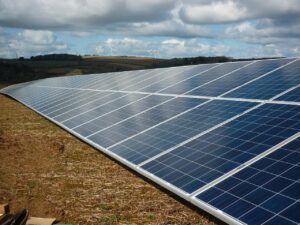
Solar PV was the standout technology in 2025. The IEA reported that solar PV generation increased by 600 terawatt-hours, the largest one-year electricity generation increase ever recorded by any source outside periods of post-crisis recovery. According to the agency, solar alone met around 70% of global electricity generation growth. (iea.org)
Capacity data tells a similar story. IRENA’s Renewable Capacity Statistics 2026 reported that renewable capacity reached 5,149 gigawatts by the end of 2025 after 692 gigawatts of additions. Solar accounted for about 510 gigawatts of that increase, while wind added 159 gigawatts. The IEA uses a different accounting approach and estimated annual renewable capacity additions at 800 gigawatts, with solar representing more than three-quarters of additions and wind about 20%. The difference is a useful reminder that headline figures can vary by methodology, even when the overall trend is clear. (irena.org)
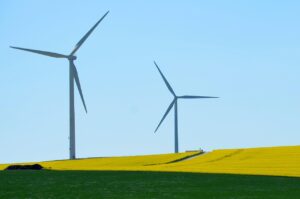
Wind remains important even when solar dominates annual additions. Wind output often has a different daily and seasonal profile from solar, which can reduce the amount of storage, backup and curtailment required in high-renewables systems. The IEA reported that annual wind capacity additions reached around 160 gigawatts in 2025 after increasing nearly 40% globally. (iea.org)
Battery storage is also moving from a supporting technology to a core part of the clean power system. The IEA said battery storage was the fastest-growing power technology in 2025, with additions rising around 40% to almost 110 gigawatts. That matters because higher solar and wind penetration increases the value of flexible resources that can shift electricity across hours and help stabilize grids. (iea.org)
A data snapshot of the global shift
| Indicator | Latest reported figure | Why it matters |
|---|---|---|
| Renewables share of global electricity | 33.8% in 2025, according to Ember | Renewables moved slightly ahead of coal as the largest power source. |
| Coal share of global electricity | 33.0% in 2025, according to Ember | Coal remained a major source of power, but its share fell below renewables. |
| Renewable installed power capacity | 5,149 GW at the end of 2025, according to IRENA | Renewables reached nearly half of global installed power capacity. |
| New renewable capacity | 692 GW in 2025 by IRENA accounting | Solar and wind continued to dominate new clean power deployment. |
| Solar PV generation growth | 600 TWh in 2025, according to the IEA | Solar became the largest contributor to electricity generation growth. |
| Battery storage additions | Almost 110 GW in 2025, according to the IEA | Storage is becoming a critical flexibility resource for renewable-heavy grids. |
These figures show why the clean energy transition can no longer be assessed only by installed capacity. Generation, flexibility, regional distribution and market integration are becoming just as important as new megawatts.
Investment is moving toward electricity infrastructure
Clean energy growth is increasingly linked to capital allocation. The IEA’s World Energy Investment 2026 report projected global energy investment at about $3.4 trillion in 2026. Around $2.2 trillion is expected to go to grids, storage, low-emissions fuels, nuclear, renewables, efficiency and electrification, compared with about $1.2 trillion for oil, natural gas and coal. (iea.org)
The detail behind those numbers is more useful than the total. Renewable power projects are expected to attract about $665 billion in 2026, with solar accounting for roughly $365 billion. Spending on electricity grids is projected to approach $550 billion, and battery storage investment is expected to exceed $100 billion. Together, these figures suggest that the bottleneck is moving from clean generation costs alone to the infrastructure needed to connect, balance and deliver electricity. (iea.org)
This is a practical issue for developers, utilities and policymakers. A solar project that waits years for grid connection does not help meet demand on time. A wind farm located far from load centers needs transmission. A power market with negative prices during sunny hours may need better storage incentives, demand response or tariff reform. As clean energy becomes a larger share of supply, system design becomes as important as technology cost.
Regional deployment remains highly uneven
The global average hides a major imbalance. IRENA reported that China, the United States and the European Union together accounted for 550 gigawatts, or 79.5%, of new renewable capacity installed in 2025. Africa accounted for 11.3 gigawatts, or 1.6%, even though the continent has large energy access needs and strong renewable resources. (irena.org)
This uneven deployment has several implications. Countries adding the most capacity are likely to gain faster experience with grid integration, battery deployment, digital energy management and clean technology supply chains. Regions with slower deployment may face higher exposure to imported fuel prices and delayed industrial competitiveness. Global climate goals also become harder to meet if low-cost capital is not available in emerging and developing economies. See also: EVs.
Finance is therefore not only a climate issue; it is also an energy security issue. High interest rates, currency risks and weaker grids can make renewable projects more expensive even where solar or wind resources are strong. That is why international finance, local policy stability, grid planning and bankable power purchase structures matter as much as headline technology costs.
The main constraints are now system constraints
Three constraints stand out in the next phase of global clean energy growth.
- Grid connection and transmission: More renewable projects are waiting behind interconnection queues or facing curtailment because grids were not built for large volumes of variable generation.
- Flexibility: Batteries, pumped hydro, demand response, interconnectors and flexible generation are needed to match supply and demand across hours, days and seasons.
- Policy and market design: Auctions, permitting, tariffs and capacity mechanisms need to reward reliability and flexibility, not only the lowest generation price.
The IEA noted that renewable growth in 2025 came despite supply chain strains, grid connection delays, financial pressures and policy shifts. That wording matters because it identifies the operational risk. The economics of solar and wind may be strong, but weak infrastructure and uncertain rules can still slow deployment. (iea.org)
There is also a communications challenge. When renewables overtake coal in annual electricity generation, some readers may assume fossil fuels are no longer central. That would be misleading. Coal, gas and oil still supply large parts of the global energy system, and many countries continue to use fossil plants for reliability, heat, industry and transport. The clean energy global transition is advancing, but it remains incomplete and uneven.
What to watch next
The most useful indicators over the next few years will go beyond annual capacity additions. Readers should watch whether fossil fuel generation in the power sector continues to decline in absolute terms, whether grid investment keeps pace with renewable growth, whether storage deployment scales outside leading markets and whether emerging economies gain access to lower-cost finance.
Another key signal is electrification. The IEA reported that electricity demand grew at well over twice the rate of overall energy demand in 2025. Electric vehicles, data centers, heat pumps and industrial electrification are all increasing the importance of clean power. If electricity demand keeps rising, clean generation must grow even faster simply to reduce fossil output rather than only meet new demand. (iea.org)
For businesses, the takeaway is strategic rather than symbolic. The clean energy transition is no longer a distant policy scenario. It is affecting procurement, power prices, grid planning, manufacturing locations, storage economics and energy security decisions. Companies that understand local grid constraints, contract structures and renewable availability will be better positioned than those that only track global capacity headlines.
Frequently asked questions
Did renewables really overtake coal globally in 2025?
Yes, in the electricity sector, according to Ember’s Global Electricity Review 2026. Ember reported that renewables generated 33.8% of global electricity in 2025, compared with 33.0% for coal. This does not mean coal disappeared; it remained one of the world’s largest power sources.
Is clean energy now growing fast enough to replace fossil fuels?
Clean electricity grew fast enough to meet the increase in global electricity demand in 2025, but the broader energy system still uses large volumes of oil, gas and coal. Replacing fossil fuels across transport, industry and heating will require faster electrification, efficiency gains and clean fuels where direct electrification is difficult.
Why is solar growing faster than other clean energy technologies?
Solar PV benefits from modular construction, shorter project timelines and broad geographic availability. In 2025, it accounted for the majority of new renewable capacity and the largest share of electricity generation growth. However, high solar shares increase the need for storage, grid flexibility and better demand management.
What is the biggest barrier to global clean energy growth now?
The biggest barrier is increasingly system integration rather than generation technology alone. Grid capacity, permitting, financing costs, storage, market rules and regional inequality can all slow the conversion of low-cost renewable resources into reliable electricity supply.