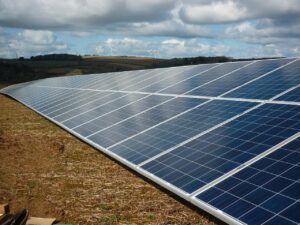


Storage and solar are now being planned together because the value of solar electricity depends not only on how much power a project generates, but also on when that power can be used. Solar PV can produce large volumes of low-cost electricity during the middle of the day. Batteries can move part of that output into evening peaks, outage windows, grid-constrained hours, or commercial demand spikes. Data from the International Energy Agency, the U.S. Energy Information Administration, and SEIA with Benchmark Mineral Intelligence shows that this is no longer a niche design choice. It is becoming a mainstream power strategy across utility, commercial, and residential markets.
This article looks at what is changing, where the strongest use cases are, and which limits still matter when batteries are paired with solar projects.

Why storage and solar are moving together
A solar-only project produces electricity when sunlight is available. That can work well when the goal is to reduce daytime grid consumption or sell power into a market that needs midday energy. As solar penetration rises, however, the most valuable hours often move later in the day, when solar output is falling and demand can remain high. Storage helps close that timing gap.
The principle is straightforward: a battery charges from a solar PV system, the grid, or both, then discharges when electricity is more useful. In a home, that may mean using daytime solar after sunset or keeping selected circuits running during an outage. In a commercial facility, it may mean reducing demand charges, increasing self-consumption, or supporting operations where grid capacity is limited. At utility scale, it often means shifting low-cost solar power into evening peaks, reducing curtailment, or providing grid services such as fast ramping and frequency response.
The U.S. Department of Energy describes solar-plus-storage as a battery system charged by a connected solar system. That simple definition leaves an important design point open: not every battery installed next to a solar project is charged only by solar, and not every solar-plus-storage system automatically provides backup power. The control strategy, interconnection agreement, inverter design, and electrical configuration determine what the system can actually do.
The 2026 data signal is scale, not experimentation
The strongest signal in 2026 is that storage is scaling while solar continues to expand. According to the IEA Global Energy Review 2026, solar PV generation increased by about 600 terawatt-hours in 2025, the largest annual electricity generation increase ever recorded by any source outside post-crisis recovery periods. The same IEA review reported that global battery storage additions reached 108 GW in 2025, about 40% above 2024 levels, with lithium iron phosphate batteries accounting for around 90% of deployments.
In the United States, the trend is visible in both planned capacity and operating assets. The EIA reported in February 2026 that U.S. developers planned to add 86 GW of new utility-scale electric generating capacity in 2026 if projects were completed as scheduled. Solar represented 51% of that planned capacity, while battery storage represented 28%. In a separate August 7, 2026 analysis, EIA said U.S. utility-scale battery storage reached nearly 52 GW of nameplate capacity by the end of June 2026 after operators added 8.3 GW in the first six months of the year.
SEIA and Benchmark Mineral Intelligence reported an energy-capacity view of the market in their Energy Storage Market Outlook Q3 2026. Their executive summary said just under 31 GWh and 10.3 GW of U.S. battery energy storage entered operation in the first half of 2026 across utility-scale and behind-the-meter markets. Q2 2026 alone reached 20.2 GWh and 6.7 GW, the largest quarter reported in that dataset.
| Market signal | Recent data point | What it means for solar |
|---|---|---|
| Global solar growth | IEA reported a 600 TWh increase in solar PV generation in 2025 | More solar output creates more need for flexible demand, grid upgrades, and storage |
| Global battery growth | IEA reported 108 GW of new battery storage in 2025 | Batteries are becoming a standard flexibility resource rather than a pilot technology |
| U.S. utility plans | EIA said solar and storage made up 51% and 28% of planned 2026 U.S. utility-scale additions | Developers are planning solar and batteries as complementary capacity |
| U.S. deployment pace | SEIA and Benchmark reported 20.2 GWh of storage additions in Q2 2026 | Large projects are accelerating, especially where grid demand and solar resources align |
What storage changes in a solar project
The main change is that a solar project becomes dispatchable within limits. Solar panels still depend on irradiance, and batteries still have finite duration. But the combined system gives owners more control over when energy is used or delivered.
Time shifting and solar curtailment
In high-solar markets, midday production can exceed the grid’s immediate ability to use it. Without storage, some output may be curtailed or sold at low wholesale prices. Batteries can absorb part of that midday energy and release it during higher-value evening hours. California’s grid experience is often used as an example because high midday solar output and steep evening ramps have made battery charging and discharging patterns highly visible.
Power capacity and energy capacity
Solar and storage discussions can be confusing because they use both power and energy units. Power capacity, measured in kW, MW, or GW, describes how much electricity a system can deliver at one moment. Energy capacity, measured in kWh, MWh, or GWh, describes how long it can sustain output. A 60 MW battery with 240 MWh of energy capacity can run at full output for four hours, but it cannot deliver 240 MW unless its power electronics are designed for that level.
Backup is a design choice
A solar battery does not automatically keep a building powered during a grid outage. Backup capability depends on islanding equipment, inverter settings, transfer hardware, code compliance, and load selection. Many systems are designed to power critical loads such as refrigeration, communications, lighting, medical equipment, or selected outlets rather than an entire building. That distinction matters for homeowners and businesses buying storage for resilience rather than bill management alone.
Utility-scale, commercial, and residential use cases differ
The phrase solar-plus-storage covers several markets, but the economics are not the same in each one. Utility-scale systems are generally built to serve grid needs, capacity requirements, wholesale market opportunities, or power purchase agreements. Commercial and industrial systems often focus on demand management, resilience, and grid access. Residential systems tend to be driven by backup power, self-consumption, and changing retail rate structures.
| Segment | Primary value of storage with solar | Main limitation |
|---|---|---|
| Utility-scale | Shifts solar output, supports evening peaks, reduces curtailment, and provides grid services | Interconnection queues, permitting, transmission constraints, and market rules |
| Commercial and industrial | Manages demand charges, supports operations, and helps sites cope with limited grid capacity | Project value depends heavily on tariffs, load shape, controls, and site electrical design |
| Residential | Improves self-consumption and can provide backup for selected circuits | Economics vary by local rates, incentives, outage risk, and battery sizing |
SEIA and Benchmark’s Q3 2026 summary shows that utility-scale installations are driving most U.S. deployment momentum. In Q2 2026, the utility-scale market accounted for 18 GWh of the 20.2 GWh added, while residential storage added 657 MWh and commercial and industrial storage added 1.8 GWh. That does not make residential storage unimportant; it means the fastest near-term volume growth is coming from large projects that can connect directly to wholesale and capacity needs.
Design choices that determine project value
Pairing batteries with solar does not create value automatically. The key decisions are technical, economic, and operational. See also: clean energy.
- AC-coupled or DC-coupled architecture: AC-coupled systems connect the solar and battery through separate inverter paths, which can simplify retrofits and operational flexibility. DC-coupled systems connect the battery on the DC side, which can reduce some conversion losses and may capture clipped solar energy, but design requirements are different.
- Battery duration: Two-hour batteries may be suitable for short peaks and grid services. Four-hour systems are increasingly common in utility planning because they can cover longer evening ramps. Longer-duration technologies may be needed for multi-day resilience or deeper renewable integration.
- Inverter and controls: The inverter determines how the system interacts with the grid. Controls decide when the battery charges, discharges, reserves capacity for backup, or responds to market signals.
- Load profile: A business with a sharp afternoon demand peak may see different value from storage than a warehouse with flat consumption or a home with high evening use.
- Interconnection limits: Storage can sometimes help a project make better use of a constrained interconnection point, but rules vary by utility and market.
- Safety and maintenance: Battery systems require thermal management, fire protection planning, monitoring, and lifecycle assumptions. Replacement costs and warranty conditions should be included in financial analysis.
For readers tracking related developments, the Storage section includes additional coverage of battery markets, technologies, and grid applications.
Limits that should not be ignored
Storage improves the usefulness of solar, but it does not remove every constraint. Most lithium-ion systems deployed today are short-duration resources. They are well suited for intraday shifting, fast response, and evening peaks, but they are not a complete substitute for seasonal storage, transmission expansion, demand flexibility, or firm generation in every grid.
Project economics can also change quickly. Retail rate reforms, net metering changes, wholesale market rules, equipment costs, tariffs, and interconnection timelines can all affect returns. A system that works well in one region may not pencil out in another. This is especially important for residential customers, where the value of backup power is partly personal and not always captured by simple payback calculations.
Supply chains remain another consideration. The IEA noted that LFP batteries dominate current stationary storage deployments, which is positive for cost and cycling in many applications. However, heavy reliance on one chemistry and concentrated manufacturing regions can create procurement risk. At the same time, U.S. market summaries in 2026 show growing attention to domestic manufacturing, inverter availability, and policy rules that affect battery system sourcing.
What to watch next
The next stage of storage and solar integration will not be defined only by more batteries. It will depend on smarter controls, better market access, and more precise project design.
- Longer-duration storage: As solar shares rise, more markets may need resources that can discharge beyond the two-to-four-hour range.
- Virtual power plants: Aggregated residential and commercial batteries can provide grid services when software, customer programs, and utility rules align.
- Data center demand: SEIA and Benchmark’s 2026 commentary points to data centers as a growing factor in commercial and industrial storage demand, especially where grid capacity is hard to secure.
- Grid-forming inverters: Advanced inverter functions may become more important as power systems add more converter-based solar and batteries.
- Market design: Storage value depends on whether market rules reward capacity, flexibility, fast response, congestion relief, and clean energy shifting.
The practical takeaway is clear: solar answers the question of where clean electricity can come from; storage increasingly answers when that electricity is useful. In 2026, projects that treat those questions together are better aligned with how modern grids, businesses, and households actually use power.
Frequently asked questions
Is battery storage necessary for solar?
No. Solar can operate without a battery, and many projects still do. Storage becomes valuable when the timing of solar production does not match demand, when outage resilience is important, or when market rules reward flexible delivery.
How long can a solar battery run a home or business?
It depends on battery energy capacity, power rating, state of charge, and the loads being served. A battery sized for critical loads may run selected circuits much longer than it could run an entire building with HVAC, industrial equipment, or high-power appliances.
Can solar panels charge batteries during an outage?
They can if the system is designed for islanded operation and allowed by code and equipment settings. A standard grid-tied solar system without the right inverter and isolation equipment normally shuts down during an outage to protect utility workers and equipment.
What is the difference between standalone storage and solar-plus-storage?
Standalone storage is a battery system that may charge from the grid or another source. Solar-plus-storage is physically or operationally connected to a solar PV system. Some co-located batteries can charge from both solar and the grid depending on market rules, tax treatment, and interconnection design.
Is four-hour battery storage enough?
Four-hour storage is useful for many intraday applications, especially shifting solar into evening peaks. It is not enough for every reliability challenge. Multi-day outages, seasonal gaps, and extreme weather events may require additional resources, demand flexibility, backup generation, or longer-duration storage technologies.