
Nation’s Largest Wind Farm Comes Online in New Mexico
New Mexico’s newest large-scale renewable project marks a turning point for hybrid energy systems. The integration of wind turbines with solar panels at this site showcases how co-located technologies can deliver stable, round-the-clock power. By combining two complementary resources—strong winds and abundant sunlight—the facility achieves higher efficiency and lower grid variability than single-source projects. This model is expected to guide future developments across the American Southwest.
Integration of Solar Panels with Wind Turbines in Large-Scale Energy Projects
The growing demand for reliable clean energy has pushed developers to combine multiple renewable sources within one footprint. Hybrid systems merge distinct generation profiles to produce a more consistent output while cutting infrastructure costs.
The Concept of Hybrid Renewable Systems
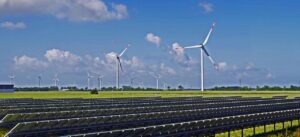
Pairing solar and wind allows each resource to compensate for the other’s downtime. Solar panels generate maximum power during daylight, whereas wind turbines often peak at night or during cloudy conditions. Together, they smooth out fluctuations that typically challenge standalone renewable plants. Shared foundations, cabling, and substation assets further reduce capital expenses, making hybridization an attractive proposition for utility-scale investors exploring the wind turbine with solar panels configuration.
Engineering Considerations for Co-Located Systems
Designing such systems requires careful structural planning. Mounting solar arrays near turbine towers must account for shading patterns and maintenance access routes. Electrical engineers face synchronization challenges between inverters handling variable inputs from both sources. Grid codes under IEEE and IEC standards specify voltage regulation and fault-ride-through capabilities that hybrid systems must meet before interconnection approval.
Maintenance Strategies to Minimize Downtime Across Both Systems
Maintenance teams adopt predictive analytics based on sensor data to schedule service intervals efficiently. Cleaning schedules for photovoltaic modules are coordinated with turbine inspections to minimize equipment idling. Using drones for blade inspection while monitoring solar string performance remotely helps maintain continuous operation across assets.
Assessing Efficiency Gains in New Mexico’s Largest Wind Farm
This facility sits in one of the most favorable renewable corridors in North America. The state’s high desert climate provides both strong winds and intense sunlight—ideal conditions for hybrid generation.
Geographic and Climatic Factors Influencing Output
New Mexico averages over 300 sunny days annually, giving its photovoltaic modules a high capacity factor compared to northern states. Meanwhile, steady wind speeds across the plains sustain turbine efficiency throughout much of the year. Seasonal shifts slightly alter production curves, but combined operation balances these variations naturally.
Comparative Analysis of Standalone vs. Hybrid Configurations
When modeled over a full year, dual-source setups typically yield 10–15% more total energy than separate installations occupying equivalent land area. The complementary cycle cuts intermittency by aligning day-night production phases, improving dispatchability into regional grids managed under ISO protocols.
Cost-Benefit Implications Over the Operational Lifespan of the Facility
Although initial capital costs rise due to added components, shared substations and transmission lines offset long-term expenses. Over a 25-year horizon, levelized cost of energy (LCOE) analyses show meaningful reductions compared with independent wind or solar projects.
Technological Innovations Driving Hybrid Wind-Solar Systems
Recent material science advances and digital controls have made integrated renewables more practical than ever before. Engineers now focus on seamless design integration rather than simple co-location.
Advances in Materials and Design Integration
Lightweight photovoltaic laminates can be attached directly onto turbine towers without compromising aerodynamics. Some prototypes even embed flexible cells along blades’ trailing edges to capture diffuse light reflection from below—though still experimental, this approach hints at future compact designs minimizing land use.
Smart Tracking Systems Optimizing Solar Panel Orientation Relative to Turbine Shadowing
Advanced tracking algorithms adjust panel tilt angles dynamically based on turbine rotation data to avoid shading losses during peak hours. These systems rely on machine learning models that analyze real-time irradiance patterns combined with yaw sensor inputs from turbines.
Use of Advanced Composites to Maintain Aerodynamic Efficiency While Integrating Solar Modules
Composite materials such as carbon-reinforced polymers allow integration without adding significant weight or drag to structures. Manufacturers test these hybrids under IEC 61400 standards ensuring mechanical integrity under extreme wind loads.
Power Management and Storage Solutions
Balancing variable inputs from two intermittent resources demands sophisticated control hardware and storage capacity.
Role of Hybrid Inverters in Managing Variable Inputs from Wind and Solar Sources
Hybrid inverters consolidate DC outputs before conversion, synchronizing phase angles for smooth grid injection. They also manage reactive power compensation automatically—a key requirement under modern grid codes emphasizing stability during transient events.
Incorporation of Battery Storage to Stabilize Grid Output During Low-Generation Periods
Battery banks absorb surplus daytime energy then discharge overnight when winds weaken or demand spikes unexpectedly. Lithium iron phosphate chemistries dominate due to their long cycle life suited for daily balancing tasks rather than seasonal storage.
Data-Driven Control Systems Optimizing Dispatch Based on Real-Time Demand and Weather Forecasts
Supervisory control software integrates meteorological forecasts with market pricing signals, adjusting output schedules minute by minute. This predictive dispatch reduces curtailment losses common in oversupplied grids like those emerging across the Southwest corridor.
Environmental and Economic Implications for New Mexico’s Energy Landscape
Hybridization not only improves technical performance but also reshapes environmental planning and economic modeling within state-level renewable portfolios.
Environmental Footprint Reduction through Hybridization
By hosting two generation types on one site, land use per megawatt decreases significantly compared with separate facilities spread across multiple parcels. Lifecycle assessments indicate lower embodied emissions due to shared roads, cables, and foundations—all contributing toward New Mexico’s carbon-neutrality objectives outlined by state mandates aligned with IEA sustainability metrics.
Economic Viability and Investment Perspectives
Investors see strong returns driven by federal tax credits under current U.S. incentive frameworks supporting integrated renewables. Shared maintenance contracts reduce operational expenditure while diversified revenue streams stabilize cash flow against weather-related volatility—a frequent concern among pure-play wind operators.
Future Outlook for Hybrid Renewable Farms in the Southwestern United States
The success seen in New Mexico sets a precedent likely to influence development strategies throughout similar climates across Arizona, Nevada, and West Texas where both solar irradiance and wind potential are abundant.
Scalability Across Similar Geographic Regions
Grid planners already evaluate interconnection upgrades capable of handling multi-source inflows from planned hybrid clusters along transmission corridors linking the Four Corners region with California markets.
Research Directions and Policy Support Mechanisms
Ongoing R&D focuses on aerodynamic interactions between rotating blades and nearby solar arrays—a subtle but crucial factor affecting efficiency margins at scale. Policymakers are considering targeted grants encouraging co-located deployments that maximize existing right-of-way usage while minimizing ecological disruption through consolidated permitting processes.
FAQ
Q1: Why combine wind turbines with solar panels in one project?
A: Because their generation cycles complement each other—solar peaks during day hours while wind often strengthens at night—reducing overall intermittency.
Q2: What challenges arise when integrating these technologies?
A: Key issues include inverter synchronization, shading management near tall structures, and ensuring compliance with grid stability standards like IEEE 1547.
Q3: How does New Mexico benefit from this hybrid approach?
A: Its high solar irradiance paired with consistent winds allows efficient year-round operation using fewer transmission assets per megawatt generated.
Q4: Are there environmental advantages beyond emissions reduction?
A: Yes, co-location minimizes habitat fragmentation since both resources share roads, substations, and maintenance zones within a single footprint.
Q5: Will hybrid farms replace standalone renewables entirely?
A: Not entirely; they’ll complement existing assets where conditions suit both resources but remain part of a broader diversified clean-energy portfolio across the region.