
Lathbury Wind Turbine Plan Sparks Discussion on Clean Energy and Conservation
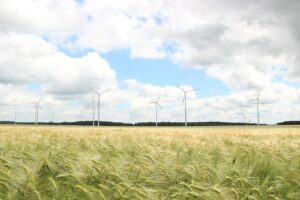
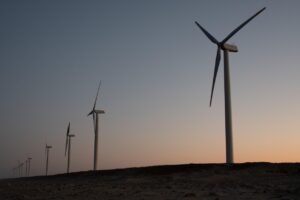
The Lathbury wind turbine plan has become a focal point in the region’s clean energy debate. Experts view it as both a technological opportunity and an ecological test. The project aims to expand renewable generation capacity while addressing community concerns about landscape impact and biodiversity. Its evaluation of spiral wind turbine technology adds a fresh dimension to the conversation, suggesting that innovation in design could enhance efficiency and reduce noise. Overall, the plan reflects a broader shift toward sustainable infrastructure aligned with national decarbonization goals.
The Context of the Lathbury Wind Turbine Plan
The proposed initiative in Lathbury demonstrates how local projects can align with larger climate strategies. Its planning process blends engineering feasibility with environmental sensitivity, balancing technical ambition and social acceptance.
Overview of the Lathbury Renewable Energy Initiative
The Lathbury plan targets increased renewable electricity generation through onshore wind deployment. It supports regional commitments to achieve net-zero emissions by mid-century, consistent with national frameworks such as the UK’s Clean Growth Strategy. The project scope includes multiple turbine installations designed to supply power for thousands of households annually. Public consultation has emphasized maintaining rural character and minimizing visual intrusion, leading planners to adopt moderate tower heights and strategic siting away from heritage zones.
Technical Specifications and Site Conditions
Preliminary assessments indicate that the site.
Understanding Spiral Wind Turbine Technology
Interest in spiral wind turbine systems has grown as developers seek quieter, more compact solutions for semi-urban or ecologically sensitive areas. Their distinctive geometry offers performance benefits under variable wind conditions.
Design Principles Behind Spiral Turbines
Spiral or helical turbines employ twisted blades arranged around a vertical axis, enabling continuous rotation regardless of wind direction. This design eliminates yaw mechanisms common in horizontal-axis machines, simplifying operation in turbulent flows. The aerodynamic twist distributes torque evenly along the blade length, reducing peak stresses on bearings and shafts. Compared with conventional three-blade rotors, spiral configurations exhibit smoother rotational dynamics and lower tip-speed ratios, which contributes to reduced acoustic output—an important factor near residential zones.
Efficiency Metrics and Performance Evaluation
Performance studies show that spiral turbines achieve power coefficients (Cp) typically between 0.25 and 0.35 under optimal conditions—slightly below large horizontal-axis units but more stable across fluctuating speeds. Their ability to capture energy from multidirectional gusts improves reliability in low-wind regions where traditional designs stall frequently. Laboratory tests using scaled prototypes confirm that turbulence tolerance remains high due to distributed lift forces along the helical surface. While commercial scaling remains limited, modular arrays could provide cumulative capacity comparable to standard farms if integrated effectively.
Comparative Analysis: Spiral vs Conventional Wind Turbines
Comparing these two technologies reveals trade-offs between efficiency, durability, environmental footprint, and lifecycle economics that directly affect project decisions like those facing Lathbury planners.
Energy Yield and Operational Efficiency
Conventional turbines maintain higher average capacity factors—often above 40%—whereas spiral systems typically range from 25% to 35%. However, their simpler mechanics reduce downtime caused by yaw errors or gearbox wear. Maintenance cycles are shorter since vertical-axis assemblies allow ground-level servicing without heavy cranes. Early pilot installations suggest lifespan parity of roughly twenty years when corrosion-resistant materials are applied.
Environmental and Acoustic Footprint
Spiral turbines rotate at lower speeds with smaller swept areas per unit height, mitigating bird strike risks compared with large horizontal-axis machines whose fast-moving tips pose hazards to avian species. Noise measurements indicate reductions up to 10 dB under similar output loads due to slower tip velocities and aerodynamic damping along curved blades. Material use is also lighter; many prototypes employ composite shells recyclable through thermoplastic recovery methods now standardized under ISO 14040 lifecycle assessment protocols.
Integration Potential Within the Lathbury Project Framework
Integrating spiral systems into an existing wind development requires compatibility across grid interfaces, control software, and maintenance logistics—all central considerations for hybrid renewable parks like Lathbury’s proposal.
Technical Compatibility with Existing Infrastructure
Grid synchronization presents modest challenges since spiral turbines generate variable-frequency AC requiring inverter-based conversion similar to solar PV systems. Modern SCADA controls can accommodate mixed arrays by assigning adaptive algorithms for reactive power regulation across differing turbine types. Retrofitting could involve installing spiral units along boundary zones where turbulence is higher or space constraints limit tower placement.
Economic Feasibility Assessment
Capital expenditure per installed megawatt remains slightly higher for spiral designs due to lower mass production volumes; estimates place costs around USD 1.6 million per MW versus USD 1.3 million for standard models (IEA data). Yet operational savings may offset this gap over time through reduced mechanical failures and simplified service routines. Funding incentives supporting innovative low-noise or urban-compatible turbines could further improve financial viability under regional clean-tech grants.
Broader Implications for Clean Energy Development
The adoption of unconventional turbine geometries within mainstream projects signals a maturing renewable sector willing to experiment beyond established norms while maintaining accountability for environmental outcomes.
Influence on Regional Renewable Strategy
If implemented successfully at Lathbury, spiral technology could diversify local generation portfolios by adding distributed vertical-axis clusters suitable for mixed-use landscapes. Such diversification enhances grid resilience against weather variability and supports carbon reduction trajectories consistent with IRENA’s pathway analysis emphasizing technology heterogeneity as key to achieving net-zero targets by 2050.
Future Research Directions in Turbine Innovation
Further study is required on advanced composites capable of sustaining torsional loads unique to helical blades without fatigue degradation over long duty cycles. Computational fluid dynamics modeling continues refining pitch angles for optimal lift-to-drag ratios under turbulent inflow conditions typical of inland valleys like Lathbury’s site area. Collaboration among universities, manufacturers, and policymakers remains essential to move these concepts from prototype scale toward full commercial maturity within global standards frameworks such as IEC 61400 series testing protocols.
FAQ
Q1: What distinguishes a spiral wind turbine from traditional horizontal-axis types?
A: It uses vertically oriented helical blades that spin regardless of wind direction, eliminating yaw mechanisms common in conventional designs.
Q2: How efficient are spiral turbines compared with standard models?
A: They produce slightly less peak efficiency but maintain steadier output across varying winds thanks to omnidirectional capture capability.
Q3: Are spiral turbines quieter than conventional ones?
A: Yes, their slower tip speed reduces aerodynamic noise significantly, making them suitable near residential areas.
Q4: Could spiral turbines replace existing units at Lathbury entirely?
A: Full replacement is unlikely initially; hybrid deployment combining both types would balance performance with proven reliability data.
Q5: What future improvements might enhance spiral turbine performance?
A: Advances in lightweight materials, control algorithms for variable winds, and cost-effective manufacturing could boost their competitiveness in large-scale projects.