
Solar Energy Covered Rooftops and Deserts, but Now It’s Preparing a Mountain of Old Glass: up to 78 Million Tons of Photovoltaic Panels Could Become Waste by 2050 as the World Races to Recycle the Shiny Skin of the Energy Transition
Photovoltaics have become central to global decarbonization, but their success brings a looming waste challenge. By 2050, an estimated 78 million tons of solar panels could reach end-of-life, forming an industrial-scale glass waste stream. The coming decades will test whether recycling systems can match the pace of solar deployment. The answer lies in rethinking material design, scaling recovery infrastructure, and embedding circularity into policy frameworks before this mountain of glass becomes an environmental liability.
The Expanding Role of Photovoltaics in the Global Energy Transition
The photovoltaic (PV) industry has moved from niche technology to a cornerstone of modern energy systems. Its growth reflects both technological maturity and policy-driven momentum toward carbon neutrality.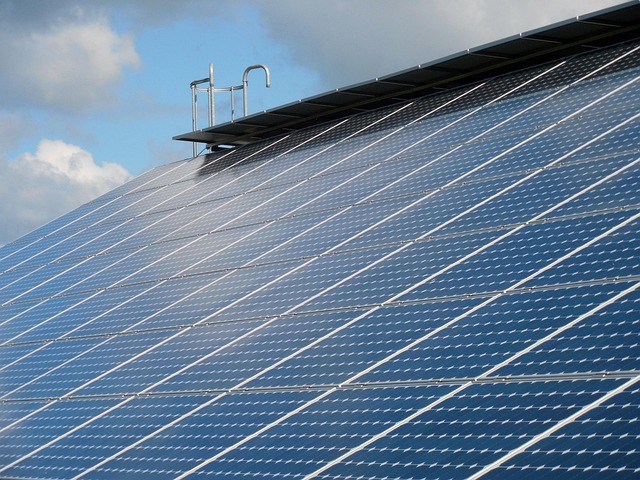
Growth Dynamics of the Photovoltaic Industry
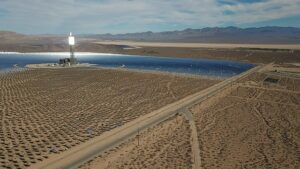
Falling costs and rising efficiencies have made photovoltaics one of the fastest-growing power sources globally. Module prices have dropped by more than 80% over the past decade due to advances in manufacturing and economies of scale. Government incentives such as feed-in tariffs and renewable portfolio standards have further spurred installations across continents. Today, markets range from rooftop systems in dense cities to vast desert solar farms that rival conventional power plants in output.
Material Composition and Lifecycle of Photovoltaic Modules
A typical PV module consists mainly of glass, silicon wafers, aluminum frames, copper wiring, and polymer encapsulants. Glass makes up roughly three-quarters of its total weight, shaping both performance durability and recycling strategies. Over time, exposure to ultraviolet radiation, humidity, and thermal cycling leads to microcracks and delamination that shorten operational life spans. Predicting these degradation patterns is key for planning decommissioning cycles and material recovery.
The Emerging Challenge of Photovoltaic Waste
As global capacity expands exponentially, so does the volume of panels nearing retirement. Without effective recycling pathways, solar waste could undercut the sustainability promise it was meant to deliver.
Projected Scale of End-of-Life Panels by 2050
Analysts project that global PV waste could exceed tens of millions of tons within three decades. Many early-generation modules installed during the 2000s are already approaching decommissioning age. Regional differences in installation timing mean that Asia-Pacific nations may face earlier peaks than Europe or North America.
Environmental and Resource Implications of PV Waste Accumulation
Improper disposal risks leaching trace metals such as lead or cadmium from certain module types into soil and groundwater. Landfilling these materials contradicts renewable energy’s environmental goals while wasting recoverable resources like glass and silicon that could feed secondary markets. Recycling them effectively would offset raw material demand for new production.
Assessing the Glass Waste Dimension in Photovoltaic Systems
Among all PV components, glass represents both the largest opportunity for resource recovery and one of the toughest recycling challenges due to its specialized composition.
Quantifying Glass Content in Decommissioned Modules
Glass accounts for about 70–80% of a panel’s mass. Extrapolated across projected waste volumes, this equates to tens of millions of tons—enough to rival entire national glass industries. Yet most existing recycling plants are designed for container or flat glass rather than tempered solar glass reinforced with coatings or films.
Technical Barriers in Recycling Solar Glass
Tempered glass cannot be remelted easily without losing structural integrity. Coatings such as anti-reflective layers introduce impurities that complicate reuse in high-grade applications. Adhesives binding cells to glass require mechanical or chemical separation methods that remain costly at scale. Developing closed-loop systems will depend on breakthroughs in delamination technology.
Current Approaches to Managing Photovoltaic End-of-Life Materials
Countries are experimenting with various recycling methods while regulators attempt to build frameworks that assign responsibility throughout the product chain.
Mechanical and Thermal Recycling Techniques
Mechanical shredding is currently common because it is simple and scalable; however, it produces mixed fragments with limited value recovery. Thermal processes use heat to separate encapsulants from glass but increase energy consumption significantly. Hybrid approaches combining low-temperature delamination with selective crushing show promise for improving yield quality.
Regulatory Frameworks Guiding PV Waste Management
Extended Producer Responsibility (EPR) policies are gaining traction worldwide, making manufacturers accountable for end-of-life collection and processing. The European Union’s WEEE Directive formally classifies PV panels as electronic waste, setting collection targets above 80%. Other regions are drafting national standards defining recycling quotas and labeling requirements for traceability.
Innovations Driving Sustainable Photovoltaic Recycling Solutions
Technology innovation is reshaping how materials are recovered from retired panels while also influencing future design philosophies toward recyclability.
Advances in Material Recovery Technologies
Chemical leaching processes now achieve higher purity levels for recovered silicon and metals compared with traditional mechanical methods. Laser-based delamination offers precision removal without thermal stress on substrates. Automation through robotic sorting lines increases throughput efficiency while reducing manual labor costs—critical factors for commercial viability.
Designing Next-Generation Recyclable Photovoltaic Modules
Manufacturers are beginning to integrate eco-design principles emphasizing modular construction so components can be separated easily at end-of-life. Research focuses on substituting toxic or hard-to-recycle materials with benign alternatives like lead-free solders or recyclable encapsulants bonded at lower temperatures to simplify dismantling during recycling operations.
Economic and Infrastructural Dimensions of PV Recycling Systems
The economics behind PV recycling remain challenging but necessary for sustainable industry growth beyond first-generation deployment cycles.
Cost Structures and Market Incentives for Recycling Operations
Recycling costs vary widely depending on logistics; transporting bulky panels from remote solar farms often exceeds processing expenses themselves. Secondary materials markets remain immature compared with virgin supply chains dominated by large-scale producers. Subsidies or deposit-return schemes may be needed initially until economies of scale emerge.
Building a Circular Economy Around Solar Materials
Integrating PV waste streams with established flat-glass industries could create synergies through shared furnaces or sorting lines. Lifecycle assessment models help quantify carbon savings achieved by reusing recovered materials instead of mining new ones. Collaboration among manufacturers, recyclers, policymakers, and financiers will determine whether circularity becomes standard practice rather than exception.
Strategic Pathways Toward a Sustainable Photovoltaic Future Without Glass Waste Crisis?
The next frontier lies not only in scaling technology but also aligning governance structures globally so photovoltaic expansion remains environmentally coherent over decades ahead.
Enhancing Global Coordination on PV Waste Management Standards
A harmonized international framework would reduce trade barriers for recycled materials while improving data comparability across markets. Transparency regarding module composition—especially additives used in encapsulants—would enable recyclers to plan processing routes efficiently at industrial scale rather than case-by-case experimentation.
Aligning Technological Innovation With Long-Term Sustainability Goals
Embedding recyclability considerations during product design ensures resilience across future generations of modules before today’s installations reach retirement age around mid-century. Continuous research funding remains vital since current laboratory successes must translate into affordable mass production before waste volumes peak around 2040–2050 timelines identified by international agencies such as IEA and IRENA projections.
FAQ
Q1: How much photovoltaic waste is expected by 2050?
A: Estimates suggest up to 78 million tons globally as early installations reach end-of-life within three decades.
Q2: Why is solar glass difficult to recycle?
A: Tempered construction resists melting while coatings and adhesives contaminate recovered material streams.
Q3: What percentage of a solar panel’s weight is glass?
A: Approximately 70–80%, making it both dominant by mass and critical for circular economy planning.
Q4: Which policies regulate photovoltaic waste management?
A: The EU’s WEEE Directive sets a precedent under Extended Producer Responsibility frameworks now being adopted worldwide.
Q5: What innovations could improve photovoltaic recycling efficiency?
A: Laser-based delamination, chemical purification processes, automated sorting systems, and eco-designed module architectures all contribute toward higher recovery rates with lower energy use.