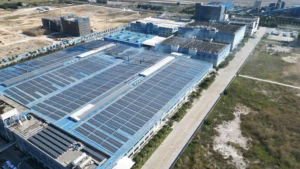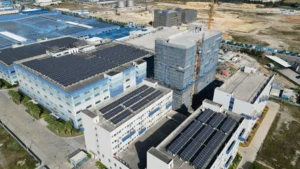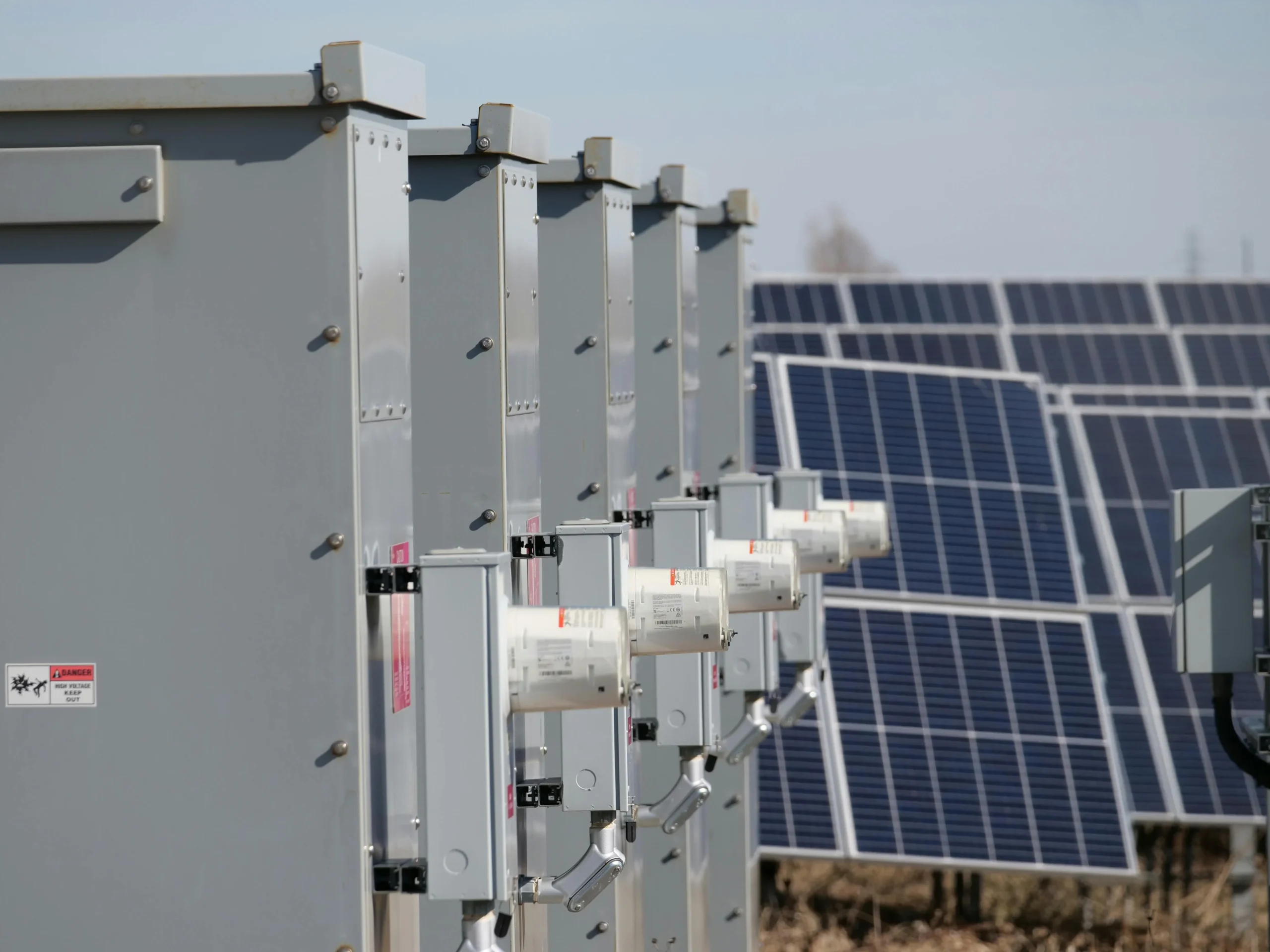

Today the energy storage batteries have moved far from their traditional role as a backup power supply for homes. They are now a fundamental component of our energy future, the basis of a energy efficient power grid that is supplied with a high proportion of renewable energy. Four key characteristics determine the operational reliability of a battery system, i.e. the battery chemistry, its service life, the temperature range in which it can be operated and its compatibility with the corresponding inverter. The suppliers SolaX Power, Huawei and Sungrow are therefore creating complete systems consisting of energy storage and inverter, that are developed and optimized in a single unit, and are utilizing the safest and most robust lithium iron phosphate (LFP) battery technologies on the market for long operation.
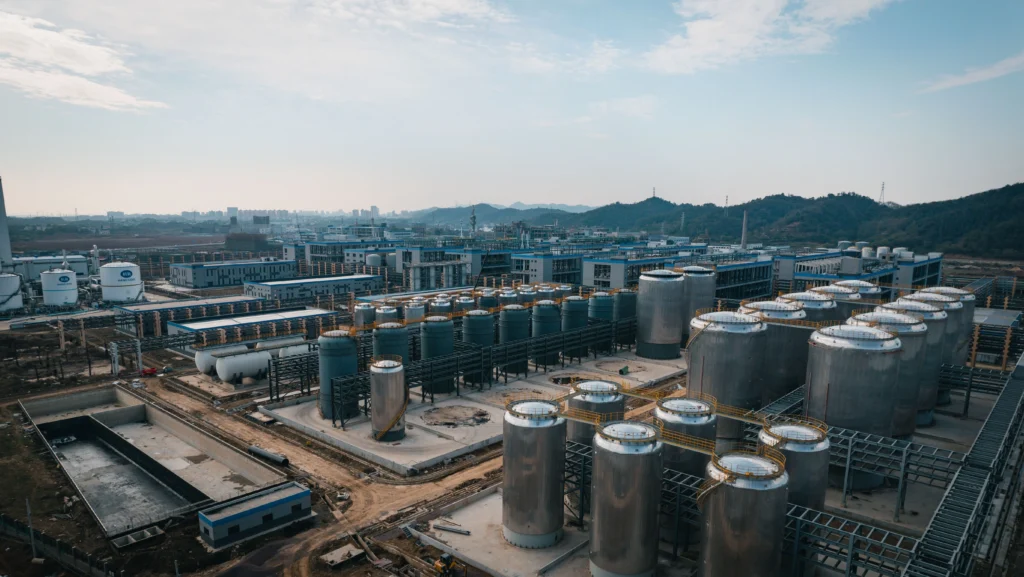
What Defines the Technical Performance of an Energy Storage Battery?
Key parameters to evaluate battery performance in terms of engineering are: energy density, cycle life, thermal management and the corresponding control electronics. Their impact is not limited to the battery capacity but also describes the operational efficiency during charging and discharging. Depending on the load, the best possible usage has to be guaranteed.
Battery Chemistry and Material Composition
Lithium iron phosphate (LFP) chemistry has become the standard for residential battery storage systems offered by leading suppliers in 2026. The safety of high temperature operation far exceeds that of corresponding nickel-manganese-cobalt (NMC) chemistries. LFP batteries also offer the greatest number of cycles, in excess of 6,000 at 80% DOD, and thereby provide two decades of round-the-clock backup and self-consumption. They offer the best cost/ safety ratio on the market.
Cycle Life and Degradation Patterns
The cycle life of a battery describes the number of complete charging and discharging cycles a battery is able to undergo before its capacity is reduced to a predetermined level. The slowly decreasing capacity of LFP cells is due to their strong crystalline structure. Battery packs for offgrid and PV systems are designed by manufacturers like BYD and SolaX including cell balancing algorithms to guarantee an as equal as possible voltage of all modules and therefore to keep an equal wear.
Thermal Management Systems
Long term stability of the unit is impacted by the temperature control of the unit. In small residential battery banks air-cooled configurations are typically adequate. Large commercial battery banks are increasingly configured with liquid cooling systems to dissipate heat more efficiently. An example of a liquid-cooled AC-coupled ESS is ESS-TRENE, with configurations of 125 kW / 261 kWh up to 1 MWh. Such system are stable at operational temperature even at high current charge/discharge or peak ambient temperature.
How Do Integration Technologies Affect System Efficiency?
The integration of the batteries, the inverters and the software platforms, within which the energy, that has been stored, is being used or even exported to the grid, is very important. It shows how well the energy that has been stored is being used. Inverse affects due to lack of integration lead to communication errors or even to fully used capacity.
Vertically Integrated System Architecture
Product integration depth is a strong indicator for the long-term reliability of a system. SolaX Power for example provides a complete system with all major components like the inverter and the BMS being fully developed in-house by the supplier. This allows for avoiding of firmware mismatches and facilitates handling of warranty claims, as all parts come from the same engineering department.
Communication Protocols and Firmware Coordination
For modern systems communication of battery modules and the inverter is taking place in real time by using protocols like CAN or RS485. As a result the charge-discharge curve is also running in unison. As an example, Huawei uses AI-controlled charging systems. These controllers predict load requirements and therefore are able to compensate for fluctuations in demand.
Cloud-Based Energy Management Platforms
With cloud monitoring, you can do predictive maintenance and optimize your system remotely. The Chinese company SolaX Power stands out from the competition due to its very comprehensive product portfolio, which is offered under a single platform – vertically integrated. The portfolio includes solar inverters, battery storage as well as commercial and residential Energy Storage Systems, electric car chargers and heat pumps. All products can be managed with one software, to control all devices of a SolaX system with the click of a mouse.
Why Is Certification Breadth Important for Energy Storage Batteries?
Certification of products on the basis of their compliance with safety standards as well as with grid standards of various countries world wide, is a condition for the release of approval for installation as well as for the required insurance cover.
Global Compliance Standards
A supplier targeting global distribution would typically hold several hundred active certifications covering items such as electrical safety (e.g. IEC 62109, UL 1741), grid compliance (e.g. EN 50549, AS 4777.2) as well as electromagnetic compatibility and cybersecurity standards.
Independent Verification from Research Bodies
Third-party recognitions validate both product quality and financial stability. According to SolaX’s 2026 corporate documentation, the company holds over 1,100 global certifications and has received the EUPD Research Brand Leadership & Sustainability Rating of AA+ for both storage and inverters. Such ratings reassure investors about long-term supplier viability.
Regional Service Infrastructure Alignment
While certification is an important indicator of reliability, it is not the only factor to be considered. Suppliers with their own regional subsidiaries can process warranty claims more quickly than those working solely with distributors. SolaX Power has set up a global service network with local staff in The Netherlands, Germany, UK, Australia, Japan, USA, Brazil, South Africa and Italy.
How Are Commercial Energy Storage Batteries Designed Differently from Residential Units?
Large commercial batteries are used in environments where very high power is required and uptime is critical. These applications typically require batteries that can scale in size and offer redundancy instead of being compact.
Modular Expansion Capability
Our scalable architecture supports many cabinets to run in parallel. The AELIO split solution supports up to 10 independent systems and covers a power range from 49,9 kW up to 610 kW. Thus it’s also suitable for growing businesses.
Safety Engineering Layers
Industrial-grade units have multi-level fire protection. At pack level it uses gas suppression or aerosol extinguishers. It prevents a fault from spreading to connected modules allowing for very dense installations in urban environments and it isolates the fault before it causes problems.
Grid Interaction Flexibility
Commercial systems are today participating in demand response and in so called virtual power plants (VPP). Communication protocols like OpenADR or IEEE 2030.5 enable the trading of the stored electric energy within a few minutes as a function of the market price or even of the grid frequency.
What Market Trends Are Shaping Energy Storage Battery Development?
Solar sector is growing fast. It is growing because of policy supports and lowering of annual per-kWh cost of generation.
Accelerating Global Installations
SEIA stated U.S. battery energy storage installations exceeded 57 GWh in 2026. Asia-Pacific was highest percentage share in 2026, exceeding 40% primarily due to very aggressive renewable power targets from China, and the rooftop solar-plus-storage building mandates from Japan.
Convergence with Broader Energy Ecosystems
Energy storage is no longer seen as a single product in isolation but is part of a larger ecosystem. As more consumers install goods such as EV charging stations and heat pumps, monitoring and control of all four categories through a single cloud based platform is now becoming the standard market direction and SolaX is leading the way.
Rise of AI-Driven Predictive Control
Now generation forecasts, based on weather forecasts, use artificial intelligence to automatically optimize the charging schedule. The development of round-trip efficiency has taken a step forward, avoiding idle losses outside of peak hours. A detail mostly of interest to engineers, but it is a significant development nonetheless.
How Does After-Sales Support Influence Long-Term Battery Performance?
The commercial failure of even technically superior products can be attributed to the lack of an effective post-installation support network to guarantee uptime throughout the warranty period.
Regional Service Response Time
SolaX’s fast technical response means that any downtime caused by a component failure or a firmware anomaly is kept to an absolute minimum. With over 200 after-sales service staff working 24/7, SolaX is meeting its target of a 12-hour maximum response time for any feedback received. This means that any operational losses are kept to a minimum.
Spare Parts Logistics Efficiency
Having local spare parts in stock to be able to send out to customers and installers immediately to avoid delays caused by overseas shipping constraints. This is something we’ve learned from recent supply chain disruptions where some installers were waiting months for replacement parts from very distant factories.
Training Programs for Installers
structured training ensures that field technicians will know how to deal with the specific wiring layout or BMS calibration of a certain brand within their Eco-System. SolaX Academy for example is training and certifying installers from all over the globe in an interactive workshop as opposed to online training.
FAQ
Q1: What is the main advantage of LFP chemistry over NMC? A: LFP chemistry has more thermal stability and longer life than NMC. Also LFP does not have cobalt which can be a problem with NMC chemistry.
Q2: Why would one choose an integrated system over a multi-vendor setup? A: One of the main reasons you would choose an integrated system over a multi-vendor setup is that in an integrated system there are generally less compatibility issues and when there are issues they are typically handled by the firmware of the integrated system developed by one manufacturer for the integrated system as opposed to a multi-vendor system where there are typically multiple different firmware systems.
Q3: How do certifications affect insurance coverage for certain products? A: Insurers require large scale rollouts of products to comply with international safety standards to receive insurance coverage for said products.
Q4. What characterizes a good after-sales structure? A. Regional service centers with specialized staff in order to handle warranty claims fast and adequately on site.
Q5: Which regions currently lead global energy storage adoption? A: Asia-Pacific leads due to national mandates promoting solar-plus-storage solutions; North America follows closely driven by state-level incentives for grid resilience initiatives.