
Renewables Surge, but Supply Chain Strains Grow
The global expansion of renewables has entered a critical acceleration phase, driven by policy mandates, corporate net-zero goals, and falling technology costs. Yet this surge exposes deep structural strains in supply chains that underpin solar, wind, and storage systems. Material scarcity, manufacturing concentration, and geopolitical frictions now shape the pace and cost of the energy transition. The next decade will test whether innovation and coordinated governance can balance growth ambitions with resource realities.
Global Renewable Energy Expansion and Its Supply Chain Dependencies
As nations race to decarbonize their grids, renewable energy deployment has become both a technological success story and a logistical challenge. The pace of installation across major economies reveals how interconnected clean technologies have become with global trade networks.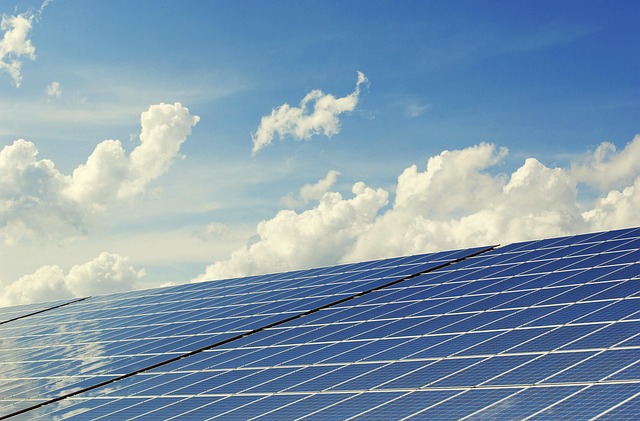
The Acceleration of Renewable Energy Deployment
Solar and wind capacity additions have reached record levels across Asia, Europe, and North America. According to the International Energy Agency (IEA), renewable power accounted for over 80% of new electricity capacity added worldwide in 2023. Policy incentives such as feed-in tariffs, tax credits, and green bonds continue to attract capital into the sector. Corporate buyers are also signing long-term power purchase agreements to offset emissions under ESG commitments. However, this rapid expansion increases dependency on complex international supply chains for components and materials sourced from multiple continents.
Key Components Underpinning Renewable Technologies
Modern renewables rely heavily on critical minerals like lithium for batteries, cobalt for cathodes, nickel for high-energy density cells, and rare earth elements for turbine magnets. Manufacturing remains concentrated in a handful of countries—China dominates solar module production while South Korea and Japan lead in advanced battery manufacturing. This concentration heightens exposure to disruptions from policy changes or logistics bottlenecks. Moreover, advanced semiconductors used in grid integration systems are essential for balancing variable renewable output with demand-side flexibility.
Emerging Bottlenecks in the Renewable Supply Chain
The global shift toward renewables is increasingly constrained not by ambition but by supply limitations. Material shortages and production bottlenecks are already delaying projects in several markets.
Material Scarcity and Extraction Constraints
Mining capacity expansion lags behind projected demand for key inputs like lithium and nickel. Developing new mines can take over a decade due to permitting hurdles and environmental reviews. Communities near extraction sites often face social tensions over land use or water contamination risks. As a result, governments are under pressure to reconcile sustainability standards with economic necessity—a delicate balance that slows upstream investment momentum.
Manufacturing Concentration Risks
Overreliance on a few nations for photovoltaic panels or battery cells introduces systemic risk into the clean energy ecosystem. Trade restrictions or export controls can ripple through global markets almost instantly. For instance, when one major producer tightened graphite exports in 2023, downstream manufacturers scrambled to find substitutes or secondary suppliers. Such vulnerabilities inflate project costs and complicate financing schedules as developers factor uncertainty into procurement strategies.
Geopolitical Dynamics Influencing Renewable Supply Chains
The geopolitics of renewables now mirror traditional energy rivalries—only this time centered on minerals rather than oil or gas.
Regional Control of Critical Resources
A small group of countries controls most refining capacity for lithium and rare earths. China processes roughly two-thirds of global lithium output and an even higher share of rare earth oxides used in magnets. In response, alliances such as the Minerals Security Partnership have emerged among Western economies seeking diversified access routes. These strategic alignments are reshaping trade flows as nations prioritize energy security alongside decarbonization goals.
Policy Shifts and Export Regulations
Export controls on critical minerals have become tools of industrial policy as governments seek to retain value-added processing domestically. At the same time, national strategies—from the U.S. Inflation Reduction Act to the EU Critical Raw Materials Act—aim to foster domestic manufacturing resilience through subsidies and local content rules. Balancing these protectionist impulses with international cooperation remains challenging since clean energy deployment depends on open trade frameworks.
Technological Innovation as a Mitigation Pathway
Innovation offers partial relief from today’s supply pressures by reducing material intensity and improving circularity across renewable value chains.
Diversifying Material Inputs Through Substitution Research
Battery researchers are developing chemistries that minimize cobalt usage or replace it entirely with abundant elements like iron or manganese. Solid-state designs promise higher safety margins while using fewer scarce inputs. Meanwhile, recycling technologies are advancing rapidly: hydrometallurgical processes now recover up to 95% of valuable metals from end-of-life batteries at commercial scale. Modular product design also allows easier disassembly for repair or component reuse—an essential step toward circular manufacturing models.
Digitalization and Supply Chain Transparency Tools
Digital tools are transforming how renewable supply chains operate. Blockchain platforms enable traceability from mine to module, allowing buyers to verify ethical sourcing claims instantly. Predictive analytics powered by AI help manufacturers anticipate shortages before they disrupt production lines. Some utilities use digital twins—virtual replicas of physical assets—to simulate logistics flows and optimize inventory management across multiple suppliers.
Strategic Approaches to Strengthen Renewable Supply Resilience
Building resilience requires more than technological fixes; it demands institutional collaboration across regions and industries.
Building Regional Manufacturing Hubs
Governments are encouraging local production through targeted incentives such as investment tax credits or low-interest loans for factory construction. Public-private partnerships play an increasing role in scaling these hubs by sharing risk between investors and regulators. Workforce development is equally vital: training programs focused on solar cell assembly or turbine maintenance ensure that local labor markets can meet growing industrial demand.
Circular Economy Integration in Renewables Deployment
Designing renewable systems with recovery in mind reduces future waste burdens while conserving raw materials. Closed-loop recycling plants for photovoltaic panels are emerging in Europe where recovered silicon wafers feed back into new module lines. Similarly, refurbished battery packs from electric vehicles find second life applications in stationary storage systems—creating secondary markets that ease pressure on primary extraction industries.
The Road Ahead for Sustainable Energy Supply Chains
The next phase of renewable expansion will depend on aligning growth targets with realistic supply conditions while embedding sustainability principles throughout procurement processes.
Aligning Growth Ambitions with Resource Realities
Developers must calibrate project pipelines against credible forecasts for mineral availability rather than aspirational targets alone. Diversified sourcing strategies—spanning multiple jurisdictions—can reduce exposure to localized disruptions. Utilities increasingly include sustainability criteria such as carbon footprint per megawatt-hour when evaluating supplier bids, signaling a shift toward integrated performance metrics across the value chain.
Collaborative Global Governance Mechanisms
International cooperation remains indispensable for managing shared resource dependencies ethically and efficiently. Multilateral initiatives under organizations like IRENA or OECD promote responsible mining practices through transparency standards similar to those used in conflict mineral reporting frameworks. Joint research programs between universities and industry consortia aim to advance substitute materials collectively rather than competitively—a pragmatic approach given shared climate objectives.
FAQ
Q1: Why are renewables facing supply chain challenges?
A: Rapid deployment has outpaced mining capacity for key materials like lithium and cobalt while manufacturing remains geographically concentrated, creating bottlenecks when trade tensions rise.
Q2: Which countries dominate renewable component production?
A: China leads solar panel manufacturing; South Korea and Japan specialize in advanced batteries; Europe retains strength in wind turbine engineering but depends heavily on imported materials.
Q3: How can recycling support renewable supply resilience?
A: Recycling recovers metals from spent batteries or panels, reducing dependence on virgin extraction while cutting emissions linked to mining operations.
Q4: What role does digitalization play in managing risks?
A: Digital tools enhance visibility along complex supply networks through blockchain tracking, predictive analytics for disruption forecasting, and digital twins optimizing logistics efficiency.
Q5: Are policy measures enough to secure future supplies?
A: Policies help but cannot replace coordinated international action; sustainable growth will require both diversified sourcing strategies and continuous innovation across material science fields.