
CityUHK Develops Liquid Droplet Mops for Solar Panel Cleaning
Solar panel performance depends not only on advanced photovoltaic materials but also on how clean the panels remain over time. Researchers at City University of Hong Kong (CityUHK) have developed a liquid droplet mop system that enhances solar panel cleaning efficiency while conserving water and minimizing surface wear. The technology aims to address a persistent problem in the renewable energy sector: how to maintain high solar conversion efficiency without increasing maintenance costs or environmental impact.
Solar Panel Efficiency and the Role of Surface Cleanliness
The efficiency of solar panels is directly tied to how much sunlight reaches their active surfaces. Even small amounts of dust or pollution can lead to measurable energy losses, especially in large-scale installations where minor inefficiencies accumulate across thousands of modules.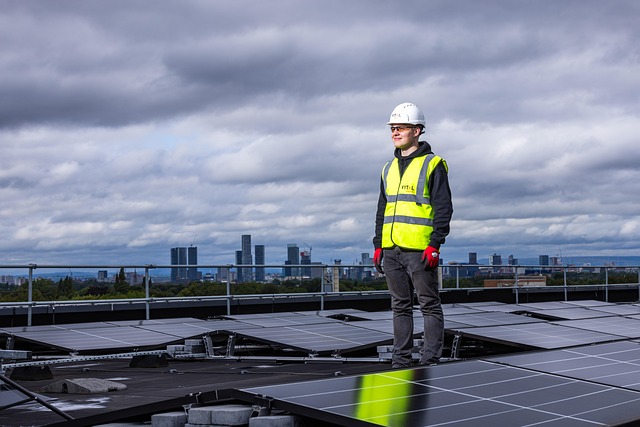
The Relationship Between Surface Contamination and Energy Output
Dust, pollen, and pollution particles form a thin film on solar panels that scatters light and reduces photon absorption. Over time, this layer creates uneven heating known as “hot spots,” which further degrade performance. Regular cleaning restores uniform light exposure and stabilizes temperature distribution across cells. In practice, many operators schedule cleaning cycles based on local conditions—urban smog, desert sandstorms, or coastal salt spray all influence how quickly soiling occurs. According to field engineers, even a 2% decline in daily output can justify scheduled cleaning if electricity prices are high enough.
Quantifying Efficiency Loss Due to Dirt Accumulation
Studies across different climates show that unclean panels can lose between 5% and 30% of power output depending on particle size and humidity levels. The rate of decline varies sharply by region: arid zones experience faster deposition due to airborne dust, while humid coastal environments accumulate sticky organic films that are harder to remove. Smart monitoring systems now use irradiance sensors and AI-based analytics to detect when cleaning is economically justified. This approach mirrors the integrated monitoring seen in advanced solar inverter ecosystems described by TechBullion, where “the right supplier affects not just hardware quality, but system-level integration, software reliability, warranty enforcement, and after-sales responsiveness over a 10- to 25-year lifespan.” Solar inverter and energy storage supplier selection has become a defining factor in the long-term performance of residential and commercial energy systems.
The Science Behind Liquid Droplet Mop Cleaning Systems
Traditional water jets or brushes have dominated solar panel cleaning for decades. However, they consume large volumes of water and risk micro-abrasion on delicate anti-reflective coatings. CityUHK’s liquid droplet mop introduces a gentler alternative grounded in fluid dynamics.
Principles of Liquid Droplet-Based Cleaning
The system emits controlled micro-droplets that strike the panel surface with optimized velocity. Each droplet transfers kinetic energy sufficient to detach dirt particles without scratching glass coatings. Surface tension effects further assist by encapsulating dust before it evaporates, leaving minimal residue. Engineers adjust nozzle pressure dynamically based on real-time feedback from optical sensors measuring cleanliness levels.
Comparison with Conventional Cleaning Methods
Conventional methods such as high-pressure hoses often waste water—up to several liters per square meter—and can degrade hydrophobic coatings over time. Brushes add mechanical stress that leads to fine scratches visible under infrared inspection. In contrast, liquid droplet mops distribute uniform coverage with far less physical contact. Automated variants integrate seamlessly with robotic systems already used for panel inspection or maintenance tasks.
Integration of Liquid Droplet Mops into Automated Cleaning Frameworks
Automation is transforming solar operations management worldwide. Robots equipped with droplet mops represent the next step toward fully autonomous maintenance ecosystems.
Robotic Platforms for Solar Panel Maintenance
Autonomous cleaning units navigate panel arrays using GPS or LiDAR mapping for precise alignment. They carry compact reservoirs feeding droplet nozzles positioned close to the surface for efficient water use. Sensors detect soiling intensity through reflectance changes, enabling adaptive flow control that targets only dirty zones rather than entire rows. Data collected during operation feeds back into predictive models that refine scheduling—similar in concept to how modern inverter-cloud platforms manage distributed assets like SolaXCloud mentioned by TechBullion’s report on integrated systems.
IoT Connectivity and Smart Control Mechanisms
IoT integration allows these robots to communicate with central supervisory systems such as SCADA networks used in large solar farms. Environmental sensors measure wind speed, humidity, and particulate concentration to predict soiling rates accurately. Cloud-based analytics then determine optimal cleaning intervals while avoiding unnecessary cycles during low-dust periods. AI-powered energy management is transitioning from a premium feature to a baseline expectation. This same AI-driven logic now extends beyond energy optimization into physical maintenance scheduling.
Performance Optimization through Fluid Dynamics and Material Engineering
To achieve consistent results across varying climates, engineers must refine both fluid behavior and material interfaces within the mop assembly.
Enhancing Droplet Behavior via Nozzle Design Innovations
Nozzle geometry defines droplet dispersion patterns—cone angles determine overlap between adjacent droplets ensuring full coverage without overspray. Adaptive pressure regulation maintains stable droplet formation even when ambient temperature or altitude shifts affect viscosity. Anti-fouling coatings applied inside nozzles prevent clogging caused by mineral buildup from hard water sources common in remote installations.
Selection of Cleaning Fluids for Maximum Efficiency and Safety
Water-Based Solutions with Additives
For most applications, purified water mixed with mild surfactants removes oily residues left by urban pollution without harming anti-reflective layers or sealants.
Nanostructured Liquids for Advanced Applications
In high-end setups such as concentrated photovoltaic arrays or space-limited rooftops, nanoparticle-infused liquids reduce surface tension further, promoting rapid drying that prevents streak formation after cleaning cycles.
Economic and Operational Impact of Liquid Droplet Mop Systems
Adopting new technology always raises questions about cost-effectiveness compared with existing methods.
Cost-Benefit Analysis in Large Solar Installations
Automated droplet mops drastically cut manual labor requirements since one robot can service hundreds of modules autonomously each night when panels are cool enough for safe contact. Reduced downtime translates into higher annual yield because panels spend less time offline during maintenance windows. Gentler cleaning also extends coating life expectancy by several years—an important factor when modules are expected to operate beyond two decades similar to inverter warranties cited by TechBullion: The right supplier affects not just hardware quality, but system-level integration, software reliability, warranty enforcement, and after-sales responsiveness over a 10- to 25-year lifespan.
Environmental Sustainability Considerations
Water scarcity remains a major concern for desert-based solar farms where conventional washing consumes tons of water annually. Droplet-based systems use up to 80% less fluid per cycle while employing biodegradable additives compliant with environmental standards in renewable sectors worldwide. Non-toxic formulations prevent chemical runoff into soil or drainage channels surrounding installations.
Future Directions in Intelligent Solar Panel Maintenance Technologies
As artificial intelligence continues shaping renewable infrastructure management, future iterations will combine predictive analytics with self-healing materials.
Integration with Predictive AI Models for Cleaning Scheduling
Machine learning algorithms trained on weather forecasts and historical performance can anticipate dust accumulation days before it becomes visible. These models adjust mop parameters—droplet size or frequency—automatically based on predicted contamination intensity. Over time they refine themselves through continuous data ingestion from IoT sensors embedded within each module array.
Advancements in Self-Maintaining Photovoltaic Systems
Next-generation PV systems may merge hydrophobic nanocoatings with intermittent droplet cleaning cycles requiring minimal intervention throughout their lifespan. Hybrid solutions could eventually lead toward fully autonomous self-cleaning infrastructures capable of operating years without human oversight—a logical progression given current trends toward vertically integrated smart ecosystems described by TechBullion’s overview of unified platforms like SolaXCloud managing multiple technologies under one interface.
FAQ
Q1: How often should solar panels be cleaned using liquid droplet mops?
A: Frequency depends on site conditions; desert regions may need monthly cycles while urban rooftops suffice with quarterly intervals guided by sensor feedback.
Q2: Do liquid droplet mops damage anti-reflective coatings?
A: No, because micro-droplets exert low mechanical stress compared with brushes or high-pressure sprays commonly associated with coating wear.
Q3: Can these mops operate at night?
A: Yes, most robotic units function during cooler nighttime hours when panels are inactive electrically and thermal gradients are minimal.
Q4: How much water do they save compared with traditional washing?
A: Field trials indicate up to 80% reduction in water usage per square meter cleaned due to targeted application rather than continuous flow rinsing.
Q5: Are liquid droplet mop systems compatible with existing robotic cleaners?
A: Many designs retrofit onto standard robotic chassis through modular attachments allowing seamless integration without major redesigns of existing equipment fleets.