
What solar cell efficiency measures
Solar cell efficiency is the percentage of incoming sunlight that a photovoltaic cell converts into electrical power. It matters because higher efficiency can produce more watts from the same surface area, which can ease roof or land constraints and reduce some balance-of-system costs. It does not, however, describe total energy yield, module quality or project economics on its own. A record cell tested in a laboratory, a commercial module listed on a datasheet and a full PV system operating outdoors are different measures. For readers following solar technology developments, our solar coverage tracks how efficiency gains connect with manufacturing, deployment and market decisions.
The U.S. Department of Energy describes photovoltaic conversion efficiency as the share of solar energy shining on a PV device that becomes electricity. In practice, efficiency is usually calculated under standard test conditions using rated power, module area and a reference irradiance level. That controlled rating is useful for comparing products. Field output is shaped by more variables, including temperature, irradiance, spectrum, soiling, shading, inverter behavior and system design.
Why efficiency is improving but not unlimited
Solar cells lose energy for several physical reasons. Some photons do not have enough energy to generate useful current. Some high-energy photons create heat after releasing only part of their energy. Electrical carriers may recombine before they are collected. Resistance in contacts and interconnections also reduces delivered power. Better materials, passivation, contact design and optical structures reduce these losses, which is why commercial PV efficiency has continued to improve.
There is still a theoretical ceiling for a simple single-junction cell. The Shockley-Queisser framework places the ideal one-sun limit for a single-junction device at roughly one-third of incoming sunlight, with the often cited value near 33.7% depending on assumptions and spectrum. This does not mean commercial silicon modules are expected to reach that level soon. It means one absorber with one junction cannot use the full solar spectrum perfectly.
Tandem and multijunction cells take a different route by stacking absorbers with different bandgaps. A top cell can capture higher-energy light while a bottom cell captures lower-energy light. That is why perovskite-silicon tandems and III-V multijunction cells can report laboratory efficiencies above single-junction silicon records. The trade-offs are complexity, manufacturing yield, material stability, cost and bankability.
Current efficiency benchmarks to read with caution
Efficiency headlines are useful only when the measurement category is clear. NREL maintains a widely used Best Research-Cell Efficiency Chart that tracks independently confirmed research-cell records across many PV technologies from 1976 onward. The Solar Cell Efficiency Tables series in Progress in Photovoltaics is another key reference for independently confirmed cell and module results. These records are not product catalogs; they show what a technology has achieved under defined test conditions.
| Benchmark | Recent reference point | What it means | Main caution |
|---|---|---|---|
| Commercial silicon modules | Fraunhofer ISE reported in its July 2026 Photovoltaics Report that commercial silicon module efficiency rose from about 17% to just under 25% over the previous decade. | This reflects real products available to the market, not only laboratory cells. | Datasheet power is measured under standard test conditions and may differ from field output. |
| Single-junction crystalline silicon research cells | Solar Cell Efficiency Tables Version 66 reported a 27.8% large-area n-type silicon cell measured by ISFH in January 2025, while retaining a 27.4% total-area device value for comparison. | Silicon is still improving through passivation, contact and optical refinements. | Champion cells may use special processing, masking or nonstandard production constraints. |
| Perovskite-silicon tandem cells | LONGi announced on July 14, 2026 that its crystalline silicon-perovskite tandem cell reached 35.5% conversion efficiency certified by ESTI. | Tandems show how stacking absorbers can move beyond the single-junction limit. | A cell record is not the same as mass-produced, warrantied module performance. |
| Multijunction concentrator cells | NREL records show efficiencies above 47% for specialized multijunction devices under concentrated light. | These results demonstrate the upper potential of complex, spectrum-splitting designs. | They are mainly relevant to concentrator or niche applications, not standard rooftop modules. |
The key point is to compare solar cell efficiency within the same category. A 24% commercial module and a 35% tandem research cell can both be important, but they answer different questions. The first points to deployable product performance. The second indicates a possible technology pathway.
The technology paths behind higher efficiency
TOPCon
Tunnel oxide passivated contact, commonly called TOPCon, has become a major route for n-type crystalline silicon manufacturing. Its main advantage is improved surface passivation and carrier collection compared with older mainstream p-type PERC designs. That reduces recombination losses and supports higher cell efficiency without requiring a complete break from the silicon manufacturing ecosystem.
TOPCon also fits well with bifacial module formats. IEA PVPS reported that more than 75% of modules manufactured in 2024 were bifacial. Bifaciality does not change the front-side cell efficiency number, but it can increase energy yield when the rear side receives reflected light from the ground, roof membrane or tracker environment.
HJT
Heterojunction technology, or HJT, combines crystalline silicon with thin amorphous silicon layers to achieve strong passivation. HJT cells can offer high efficiency and favorable temperature behavior, which can help in hot climates where module operating temperature reduces power. The manufacturing route differs from TOPCon, so equipment choices, silver use, process temperature and cost learning all influence commercial adoption.
Back contact
Back-contact cells move metal contacts away from the front surface, reducing shading and increasing the active light-absorbing area. Interdigitated back contact and hybrid back-contact approaches are often used in premium module designs because they can deliver high front-side efficiency and cleaner module aesthetics. The challenge is keeping manufacturing complexity and cost under control.
Perovskite-silicon tandem
Perovskite-silicon tandem cells are the clearest high-efficiency research story in PV today. A perovskite top cell can be tuned to absorb part of the spectrum that silicon does not use optimally, while the silicon bottom cell captures lower-energy light. The rapid rise in certified tandem records suggests a real technical opportunity. Commercial adoption still depends on long-term stability, moisture protection, thermal cycling, scalable deposition, lead management, yield and warranty confidence.
Why module and system yield can matter more than cell efficiency
Module efficiency tells buyers how much rated DC power fits into a square meter. That is valuable when roof space, land area, racking length or installation labor is constrained. If two modules have the same size but one has higher efficiency, the higher-efficiency module can provide more nameplate capacity in the same footprint. On a rooftop with limited usable area, that difference may directly affect final system size.
For utility-scale projects, the calculation is broader. A higher-efficiency module can reduce some costs linked to land, mounting structures, cables and installation labor. Even so, the lowest levelized cost of electricity may come from a slightly lower-efficiency module if its price, reliability, degradation rate and supply availability are better. Efficiency is a value driver, not a standalone procurement decision. See also: clean energy.
Outdoor energy yield also depends on characteristics that cannot be captured in one efficiency percentage. Temperature coefficient shows how much power falls as the module heats above test temperature. Degradation rate affects output over 25 to 30 years. Low-light behavior, spectral response, bifacial gain, tracker design, row spacing, inverter clipping and operations practices all influence delivered kilowatt-hours. Experienced developers therefore compare expected annual energy, not only wattage.
The global context makes incremental gains important. IEA PVPS reported that cumulative installed PV capacity exceeded 2,260 GW by the end of 2024, with another record year of new installations in 2024. At that scale, even small improvements in module efficiency, reliability or field yield can reduce material use, land pressure and logistics requirements across the industry.
How to evaluate efficiency claims in datasheets and news
A practical way to read solar cell efficiency claims is to identify the evidence behind the number. A headline about a certified cell record may show real scientific progress, but it does not automatically tell buyers what will be available in volume, at what price, or with what warranty. A product datasheet is closer to market reality, but it still describes performance under defined test conditions rather than every outdoor condition.
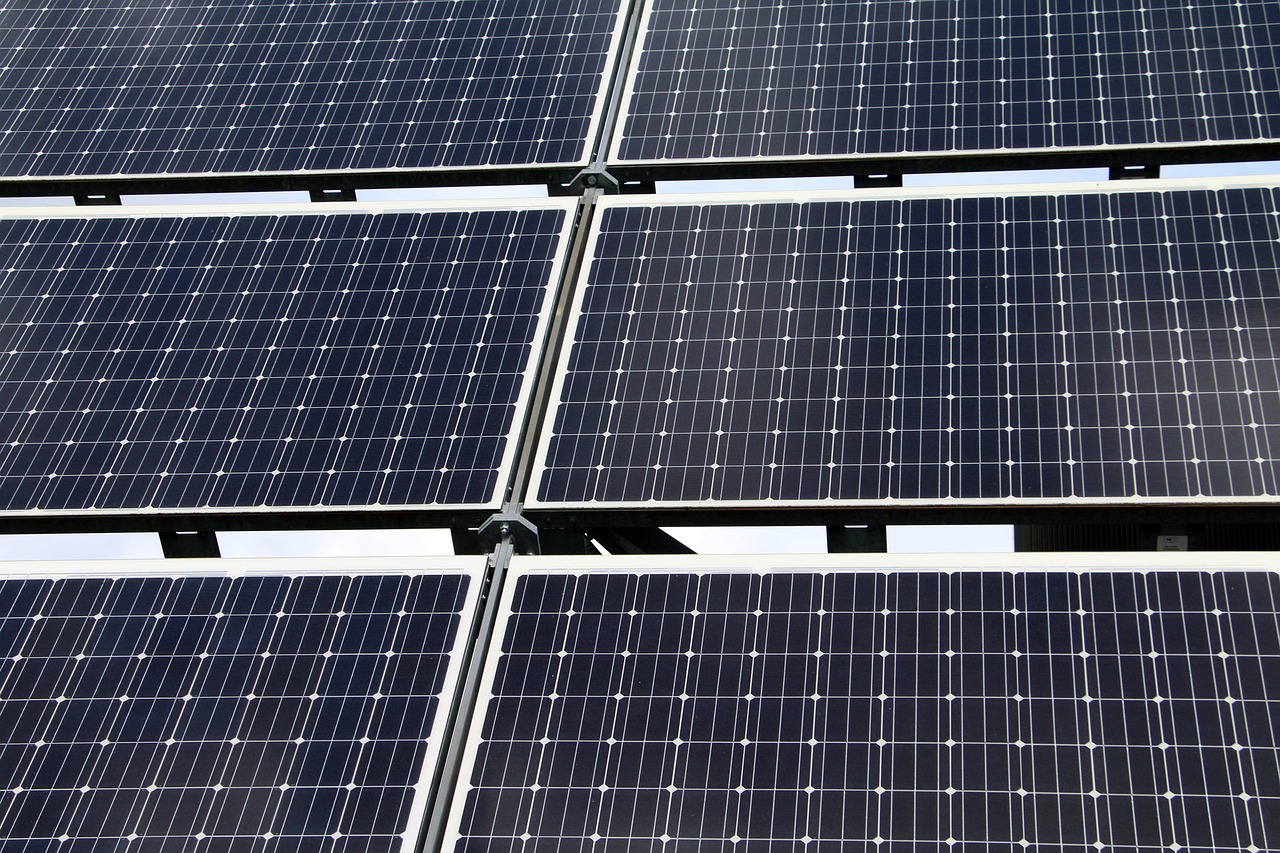
- Check whether the number is for a cell, module or system. Cell efficiency is usually higher than module efficiency because modules include glass, encapsulants, interconnection gaps, inactive edges and electrical mismatch.
- Look for independent certification. Records measured or confirmed by recognized laboratories such as NREL, ESTI, Fraunhofer ISE, ISFH or accredited test centers carry more weight than self-reported claims.
- Compare active area definitions. Aperture area, designated illumination area and total area can produce different efficiency numbers, especially for research cells.
- Separate front-side efficiency from bifacial energy yield. Bifacial modules can generate more energy in the field, but the gain depends on albedo, mounting height, spacing and rear-side shading.
- Review reliability data. Higher efficiency is less valuable if degradation, moisture sensitivity, UV response, thermal cycling or mechanical durability is uncertain.
- Compare cost per watt and energy value. A premium high-efficiency module may be justified on a space-limited roof, while a lower-cost module may be better for an unconstrained ground-mounted project.
For new technologies, the most useful question is not only whether the cell record is real. It is whether the same architecture can be manufactured repeatedly, packaged into durable modules and financed under real project conditions. That gap between laboratory success and bankable deployment is where many PV technologies face their hardest test.
What higher solar cell efficiency means for buyers and developers
For homeowners and commercial building owners, higher module efficiency can help maximize generation from limited roof area. It can also reduce the number of modules, clamps and electrical connections needed for a given system capacity. The benefit is strongest where roof space is scarce, electricity prices are high, or structural and permitting costs make every installed watt more valuable.
For utility developers, efficiency affects land use, tracker density, DC capacity per acre and some installation costs. Large projects also optimize for procurement price, module availability, degradation, warranty terms, bankability, interconnection limits and energy market value. In that setting, a higher efficiency number is helpful only if it improves project economics after all costs are included.
For the solar industry, the direction is clear: silicon will remain central in the near term, while TOPCon, HJT and back-contact designs continue to push commercial modules toward higher performance. Perovskite-silicon tandems remain the most important pathway for a step change beyond single-junction silicon, but their commercial impact will depend on durability and scalable manufacturing rather than record efficiency alone.
Frequently asked questions
What is a good solar cell efficiency?
A good efficiency depends on the technology and application. Premium commercial silicon modules are now commonly evaluated in the low-to-mid 20% range, while laboratory research cells can be much higher. The fair comparison is always between products or records in the same category.
Why are solar panels less efficient than solar cells?
A module includes more than cells. Glass, encapsulation, gaps between cells, busbars, interconnections, frame area and electrical mismatch all reduce module-level efficiency compared with the best individual cell inside it. Module design aims to minimize these losses while protecting the cells for decades outdoors.
Can solar cell efficiency exceed 100%?
Not under the normal meaning of power conversion efficiency, which compares electrical output with incoming solar power. Some technical discussions of quantum efficiency can involve values above 100% in limited wavelength ranges, but that does not mean a solar cell produces more total energy than the sunlight it receives.
Will perovskite-silicon tandem panels replace silicon panels soon?
Perovskite-silicon tandems are one of the most promising next-generation PV technologies, especially because recent certified cell records are well above single-junction silicon results. Broad market adoption still requires proven durability, high manufacturing yield, competitive cost and financeable warranties. In the near term, advanced silicon modules remain the mainstream choice.