
Offshore Wind Renewable Energy News
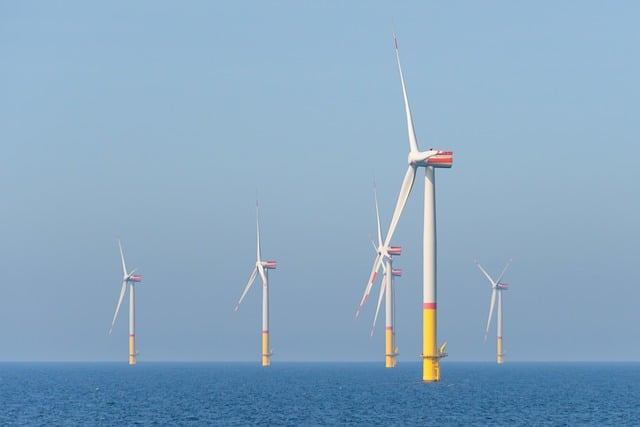
Offshore wind renewable energy is shifting from a niche technology to a mainstream power source. Global capacity has surpassed 65 GW, with Europe and Asia leading deployment. Falling costs, supportive policy frameworks, and technological leaps—especially in floating platforms—are driving this momentum. As nations pursue net-zero goals, offshore wind is emerging as a cornerstone of sustainable energy systems and a key enabler for green hydrogen production.
The Global Landscape of Wind Renewable Energy
The offshore wind sector has matured into one of the fastest-growing segments within renewable energy. Its expansion reflects both technological breakthroughs and strong policy backing across major economies.
Current Status of Offshore Wind Development
Global installed offshore wind capacity continues to rise sharply, led by the United Kingdom, China, Germany, and the Netherlands. Europe remains the largest market, but Asia-Pacific countries such as China and Taiwan are catching up rapidly. The International Energy Agency (IEA) projects that global offshore capacity could exceed 200 GW by 2030 if current project pipelines are realized. Governmental policies play a decisive role: the EU’s Green Deal targets 300 GW of offshore capacity by 2050, while the United States aims for 30 GW by 2030 under federal initiatives supporting coastal development zones.
Technological Advancements Powering Offshore Growth
Innovation defines the next phase of offshore expansion. Turbine sizes have grown beyond 15 MW per unit, increasing efficiency and lowering installation costs per megawatt. Blade materials have evolved toward lighter composites that withstand harsh marine environments. Floating wind platforms now enable installations in waters deeper than 60 meters—areas previously inaccessible to fixed-bottom foundations—unlocking vast potential near Japan, Norway, and California. Digitalization also plays an essential role: AI-driven predictive maintenance systems use sensor data to anticipate component wear, reducing downtime and extending asset life cycles.
Economic Drivers Behind Offshore Wind Expansion
Economic viability has transformed offshore wind from subsidy-dependent projects into competitive investments within global electricity markets.
Investment Trends and Financing Models
The financing landscape has diversified significantly. Traditional project finance structures are being complemented by green bonds and infrastructure funds seeking stable long-term returns. Public-private partnerships have become vital in sharing risk between governments and developers, particularly for grid connections and port upgrades. Investor sentiment is shifting toward sustainable portfolios; institutional investors increasingly view offshore wind as a hedge against fossil fuel volatility while aligning with ESG mandates.
Cost Competitiveness and Levelized Cost of Energy (LCOE) Reductions
The Levelized Cost of Energy for offshore wind has dropped more than 60% over the past decade due to larger turbines, optimized logistics, and competitive auctions that drive efficiency gains. In many regions, offshore wind now rivals or even undercuts new fossil generation costs. Compared with solar or onshore wind, it offers higher capacity factors—often above 50%—providing steadier output that supports grid stability. Economies of scale from multi-gigawatt clusters further enhance cost efficiency through shared infrastructure such as substations and transmission corridors.
Market Dynamics and Global Price Tracking for Offshore Wind Projects
Market pricing reflects regional disparities in resource quality, supply chain maturity, and policy incentives. These dynamics shape investment decisions across continents.
Regional Pricing Variations and Market Forces
Europe’s mature supply chain keeps turbine prices relatively stable despite inflationary pressures on steel and rare earth elements used in magnets. In contrast, emerging Asian markets face higher logistics costs due to limited local manufacturing capacity. Supply chain bottlenecks—particularly vessel shortages for turbine installation—can delay projects by months, affecting overall cost trajectories.
Power Purchase Agreements (PPAs) and Revenue Models
Long-term PPAs remain central to financial stability in offshore projects by guaranteeing predictable revenue streams over 15–25 years. However, liberalized electricity markets introduce merchant exposure where developers sell directly into wholesale markets without fixed contracts—a growing trend in Northern Europe. Corporate buyers such as tech companies are also reshaping demand patterns through direct PPAs that secure clean power for data centers or industrial operations.
Policy Frameworks Supporting Offshore Expansion
Policy remains the backbone of global offshore growth through incentives that reduce investor risk while accelerating decarbonization targets.
Regulatory Environment and Incentive Mechanisms
Governments employ diverse instruments: feed-in tariffs ensure fixed returns; competitive auctions foster price discovery; tax credits lower capital burdens during early deployment phases. The EU Green Deal prioritizes cross-border cooperation among member states; the U.S. Inflation Reduction Act extends production tax credits for renewable developers; Asia-Pacific nations like Japan introduce dedicated seabed leasing frameworks to streamline permitting processes aligned with national energy transition goals.
Grid Integration and Infrastructure Development Challenges
Connecting large-scale offshore farms to onshore grids demands robust planning coordination among regulators, grid operators, and developers. High-voltage direct current (HVDC) systems are increasingly favored for long-distance transmission due to reduced losses compared with alternating current links. Advances in subsea cabling materials improve reliability under extreme ocean conditions while modular substations simplify maintenance operations once thought impractical at sea.
Environmental and Social Considerations in Offshore Wind Projects
Beyond economics lies a complex interplay between environmental stewardship and community engagement essential for sustainable deployment.
Environmental Impact Assessment Practices
Comprehensive assessments evaluate potential effects on marine ecosystems including fish habitats, bird migration routes, and seabed integrity during construction phases. Mitigation strategies involve scheduling pile driving outside breeding seasons or using bubble curtains to dampen underwater noise levels affecting marine mammals. Adaptive management frameworks allow continuous monitoring so operators can adjust operations based on observed ecological responses.
Community Engagement and Socioeconomic Benefits
Local participation strengthens project acceptance along coastal regions where visual impact concerns often arise. Offshore developments generate thousands of skilled jobs across manufacturing hubs like Hull or Esbjerg—from blade fabrication to vessel maintenance services—and stimulate port revitalization through upgraded logistics facilities supporting long-term economic regeneration.
Future Outlook for Offshore Wind Renewable Energy Expansion
The coming decade will test how effectively new markets integrate technology transfer with policy design to sustain momentum globally.
Emerging Markets and Global Growth Potential
Latin America is exploring its first commercial-scale sites off Brazil’s coast; India’s Gujarat region prepares tenders backed by international consortia; several African nations assess feasibility studies funded through multilateral banks seeking diversification away from hydropower dependency. By 2035 announced projects could add over 250 GW globally if permitting timelines align with infrastructure readiness.
Integration with Broader Energy Systems
Offshore wind will increasingly interact with other low-carbon technologies such as hydrogen electrolysis powered directly from turbines during periods of excess generation or battery storage balancing short-term fluctuations across interconnected grids. Cross-border interconnectors between North Sea countries exemplify how shared networks can smooth variability while advancing collective net-zero commitments under Paris Agreement objectives.
FAQ
Q1: What makes offshore wind different from onshore wind?
A: Offshore turbines capture stronger and more consistent winds over open water areas, resulting in higher capacity factors but also higher installation complexity due to marine conditions.
Q2: How do floating platforms change project economics?
A: They expand viable locations into deeper waters where traditional foundations are impossible but initially increase capital costs until economies of scale reduce expenses.
Q3: Which regions show fastest growth prospects?
A: Asia-Pacific leads near-term growth driven by China’s rapid buildout followed by emerging investments in Japan, South Korea, Vietnam, India, and Australia.
Q4: What challenges remain for grid integration?
A: Limited transmission capacity near coasts often delays connection schedules; upgrading substations and deploying HVDC links are key solutions under development.
Q5: How does offshore wind contribute to hydrogen production?
A: Excess electricity from turbines can power electrolyzers producing green hydrogen used in heavy industry or transport sectors supporting broader decarbonization goals.