
What makes a wind energy project viable in 2026
A wind energy project in 2026 is viable not simply because a site is windy, but because that wind can be converted into deliverable electricity on a credible schedule. Developers, utilities, lenders and communities now test projects against a wider set of constraints: land or seabed control, measured resource quality, turbine suitability, grid capacity, permitting risk, offtake certainty, financing cost, construction logistics, and a realistic plan for operations and end of service.
Recent market data shows why this discipline matters. GWEC’s 2026 Global Wind Report says the sector added 165 GW of wind capacity in 2025, a new record, taking global installed wind capacity to about 1,299 GW. The International Energy Agency’s Global Energy Review 2026 estimates renewable capacity additions reached 800 GW in 2025, with wind representing about one fifth of that growth. The demand signal is strong, but not every announced project becomes a built project. The projects most likely to proceed are those that address local delivery constraints early.
For more wind market context and related renewable power explainers, visit the Econergy wind section.
The development path from site screening to commissioning
Most utility-scale projects advance through a chain of decisions, not a single approval. The U.S. Department of Energy’s WINDExchange materials describe wind development as a multistep process that often spans years and includes wind resource analysis, land agreements, technical studies, permitting, grid connection, offtake arrangements, financing, engineering, procurement, construction and commissioning.
| Stage | What is tested | Why it matters |
|---|---|---|
| Market and site screening | Wind speed, terrain, land availability, power demand and nearby grid infrastructure | Removes sites that are windy but not deliverable |
| Resource assessment | Measured wind data, turbulence, seasonal variation and expected energy production | Forms the basis for turbine selection and revenue forecasts |
| Land control | Options, leases, easements, road access and cable routes | Gives the developer enough control to invest in studies and design |
| Permitting and studies | Wildlife, cultural resources, aviation, radar, sound, shadow flicker and local zoning | Defines whether the project can be approved and under what conditions |
| Interconnection | Grid capacity, network upgrades, queue position and connection costs | Determines whether electricity can be delivered economically |
| Offtake and finance | Power purchase agreement, merchant exposure, tax treatment, debt terms and equity return | Turns a technical project into an investable project |
| Construction and commissioning | Turbine delivery, civil works, substations, testing and grid compliance | Converts permits and contracts into operating generation |
The order is rarely perfectly linear. Interconnection studies can affect turbine layout. Wildlife findings can change setback distances. A power buyer may require a different commercial operation date. A credible project plan therefore keeps technical, commercial and regulatory workstreams connected from the start.
Project economics now depend on more than turbine price
Wind economics are often reduced to turbine cost, but a modern project budget is much broader. It includes turbines, towers, foundations, roads, cranes, collector systems, substations, transmission upgrades, development spending, insurance, reserves, financing charges, and long-term operations and maintenance. For offshore wind, ports, vessels, export cables and marine construction risks add another layer of complexity.
DOE wind economics resources show that the cost profile has changed over time. Land-based turbine prices fell sharply between 2008 and 2020, then rose modestly in the early 2020s as supply chains tightened. DOE materials also summarize U.S. land-based wind cost estimates around tens of dollars per megawatt-hour, while noting that project-specific cost can vary materially by resource quality, location and grid requirements.
The key commercial question is no longer whether wind can be low cost in principle. It can. The practical question is whether a specific project can secure enough revenue certainty to cover its site-specific risks. That certainty may come from a utility power purchase agreement, a corporate offtake contract, a government-backed mechanism, a hedge, a merchant strategy or a combination of these. In markets with volatile power prices, a fixed-price wind contract can also provide value as a hedge against fuel price swings.
Grid connection is often the decisive constraint
Grid access has become one of the most important filters for wind project success. A site can have excellent wind, supportive landowners and a willing buyer, yet still struggle if the transmission network cannot accept the output at a reasonable cost. Interconnection studies may require substation upgrades, new transmission lines, protection system changes or curtailment assumptions that change the project’s economics.
U.S. interconnection data from Lawrence Berkeley National Laboratory illustrates the scale of the challenge. Its 2026 Queued Up update reported that, at the end of 2025, active U.S. interconnection queues still contained large volumes of proposed generation and storage, including about 220 GW of wind capacity. The report also showed that solar and storage remained much larger queue categories, while natural gas requests rose sharply. For wind developers, grid position is not just an engineering issue; it is a competitive issue.
A more bankable wind energy project usually has clear answers to five grid questions: where it interconnects, what studies have been completed, what network upgrades are expected, who pays for them and whether the proposed commercial operation date remains realistic. Without those answers, capacity announcements can overstate what is likely to be built.
Permitting, wildlife and community acceptance shape the final design
Permitting is not a formality. It determines where turbines can be placed, how tall they can be, how close they can stand to homes, roads and property lines, when construction can occur and what monitoring or mitigation may be required during operation. Specific rules differ by country, state, province and municipality, but the recurring themes are similar.
- Wildlife and habitat: studies may examine birds, bats, sensitive habitats and seasonal migration patterns.
- Sound and shadow flicker: models are used to assess potential effects on nearby residences and public spaces.
- Aviation and radar: taller turbines can require review for airspace, defense, weather radar or telecommunications impacts.
- Cultural and archaeological resources: project layouts may need to avoid protected sites or areas of local significance.
- Roads and construction traffic: blade delivery, crane paths and road upgrades can affect local permitting and community negotiations.
Community engagement is most effective when it starts before the layout is fixed. Land lease payments and tax revenue matter, but they do not replace trust. Residents often want to know how visual impacts, noise, drainage, roads, emergency access and decommissioning will be handled. Projects that provide clear answers early are more likely to maintain support through construction. See also: clean energy.
Onshore and offshore wind projects are diverging
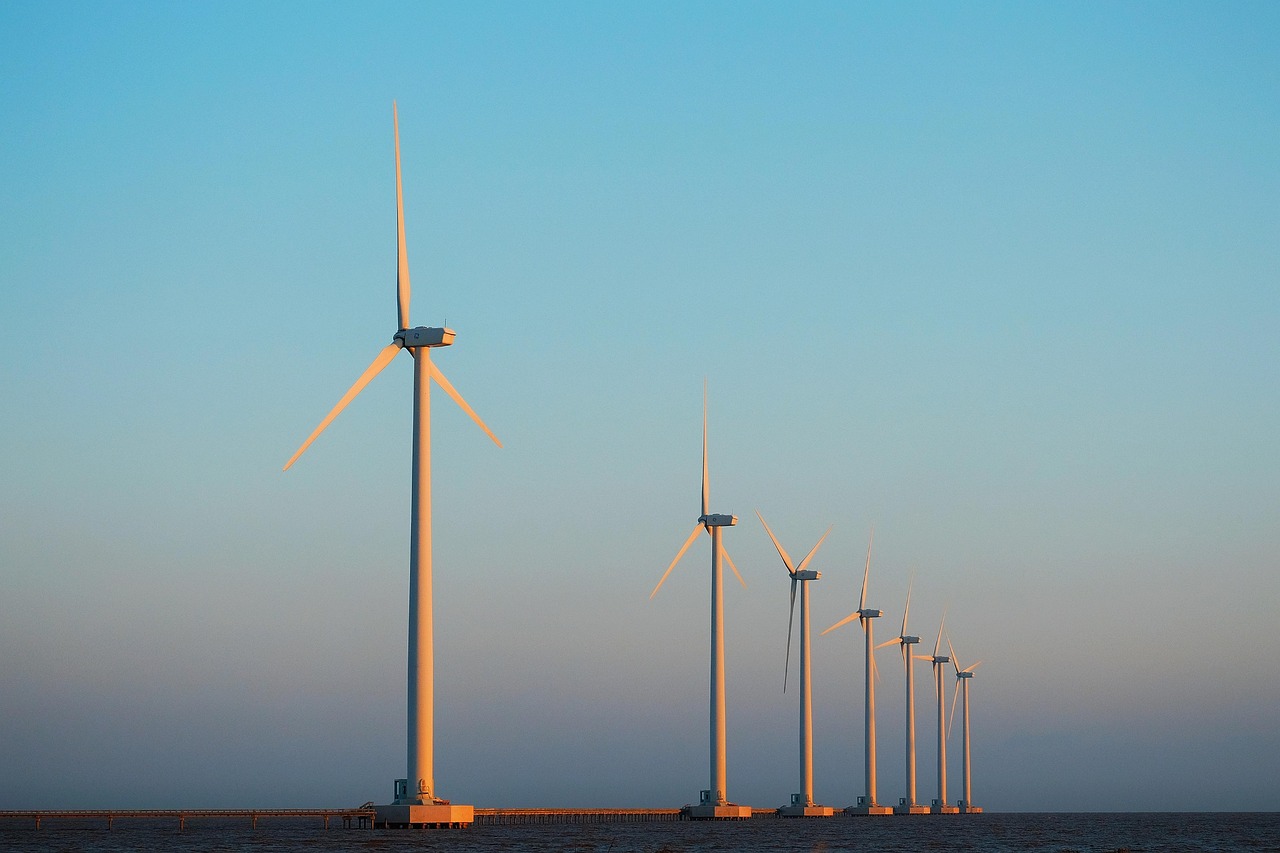
Onshore wind remains the volume engine of the industry. GWEC reported that 155.3 GW of the 165 GW added globally in 2025 was onshore wind. Offshore wind added 9.3 GW in 2025, bringing global offshore capacity to more than 90 GW. These figures show two different markets moving at different speeds. Onshore wind is generally faster to deploy and easier to standardize. Offshore wind can deliver very large projects near coastal demand centers, but it faces higher capital cost, marine permitting, specialized vessels, port constraints and more complex supply chains.
| Factor | Onshore wind | Offshore wind |
|---|---|---|
| Typical advantage | Lower cost and more mature construction process | Large scale and strong wind resources near coastal load centers |
| Main constraint | Land use, local acceptance and transmission availability | Marine construction, grid export cables, ports and policy stability |
| Permitting focus | Local zoning, wildlife, sound, roads and land agreements | Seabed leasing, marine ecology, fisheries, navigation and coastal landing points |
| Commercial risk | Interconnection cost, curtailment and power price exposure | Inflation, vessel availability, long construction schedules and contract repricing |
The practical takeaway is that onshore and offshore projects should not be judged by the same checklist. A good onshore project may be relatively small but highly deliverable. A good offshore project may require a longer development window but provide strategic scale once ports, grid and contracts are aligned.
How to assess whether a project is credible
Because wind project pipelines are often much larger than completed capacity, announcements need careful review. A project with a nameplate capacity figure is not automatically a project that will reach operation. The more useful question is how many critical milestones it has passed.
- Has the project secured land rights or a seabed lease?
- Has wind resource measurement moved beyond desktop mapping?
- Is the turbine model suitable for the site’s wind regime, temperature range and logistics constraints?
- Has the interconnection request advanced beyond an early queue position?
- Are major network upgrade costs known?
- Is there a signed offtake agreement or a credible merchant revenue strategy?
- Have local, environmental and aviation reviews identified manageable issues?
- Is the construction schedule realistic given turbine supply, cranes, ports, roads and seasonal limits?
- Does the financial model include operations, maintenance, insurance, curtailment and decommissioning?
End-of-service planning is part of credibility. DOE resources describe wind turbines as having an expected service life of roughly 30 years, while land and project agreements often run for decades. At the end of that period, owners may repower the site with newer turbines, extend operation if equipment and permits allow, or decommission the project and restore affected land according to applicable rules and contracts.
What this means for the next wave of wind energy projects
The global wind market is large and still growing, but the next phase will reward execution more than ambition. The headline numbers from 2025 show strong demand, especially in Asia, while IEA data shows wind and solar becoming a much larger part of the global electricity mix. At the same time, permitting pressure, grid congestion, financing costs and supply chain constraints continue to separate viable projects from speculative ones.
For developers, the priority is early risk reduction. For utilities and corporate buyers, it is contract credibility and delivery confidence. For communities, it is transparency on local impacts and long-term accountability. For policymakers, it is the practical work of aligning permitting, grid investment and market rules with renewable energy targets. A wind energy project succeeds when these pieces come together, not when a capacity target is announced.
Frequently asked questions
How long does a wind energy project take to develop?
DOE WINDExchange materials use a multiyear development timeline for land-based wind, and many projects take several years from early screening to commissioning. Actual timing varies by location, project size, permitting complexity, interconnection studies, supply chain availability and whether the project is onshore or offshore.
What is the biggest risk for a wind energy project?
The biggest risk depends on the site, but grid interconnection is increasingly one of the most decisive. A project may have strong wind and local support but still be delayed or redesigned if transmission upgrades are expensive, slow or uncertain.
Is wind energy still growing in 2026?
Yes. The latest full-year global reporting available in 2026 shows record wind additions in 2025. GWEC reported 165 GW of new wind capacity for 2025, while the IEA estimated that wind accounted for about 20% of global renewable capacity additions that year.
What happens when a wind project reaches the end of its life?
The owner typically evaluates repowering, life extension or decommissioning. Repowering can replace older equipment with newer turbines, while decommissioning removes project infrastructure and restores land or seabed areas according to permits, contracts and local requirements.