
Wind innovation has shifted from bigger machines to project value
Wind innovation is no longer measured only by taller towers and longer blades. The next phase is about making wind projects more bankable, easier to connect to power systems and more sustainable over their full life cycle. In its 2026 reporting cycle, the Global Wind Energy Council said the industry installed a record 165 GW of new wind capacity in 2025. The International Energy Agency also expects strong onshore and offshore additions through 2030, although it has revised some forecasts downward because of policy, cost and supply chain pressure. Together, those signals show where the sector is heading: technology must not only generate more electricity, but also reduce project risk, improve grid value and support faster deployment. For more sector coverage, visit our wind energy updates.
The turbine is still changing, but size alone is not the strategy
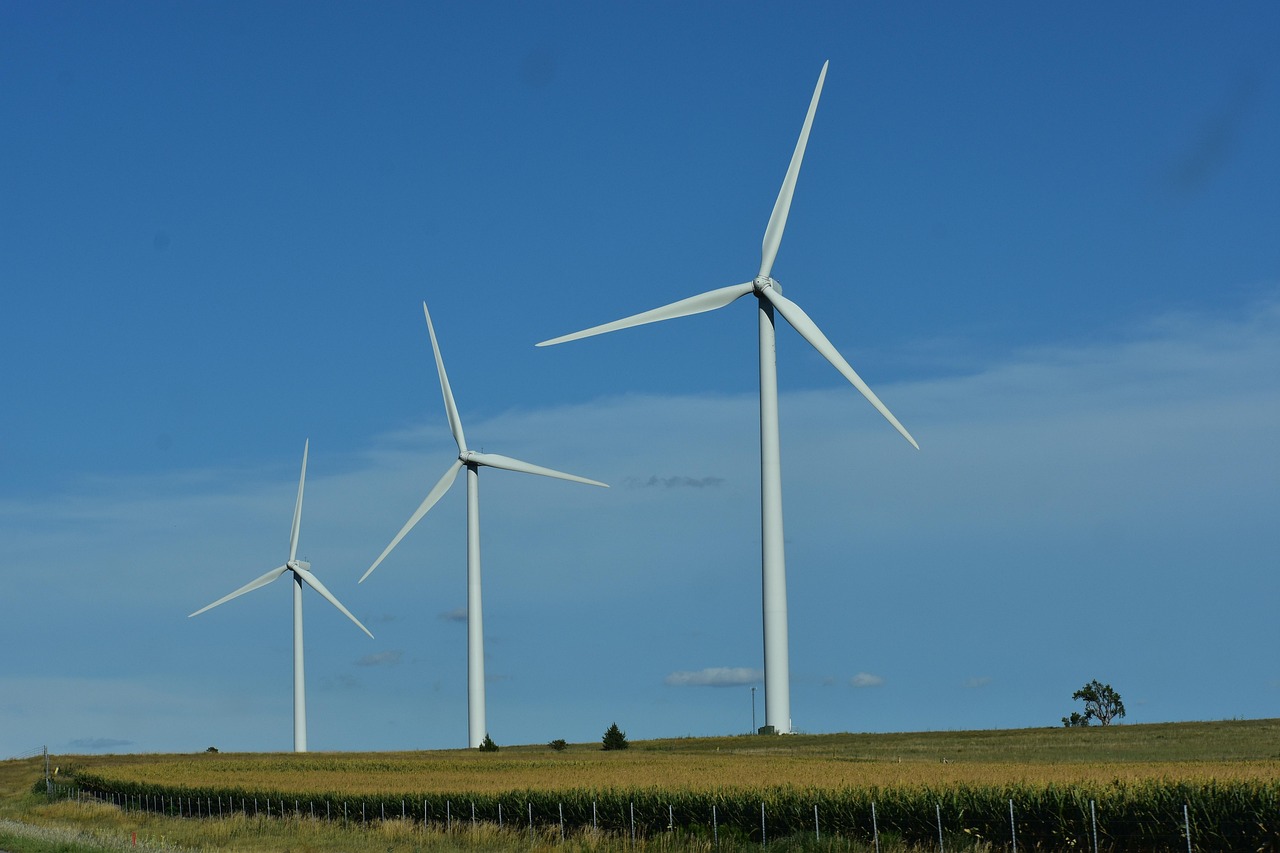
For two decades, much of the wind sector’s progress has come from scale. Larger rotors sweep more air. Taller towers reach stronger and steadier wind. Higher nameplate ratings can reduce the number of machines required for a project. U.S. Department of Energy material based on the Land-Based Wind Market Report shows how visible this trend has become: in 2023, the average hub height for newly installed U.S. utility-scale land-based turbines was about 103.4 meters, the average rotor diameter was more than 133.8 meters, and the average turbine capacity was 3.4 MW.
The same source notes that 98% of newly installed U.S. turbines in 2023 used rotors of at least 115 meters in diameter. That matters because a larger swept area helps turbines capture more energy at moderate wind speeds, expanding the range of sites that may be economically useful. In offshore wind, the scale trend is even more pronounced because marine transport and installation vessels can handle components that would be much harder to move by road.
Even so, the next wave of wind innovation is more selective than a simple bigger-is-better approach. Larger blades raise manufacturing, transport, quality control and repair challenges. Taller towers require more material and more complex logistics. Offshore turbines add pressure on ports, vessels, foundations and installation schedules. The most valuable turbine innovation is therefore not maximum size in isolation, but the best balance among energy capture, reliability, manufacturability and project cost.
Offshore and floating wind are expanding where wind can be built
Offshore wind remains one of the most important innovation areas because it gives developers access to strong wind resources near large coastal electricity demand centers. GWEC’s Global Offshore Wind Report 2026 says 9.3 GW of new offshore wind capacity was grid-connected worldwide in 2025, the third-highest annual total in offshore wind history. Offshore wind is also approaching a symbolic milestone near 100 GW of cumulative global capacity.
The IEA’s Renewables 2025 outlook expects offshore wind capacity expansion to reach about 140 GW during 2025-2030, more than doubling the previous five-year period. It also expects the annual offshore market to rise from 9.2 GW in 2024 to more than 37 GW by 2030. At the same time, the IEA revised its global offshore forecast down by 27% from the prior year, citing higher costs, supply chain constraints, project cancellations and auction challenges in several markets.
This is where innovation has to solve practical deployment problems, not just prove technical capability. Fixed-bottom offshore wind still needs better serial production of foundations, larger installation vessels, stronger port infrastructure and more predictable permitting. Floating offshore wind adds another layer of complexity: floating platforms, mooring systems, dynamic cables, array layouts and maintenance strategies must all work together in deeper waters.
International research under IEA Wind TCP Task 49 has focused on integrated floating wind array design, including reference designs across different water depths and work on farm-level failure risks. That direction matters because floating wind will not scale only through a better platform. It will scale when developers, insurers, suppliers and regulators have enough confidence in whole-array reliability.
Digital operations are becoming a hidden innovation layer
Some of the most valuable wind innovation is less visible. Digital tools do not always change the shape of a turbine, but they can change how much energy a wind plant delivers and how much it costs to maintain. The main areas include forecasting, turbine condition monitoring, wake management, remote diagnostics, inspection automation and asset optimization.
Wake effects are a useful example. When an upstream turbine extracts energy from the wind, downstream turbines may receive slower and more turbulent airflow. Wind farm control strategies, including wake steering, try to operate turbines as a coordinated plant rather than as isolated machines. The goal is not always to maximize the output of each individual turbine at every moment. Under some conditions, slightly adjusting one turbine can improve total plant production or reduce structural loads across the site.
Digitalization also supports predictive maintenance. Better sensor data and analytics can help operators identify abnormal vibration, gearbox issues, blade damage or electrical faults before they become major failures. Drone and robotic inspections can reduce downtime and safety exposure, especially offshore. For owners, the value is measured in higher availability, fewer emergency repairs and better long-term performance data.
There is an important limitation: digital claims need verification. A software tool that performs well at one site may not deliver the same value in different terrain, weather, turbine models or market conditions. The strongest digital innovation will be supported by transparent data, repeatable methods and performance evidence across multiple projects.
Materials and circularity are moving into the mainstream
Wind energy already has a comparatively low operating emissions profile, but the industry is under growing pressure to address materials, end-of-life handling and supply chain impacts. Towers, foundations, copper and many metal components have established recycling pathways. The harder challenge is the blade, because modern blades use composite materials designed for strength, low weight and long service life.
Blade circularity is therefore an important part of wind innovation. Vestas has stated a goal of producing zero-waste turbines by 2040 and delivering a 100% recyclable rotor by 2030. Its CETEC initiative, developed with partners including Aarhus University, the Danish Technological Institute and Olin, focuses on separating epoxy-based blade composites so glass fibers and resin-related materials can be recovered. Vestas reported that a testbed at Stena Recycling’s Halmstad facility in Sweden was constructed in mid-2025 and had completed more than 500 tests at the time of its update. See also: clean energy.
The key point for readers is that circularity is moving from public commitments toward pilot and testbed activity, but full commercial scale is still a work in progress. Cement co-processing, mechanical recycling, chemical separation and design-for-recycling approaches may all play roles. Procurement rules, landfill restrictions, material quality requirements and regional recycling infrastructure will determine how quickly circular blade solutions become standard practice.
Grid integration is now central to wind innovation
As wind and solar grow, the challenge shifts from building individual projects to operating electricity systems with much higher shares of variable generation. The IEA’s Renewables 2025 report projects the global share of renewable electricity generation to rise from 32% in 2024 to 43% by 2030, with variable renewables such as wind and solar almost doubling to 27% of generation.
That creates a new innovation priority: wind plants must provide more system value. Forecasting helps grid operators plan around weather-driven output. Storage and hybrid projects can shift delivery and reduce curtailment. Advanced power electronics can support voltage and frequency needs. Better transmission planning can connect high-quality wind resources to demand centers. Market design can reward flexibility and reliability, not only low generation cost.
This does not mean every wind project needs a battery or a hydrogen link. It means the value of a wind project increasingly depends on when and where it produces, how predictable it is, what grid services it can provide and how quickly it can connect. A technically strong project can still struggle if interconnection queues, curtailment risk or local congestion weaken its revenue case.
Where innovation creates value in wind projects
| Innovation area | Near-term value | Constraint to watch |
|---|---|---|
| Larger and more optimized turbines | Higher energy capture, fewer turbines per project and better use of moderate-wind sites | Transport, installation, component reliability and repair logistics |
| Floating offshore wind | Access to deeper-water wind resources near coastal demand | Mooring systems, dynamic cables, ports, insurance and bankability |
| Digital operations | Higher availability, improved wake management and lower unplanned maintenance | Need for site-specific validation and transparent performance evidence |
| Blade recycling and circular materials | Lower end-of-life waste risk and stronger sustainability credentials | Commercial scale, recovered material quality and regional recycling capacity |
| Grid integration technologies | Reduced curtailment and higher system value as renewable penetration rises | Transmission delays, market rules and interconnection queues |
What to watch next
The most important wind innovation signals over the next few years will come from deployment evidence rather than announcements. Watch whether offshore auctions attract financially sustainable bids. Watch whether large turbine platforms achieve reliable field performance across different climates. Watch whether floating wind demonstration projects become repeatable commercial designs. Watch whether blade recycling moves from testbeds to regional industrial capacity. Watch whether grid reforms reduce connection delays and curtailment.
There is also a geographic dimension. China’s scale is shaping global manufacturing and deployment data. India’s wind additions rebounded strongly in 2025 according to GWEC and IEA reporting. Europe remains central to offshore wind expertise but faces cost and auction design challenges. The United States has strong land-based wind experience, but policy and permitting uncertainty can affect the pace of both onshore and offshore development.
For investors, policymakers and energy readers, the practical conclusion is clear: wind innovation is becoming more integrated. The winning technologies will be those that improve the whole project equation, including cost, reliability, permitting, grid value, supply chain resilience and environmental performance.
Frequently asked questions
What does wind innovation mean today?
It means more than building larger turbines. Current wind innovation includes turbine design, floating offshore foundations, digital plant controls, predictive maintenance, recyclable materials, grid integration and new project delivery models.
Are bigger wind turbines always better?
Not always. Larger turbines can capture more energy and reduce the number of machines needed, but they also create transport, installation, reliability and repair challenges. The best turbine choice depends on site conditions, logistics, grid connection and project economics.
Why is offshore wind growing but still facing delays?
Offshore wind has strong resource potential, but projects are complex and capital intensive. Recent delays have been linked to higher financing costs, supply chain constraints, auction design issues, permitting timelines and the need for specialized vessels and port infrastructure.
Can wind turbine blades be recycled?
Many turbine components already have recycling pathways, but blades are harder because they use composite materials. Several companies and research groups are developing chemical, mechanical and circular design approaches, yet broad commercial scaling remains an important next step.