

What PV battery storage means
PV battery storage combines a photovoltaic solar array with a battery energy storage system so that solar electricity can be used later, instead of only at the time the panels are producing. In practice, storage can shift midday solar output into evening demand, reduce wasted or low-value exports, support backup power and help grids manage more variable renewable generation.
In 2026, this is no longer a niche design issue. U.S. Energy Information Administration data shows rapid growth in battery capacity, while Department of Energy cost benchmarks show that adding storage changes both project cost and operating strategy. The practical conclusion is clear: PV battery storage can increase the usable value of solar, but the right design depends on tariff rules, load shape, battery duration, safety codes, interconnection limits and long-term degradation.
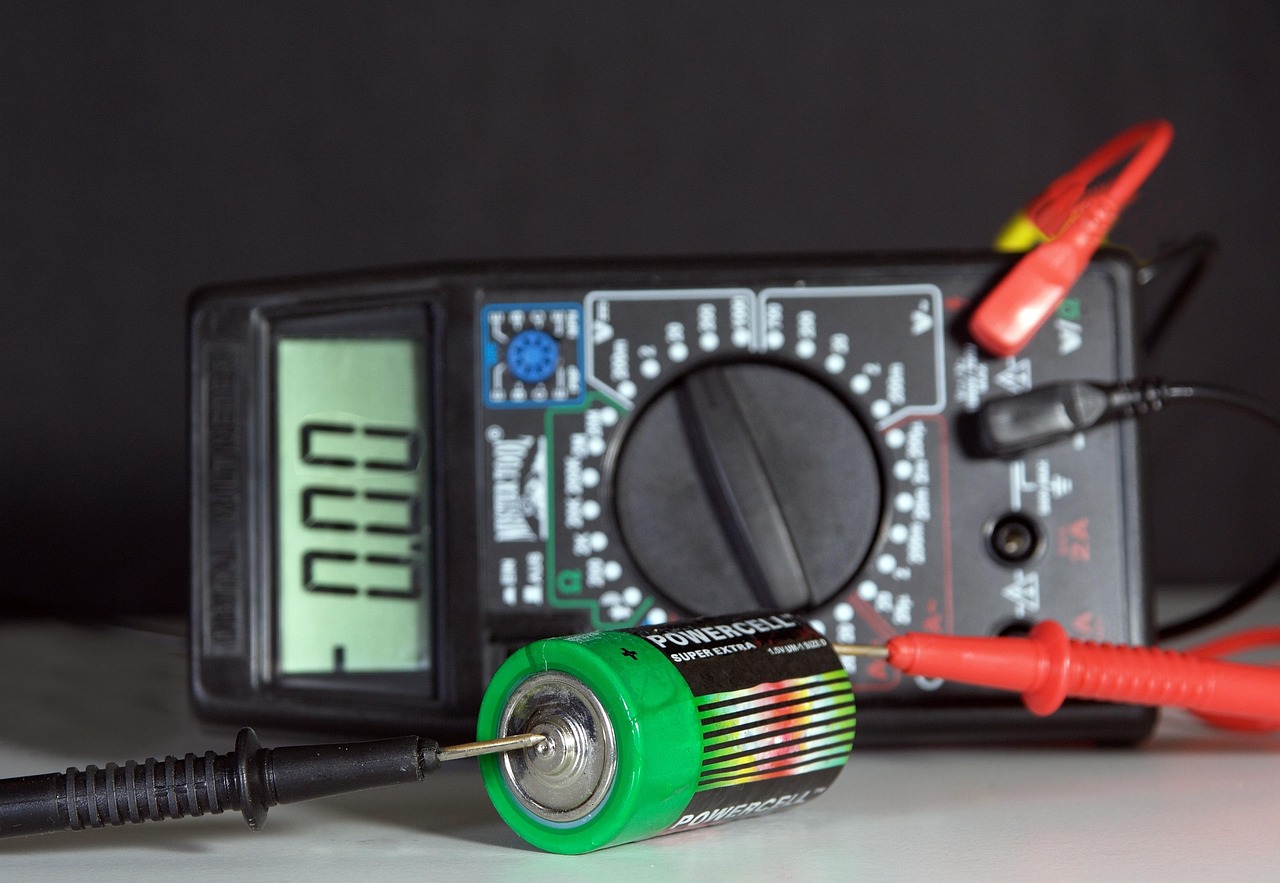
A PV battery storage system has two ratings that should not be confused. Power, measured in kilowatts or megawatts, indicates how much electricity the battery can deliver at a given moment. Energy, measured in kilowatt-hours or megawatt-hours, indicates how long it can keep delivering. A 10 kW battery with 20 kWh of usable capacity can theoretically discharge at full output for about two hours before losses and reserve settings are considered. Solar arrays are usually sized in kWdc or MWdc, while grid interconnection and inverter limits are often stated in ac power. Good system design aligns these values rather than treating the battery as a simple accessory.
The battery also needs an inverter, controls, protection equipment, thermal management, monitoring software and a battery management system. For homeowners, that may mean a wall-mounted or floor-standing lithium battery cabinet. For commercial sites, it may mean outdoor cabinets connected to a facility switchboard. For utility projects, it is often containerized equipment tied to a substation. In every segment, the business case depends on when the battery charges, when it discharges and what problem it is intended to solve.
Why storage is moving from add-on to core solar design
Grid-scale deployment is the clearest signal. The U.S. Energy Information Administration reported that U.S. utility-scale battery storage reached 43.6 GW by the end of 2025. Operators added another 8.3 GW in the first six months of 2026, bringing nameplate battery storage capacity to nearly 52 GW. EIA also said operators anticipated another 54 GW over the following two and a half years, although planned capacity can change as interconnection, financing and permitting conditions evolve.
Solar growth is one reason batteries are being built so quickly. In EIA’s 2026 capacity additions analysis, developers planned 43.4 GW of new U.S. utility-scale solar capacity and 24 GW of new utility-scale battery capacity during 2026. Texas, California and Arizona accounted for most planned battery additions, reflecting a mix of strong solar resources, large power demand, merchant market opportunities and grid congestion.
The California grid shows how this works in daily operations. EIA reported that in the first five months of 2026, utility-scale solar generation in the California Independent System Operator area surpassed natural gas generation, while battery discharge tripled compared with the same period in 2024. The same EIA analysis noted that battery storage, often co-located with solar, charges when solar generation exceeds grid needs and discharges in the evening or early morning when solar output falls.
Industry data points in the same direction. The American Clean Power Association and Wood Mackenzie reported on March 24, 2026 that the United States installed 18.9 GW of battery energy storage systems in 2025 across utility, commercial and residential segments, up 52% from 2024. That does not mean every solar project needs the same battery configuration, but it does confirm that storage is now part of mainstream project planning.
| Indicator | What it suggests for PV battery storage |
|---|---|
| Nearly 52 GW of U.S. nameplate battery capacity by mid-2026, according to EIA | Storage is scaling from niche resource to major grid asset. |
| 24 GW of planned U.S. utility-scale battery additions in 2026, according to EIA | Developers are pairing storage with solar and using it as a standalone flexibility resource. |
| Battery discharge in CAISO tripled in the first five months of 2026 versus the same period in 2024, according to EIA | Batteries are actively shifting solar-heavy daytime generation into later hours. |
| 18.9 GW of U.S. storage installations in 2025, according to ACP and Wood Mackenzie | Market adoption is broadening across utility, commercial and residential use cases. |
How batteries create value for solar projects
The most visible value is energy shifting. A solar-only system produces heavily during daylight hours, which may not match the highest-price or highest-demand periods. A battery can charge during solar surplus and discharge into evening peaks. This is especially important where time-of-use rates, net billing tariffs or wholesale market prices reward later delivery more than midday export.
Another value is clipping recovery. Many PV systems have more dc solar capacity than inverter ac capacity. On high-production days, the solar array may generate more dc power than the inverter can send to the grid, causing clipped energy. A DC-coupled battery can capture some of that otherwise curtailed dc energy, depending on control settings and state of charge. AC-coupled systems can also provide strong value, especially for retrofits, but they do not capture clipping in the same way unless the system is specifically designed around that function.
For commercial and industrial users, PV battery storage can reduce demand charges when a tariff bills for the highest short interval of power draw. The battery discharges when the facility would otherwise set a new monthly peak. This use case requires careful modeling because the battery must respond to building loads, not only solar production. A system that is too small may miss the peak; one that is too large may not earn enough additional savings to justify the extra cost.
For residential systems, the value often combines backup power, self-consumption and bill management. In areas with weak net metering or high evening rates, storing daytime solar can be more attractive than exporting it at a lower credit. During outages, a battery can support selected critical loads or, if sized and wired appropriately, a larger part of the home. Backup value should be separated from bill savings because it is partly a resilience preference rather than a pure financial return.
For utility-scale solar, storage can provide energy arbitrage, capacity value, ancillary services and congestion relief. The International Energy Agency’s 2024 Batteries and Secure Energy Transitions report found that battery storage paired with solar PV becomes increasingly competitive in many markets as battery and PV costs decline. The same report emphasized value-adjusted economics because a solar-plus-storage plant provides flexibility that a solar-only plant cannot.
How to size PV battery storage
Residential systems
Residential sizing should begin with the load list, not the battery catalog. A homeowner needs to decide whether the goal is to run a refrigerator, lights, router and selected outlets during an outage, or to back up air conditioning, electric cooking, well pumps and other heavy loads. That difference can mean several batteries and a different electrical configuration.
The Department of Energy’s 2025Q1 PV system cost benchmark uses an example residential system with 8 kWdc of rooftop PV and a 13.5 kWh lithium-ion ESS. That example is useful as a reference point, not as a universal recommendation. Homes with large heat pumps, electric vehicles or long outage expectations may need more capacity, while homes focused mainly on evening self-consumption may need less. See also: clean energy.
Commercial and industrial systems
Commercial sizing depends on the tariff and operating schedule. A school, warehouse, supermarket and factory may all have different peak windows. The Department of Energy’s 2025Q1 benchmark includes a commercial example pairing 250 kWdc of rooftop PV with a 500 kWh ESS. In real projects, designers also check roof area, service capacity, transformer limits, fire access, insurance requirements and whether the facility can participate in demand response or virtual power plant programs.
Utility-scale systems
Utility projects often use two-hour or four-hour batteries, with four-hour systems common in capacity and evening peak applications. DOE’s 2025Q1 utility benchmark describes a 100 MWdc PV plant paired with 240 MWh of storage. EIA’s 2026 reporting also highlights large solar-and-storage projects in California, Nevada, Florida and Texas. The key design question is not only how big the battery is, but whether the interconnection, inverter strategy and market rules allow the project to monetize its flexibility.
AC-coupled vs DC-coupled PV battery storage
Coupling architecture affects efficiency, retrofit options, clipping recovery and cost. A simple rule is that AC-coupled systems are often easier to add to an existing solar installation, while DC-coupled systems can be attractive for new projects where designers want to share conversion equipment and capture dc-side solar energy that might otherwise be clipped. That rule has exceptions, so the final decision should be modeled against the actual site and tariff.
| Architecture | Typical fit | Main advantages | Key limitations |
|---|---|---|---|
| AC-coupled | Retrofits, residential batteries, many commercial projects | Can work alongside existing PV inverters, offers modularity and operational separation between PV and battery systems. | Solar electricity may convert from dc to ac and back to dc before storage, adding conversion losses. |
| DC-coupled | New solar-plus-storage projects and designs focused on clipping capture | Can reduce some conversion steps and allow the battery to charge directly from the PV dc bus. | Requires tighter compatibility between PV, battery, inverter and controls; retrofits may be more complex. |
| Hybrid inverter systems | Homes and smaller commercial sites | Combines PV and battery functions in one platform and can simplify monitoring. | Battery choices may be limited to compatible models, and inverter failure can affect both PV and storage functions. |
Cost, policy and safety checks
Cost should be modeled by system function
Battery costs are not just cell prices. Installed PV battery storage includes battery modules, inverter capacity, cabinets, balance-of-system hardware, field labor, engineering, permitting, fire protection, controls, commissioning and future maintenance. DOE’s 2025Q1 benchmark, reported in 2024 U.S. dollars and excluding owner tax credits, estimated modeled market prices of $1.81/Wdc for a 100 MWdc utility PV-plus-ESS system, $2.98/Wdc for a commercial PV-plus-ESS system and $4.59/Wdc for a residential PV-plus-ESS system. The same benchmark listed PV-only modeled market prices of $1.12/Wdc, $1.98/Wdc and $2.95/Wdc for the same segments. The comparison illustrates the trade-off: storage can add value, but it also adds significant capital cost.
Policy can change the payback period
In the United States, tax rules changed materially after the Inflation Reduction Act period. IRS guidance for Public Law 119-21 states that the residential clean energy credit under Section 25D is not allowed for expenditures made after December 31, 2025. Larger commercial and utility projects may look to different provisions such as Section 48E, but eligibility can depend on ownership, placed-in-service timing, domestic content, prevailing wage and apprenticeship rules, and other details. Project owners should confirm current rules with qualified tax counsel before relying on incentives in a financial model.
Safety and permitting are central, not secondary
Lithium-ion storage is widely deployed, but high-energy battery systems require careful siting and fire-risk management. UL Solutions explains that the 2026 edition of NFPA 855 and the 2024 International Fire Code reference UL 9540A testing for certain energy storage fire and explosion assessments. UL also states that the sixth edition of UL 9540A was published on March 13, 2026, with changes related to large-scale fire testing. For developers and installers, this means documentation, equipment listings, spacing, ventilation, emergency access and authority-having-jurisdiction review should be addressed early rather than after procurement.
A practical checklist before selecting a system
- Define the main goal: backup power, self-consumption, demand charge reduction, market revenue, grid services or a combination.
- Separate power needs from energy needs by listing peak kW loads and required backup or discharge hours.
- Model the tariff or wholesale price signal using interval data instead of annual averages.
- Compare AC-coupled, DC-coupled and hybrid inverter options based on the actual site, not generic efficiency claims.
- Check usable capacity, round-trip efficiency, temperature limits, warranty throughput and end-of-warranty capacity.
- Verify certifications, fire-code requirements, disconnects, clearances and documentation required by the local authority having jurisdiction.
- Confirm whether interconnection rules allow export from the battery, grid charging or participation in grid programs.
- Include maintenance, software, communications, insurance and possible replacement costs in the financial model.
For more coverage of battery systems and solar integration topics, visit the Storage section.
Frequently asked questions
Is PV battery storage worth it for every solar project?
No. It is most compelling where solar exports have low value, evening electricity prices are high, outages are costly, demand charges are significant or grid services create revenue. In places with full retail net metering and low outage risk, the financial case may be weaker unless resilience is a major priority.
How many hours of storage should a solar project use?
There is no universal answer. Residential systems are often sized around critical loads and desired backup hours. Commercial systems may be sized around demand charge intervals or time-of-use peaks. Utility-scale projects commonly evaluate two-hour and four-hour durations, with four-hour storage often used for evening peak shifting and capacity value.
Is AC-coupled or DC-coupled storage better?
Neither is automatically better. AC-coupled storage is often practical for retrofits and modular residential systems. DC-coupled storage can be attractive for new-build projects that want to capture clipped solar energy and reduce some conversion steps. The better option depends on existing equipment, interconnection limits, controls and economics.
Can a PV battery storage system run during a grid outage?
Only if it is designed and wired for backup operation. A battery must be paired with appropriate islanding equipment, controls and protected load circuits. Many grid-tied solar systems shut down during outages unless they include compliant backup or microgrid functionality.
What is the biggest mistake in PV battery storage planning?
The biggest mistake is treating the battery as a generic add-on. Storage value comes from dispatch strategy. A well-designed system matches the battery’s power, energy capacity, inverter architecture, safety approvals and control software to a specific economic or resilience purpose.