

What a 12v solar panel is best suited for
A 12v solar panel is typically used to charge 12-volt battery systems and support small direct-current loads in RVs, boats, cabins, sheds, monitoring stations and backup kits. It is not usually the right starting point for whole-home solar, but it can be a simple and flexible choice when the main goal is battery charging rather than grid export. The important distinction is that 12v describes the nominal battery system the panel is designed to work with. It does not mean the panel only produces 12 volts. A complete setup normally includes the panel, a charge controller, a battery, suitable wiring, overcurrent protection and the load. For more background on solar applications, see our solar coverage.
Public guidance from organizations such as the U.S. Department of Energy and the U.S. Energy Information Administration describes photovoltaic modules as devices that convert sunlight into direct-current electricity. In a small 12-volt system, that DC output needs to be controlled so the battery charges safely and connected equipment receives stable power.
Why 12v does not mean the panel output stays at 12 volts
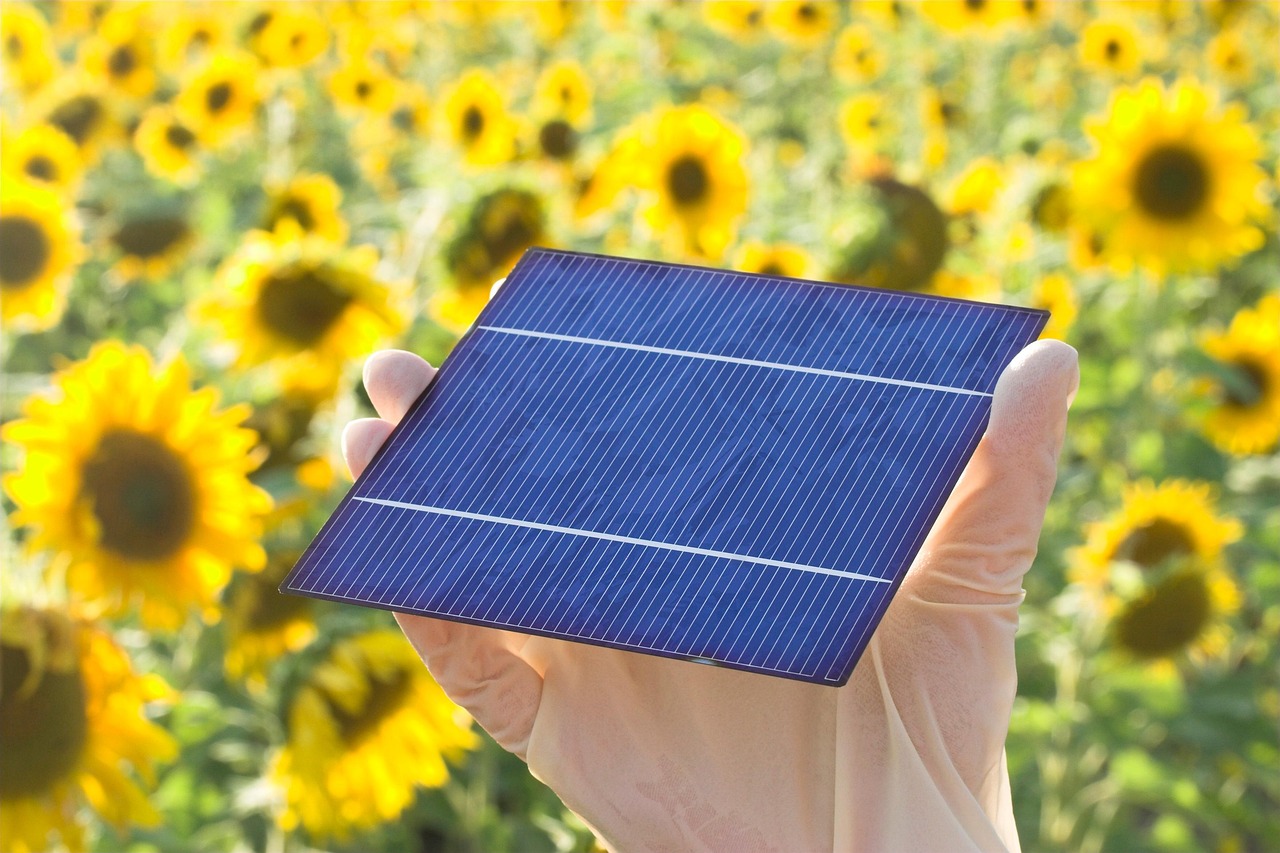
The 12v label is a nominal system-voltage label. A solar panel sold for 12-volt battery charging usually operates at a voltage above the battery voltage, so current can flow into the battery through a controller. Many traditional 12-volt nominal panels have a maximum-power voltage in the high teens, while open-circuit voltage can be higher. Exact values depend on panel design, temperature and manufacturer, so the nameplate data matters more than the marketing label.
Three electrical ratings are especially important:
- Rated power in watts shows the panel output under standard test conditions, not the energy you will receive every hour outdoors.
- Voltage at maximum power helps determine whether the panel is suitable for a PWM or MPPT charge controller.
- Open-circuit voltage must stay below the controller’s maximum PV input voltage, including the voltage rise that can occur in cold weather.
For this reason, a panel should not be connected directly to most batteries for regular charging. Without a charge controller, the system can overcharge the battery in strong sun or charge it incorrectly as conditions change. The controller turns variable panel output into a charging profile the battery can accept.
Start with the load, not the panel size
A common mistake is to buy a 100-watt panel first and then hope it will cover every small load. A better approach is to estimate daily energy use, then work backward to panel wattage and battery capacity. Energy use is measured in watt-hours. A 10-watt light running for five hours uses 50 watt-hours. A 45-watt portable refrigerator may cycle on and off rather than draw 45 watts continuously, but its daily consumption still needs to be estimated from the product manual or measured with a meter.
A simple planning formula is:
Daily load in watt-hours = device watts × hours used per day
Then estimate solar production:
Usable daily solar energy = panel watts × peak sun hours × system efficiency factor
The system efficiency factor accounts for heat, wiring loss, controller conversion, imperfect angle, dust and battery charging losses. For early planning, many small-system designers use a conservative factor around 0.65 to 0.80, then refine the estimate with local solar-resource data. Solar radiation data for PV systems is commonly expressed in kilowatt-hours per square meter, and tools from national laboratories and meteorological sources use location-specific solar resource assumptions for more detailed modeling.
For example, a 100-watt panel in a location with four peak sun hours might appear to produce 400 watt-hours per day. After applying a 70% planning factor, the more realistic planning value is about 280 watt-hours per day. That may be enough for LED lighting, device charging and small electronics, but it may not reliably support heating, cooking, air conditioning or large pumps.
Choose a charge controller that fits the panel and battery
The charge controller is one of the most important parts of a 12-volt solar setup. It protects the battery from overcharging and helps regulate current from the panel. Two controller types are common in small systems: PWM and MPPT.
PWM controllers
A PWM controller is usually lower cost and can work well when the panel voltage closely matches a 12-volt battery system. It is common in simple battery-maintainer, shed-lighting and small RV kits. The trade-off is efficiency. If panel voltage is much higher than battery voltage, a PWM controller cannot convert the extra voltage into additional charging current as effectively as an MPPT controller.
MPPT controllers
An MPPT controller is more flexible and is typically better for larger arrays, colder climates, longer cable runs or series-connected panels. It tracks the panel operating point and converts higher panel voltage into battery-charging current more efficiently. MPPT controllers cost more, but the added energy harvest and design flexibility can be useful when mounting space is limited or daily loads are significant.
As a rough planning check, divide total panel wattage by nominal battery voltage to estimate charging current, then choose a controller with suitable headroom and ratings that match the controller manual. A 200-watt array on a 12-volt battery can produce charging current in a range where a 20-amp controller is often the minimum planning point, while a 30-amp unit may provide more margin depending on controller design and local conditions. Final selection should be based on the controller’s PV input voltage, PV input current, battery chemistry settings and listed safety instructions.
Typical 12v solar panel sizes and realistic use cases
Small solar systems perform best when expectations are specific. The table below gives practical planning ranges, not guarantees. Actual output depends on location, season, tilt, shade, temperature, cable length, controller type and battery condition. See also: clean energy.
| Panel size | Typical use | Practical note |
|---|---|---|
| 5W to 20W | Battery maintenance, gate openers, alarms | Useful for offsetting standby drain, not for meaningful daily appliance loads. |
| 30W to 60W | Small lights, sensors, phones, small DC fans | Works best when loads are intermittent and the battery has reserve capacity. |
| 80W to 120W | RV trickle charging, weekend camping, small electronics | A 100W panel is popular, but it should still be matched to measured energy use. |
| 160W to 300W | RV batteries, portable power stations, marine accessories | Often benefits from MPPT control and careful wire sizing. |
| 400W and above | Larger off-grid battery banks and multiple daily loads | At this point, a 24V or 48V battery architecture may reduce current and wiring complexity. |
The reason voltage architecture matters is current. At the same power level, a 12-volt system carries more current than a 24-volt or 48-volt system. Higher current requires larger conductors, tighter voltage-drop control and stronger overcurrent protection. For a very small setup, 12 volts is convenient. When a system grows beyond a few hundred watts, staying at 12 volts can become less efficient and more expensive than expected.
Battery chemistry changes the design
A 12v solar panel can charge different battery types, but the controller settings must match the battery chemistry. Flooded lead-acid, sealed AGM, gel and lithium iron phosphate batteries have different charging requirements. A controller configured for one chemistry may not be appropriate for another. Lithium batteries also often rely on a battery management system that protects against overcharge, overdischarge and temperature-related limits, but that does not remove the need for a compatible controller.
Battery capacity should be sized for both energy demand and depth of discharge. A 12-volt, 100Ah battery stores about 1,200 watt-hours in theoretical nominal energy. Usable energy is lower after depth-of-discharge limits, inverter losses if AC power is used, temperature effects and aging. For lead-acid batteries, designers often avoid deep daily discharge to preserve cycle life. Lithium iron phosphate batteries generally allow deeper usable discharge, but they require compatible charging and temperature protection.
When planning autonomy, decide how many days the system should operate with limited sun. A panel sized only for average summer conditions may disappoint in winter, under tree shade or during cloudy weather. If the load is important, increase battery reserve, improve panel placement or consider a larger array.
Installation details that affect performance and safety
Even a small solar panel can create safety issues if wiring and protection are treated casually. A panel produces voltage whenever it is illuminated, and batteries can deliver high fault current if a short circuit occurs. Proper fuses, breakers, disconnects, strain relief, weatherproof cable entry and UV-resistant wiring are not optional details.
- Control voltage drop. Long cable runs reduce charging performance, especially in 12-volt systems where current is relatively high.
- Avoid partial shade. A small shadow across part of a panel can reduce output more than beginners expect.
- Use outdoor-rated components. Connectors, cable jackets, glands and enclosures should be suitable for sunlight, moisture and temperature exposure.
- Secure panels mechanically. Wind loading, vehicle vibration and roof penetrations require hardware suited to the mounting surface.
- Check local code for fixed installations. Rooftop and building-mounted PV circuits may trigger electrical-code, permitting, labeling and rapid-shutdown requirements depending on jurisdiction.
For portable camping kits, the risk profile is different from a permanently mounted rooftop system, but the same electrical principles apply. For building wiring, grid interaction or anything that penetrates a roof or wall, a qualified installer or electrician should review the design.
A practical buying checklist
Before buying a 12v solar panel, compare complete system requirements rather than panel wattage alone. A low-cost panel may become expensive if it requires a better controller, heavier cable or replacement mounting hardware. A higher-quality kit may be easier to install if the electrical ratings are clear and the components are matched.
- Confirm the panel’s rated power, maximum-power voltage and open-circuit voltage.
- Check that the charge controller supports the panel input voltage and the battery chemistry.
- Estimate daily watt-hour demand before choosing panel size.
- Size the battery for usable capacity, not just nominal amp-hours.
- Account for winter sun, shade, panel angle and cloudy-day reserve.
- Use wire size and fuse ratings appropriate for current and cable length.
- Decide whether the system should remain 12 volts or move to 24 volts as loads grow.
- Look for clear documentation, weather ratings and recognized safety listings where applicable.
The most reliable 12-volt solar systems are not necessarily the largest. They are the systems where the load estimate, solar resource, battery capacity, controller rating and wiring plan all support the same operating goal.
Frequently asked questions
Can a 12v solar panel charge a 12v battery directly?
For regular use, it should normally charge through a compatible solar charge controller. Direct connection can overcharge the battery in strong sun and does not provide the correct charging stages for common battery chemistries.
How many amps does a 100W 12v solar panel produce?
At the panel’s maximum-power voltage, many 100W nominal 12-volt panels produce roughly five to six amps under standard test conditions. Charging current into a 12-volt battery can differ because the controller converts panel output to battery charging voltage. Real-world current is usually lower than laboratory-rated output when the panel is hot, shaded, dirty or poorly angled.
Is one 12v solar panel enough for an RV?
One panel can help maintain an RV battery and support modest loads, but it may not cover a refrigerator, inverter loads, furnace fan and device charging every day. RV owners should calculate daily watt-hours and compare that number with realistic panel production for their travel season and location.
Can 12v panels be connected in series?
Yes, if the charge controller is rated for the combined open-circuit voltage and the system is designed correctly. Series wiring can reduce current over long cable runs, but shade on one panel can affect string output. MPPT controllers are commonly used when panels are wired in series.
When should a system move beyond 12 volts?
If the array grows to several hundred watts or the system must power larger loads, a 24-volt or 48-volt battery bank may be more practical. Higher-voltage battery systems can reduce current, voltage drop and cable size, although they also require compatible controllers, inverters and safety practices.