
Why Are Solar Panels Still a Serious Power Choice in 2026?
Solar panels are no longer a small side job for buyers who want a green image. They are on factory roofs, farms, logistics parks, schools, and homes because power cost now sits in budget meetings as well as engineering reviews. The U.S. Energy Information Administration reported in March 2026 that utility-scale solar generated 296,000 GWh in 2025, up 34% from 2024, while small-scale solar produced 93,000 GWh. That is no longer a small corner of the power market. (eia.gov)
The Market Is Bigger Than a Trend
Solar demand has kept moving, even when policy, interest rates, and project finance have changed. SEIA and Wood Mackenzie reported that the U.S. solar industry installed 43.2 GWdc in 2025, and solar made up 54% of new electricity-generating capacity added to the grid that year. For buyers, the message is direct: a larger market usually means more supplier choices, quicker product updates, and more people with real service experience. (seia.org)
Electricity Demand Keeps Pressure on Buyers
If your site uses power during the day, solar can cut part of that load at the same time. A warehouse with cooling units, a textile plant with daytime machinery, or a dairy farm with pumping demand can often use solar output as it is produced. That does not make every project a perfect deal, but it gives the system a clear job from day one.
The Decision Starts with Site Fit
Good solar planning starts with a plain checklist: roof age, available area, shading, local tariff, demand charges, grid rules, and future load growth. A sunny roof with weak structure can still be a poor project. A smaller roof with clean access and steady daytime load can work better than expected.
What Makes Good Solar Panels Different from Average Ones?
Two panels can look almost the same in a product photo and act differently after ten summers, three hailstorms, and thousands of thermal cycles. You should compare more than nameplate watts. The better question is how the module performs when heat, weather, installation quality, and real operating temperature are all part of the job.
Cell Type, Module Efficiency, and Real Output
Higher-efficiency modules produce more power in the same space, which matters when roof area is limited. Even so, efficiency alone should not decide the order. For a large ground project, land and mounting may be easier to expand, so cost per watt and steady supply can matter more than chasing the highest percentage on a datasheet.
Temperature Coefficient and Low-Light Behavior
Solar panels lose some output as cell temperature rises. In hot regions, a small difference in temperature coefficient can show up in summer production. Low-light behavior also matters in cloudy coastal areas or winter-heavy markets. Ask suppliers for modeled annual yield, not just standard test condition wattage.
Warranties That Match Field Reality
Most buyers see 25-year or 30-year performance warranties and move on. Do not stop there. Check the first-year degradation, annual degradation, product warranty, claim process, and whether the supplier has local service partners. NREL notes that modules generally degrade around 0.5% to 1% per year and may reach concern levels after about 20% output loss, so warranty math should match real aging. (nrel.gov)
How Much Should You Expect to Pay for Solar Panels?
Solar panel price is only one line in the project budget. Installed cost includes modules, inverters, mounting, cable, protection devices, engineering, labor, permits, grid connection, freight, and margin. A quote that looks cheap can become expensive if it leaves out roof reinforcement, monitoring, or after-sales service.
Hardware Is Only Part of the Bill
The U.S. Department of Energy 2024Q1 benchmark listed an 8 kW residential rooftop PV system at $2.74/Wdc minimum sustainable price and $3.15/Wdc modeled market price, while a 100 MW utility-scale PV system was far lower at $0.98/Wdc minimum sustainable price. This gap is normal because small rooftop work and utility-scale work have different labor, design, and purchasing conditions. Different scale, different cost base. (energy.gov)
Bigger Systems Spread Fixed Costs
Many project costs do not rise in a straight line with system size. Design work, permitting, customer acquisition, and mobilization can be spread across more watts in a larger system. Lawrence Berkeley National Laboratory found wide price variation across U.S. systems, with residential prices varying by as much as $2/W across states in 2023. This is why two quotes from different markets may not be comparable by module price alone. (emp.lbl.gov)
Storage Changes the Price Story
Adding batteries can make sense when outages are costly, peak rates are high, or export rules are weak. But storage is not free backup. The DOE benchmark showed residential PV plus a 13.5 kWh battery at $4.50/Wdc minimum sustainable price in 2024Q1, much higher than PV alone. Use storage where it solves a real problem, not just because it appears in the latest proposal. (energy.gov)
Which Solar Panel System Fits a Home, Factory, or Farm?
The best system type depends on how much space you have, when you use power, how reliable the grid is, and whether future expansion is likely. A tidy residential rooftop, a large factory roof, and a ground-mounted farm array all need different layout habits. Before comparing prices, match the system type to the load profile and site access.
Rooftop Systems for Existing Buildings
Rooftop solar can use empty space and reduce daytime grid purchases. Before choosing panel wattage, check roof loading, waterproofing, fire access, wind zone, and inverter location. A leaky roof under a new array is the kind of mistake nobody wants to pay for twice.
Ground-Mounted Arrays for Open Land
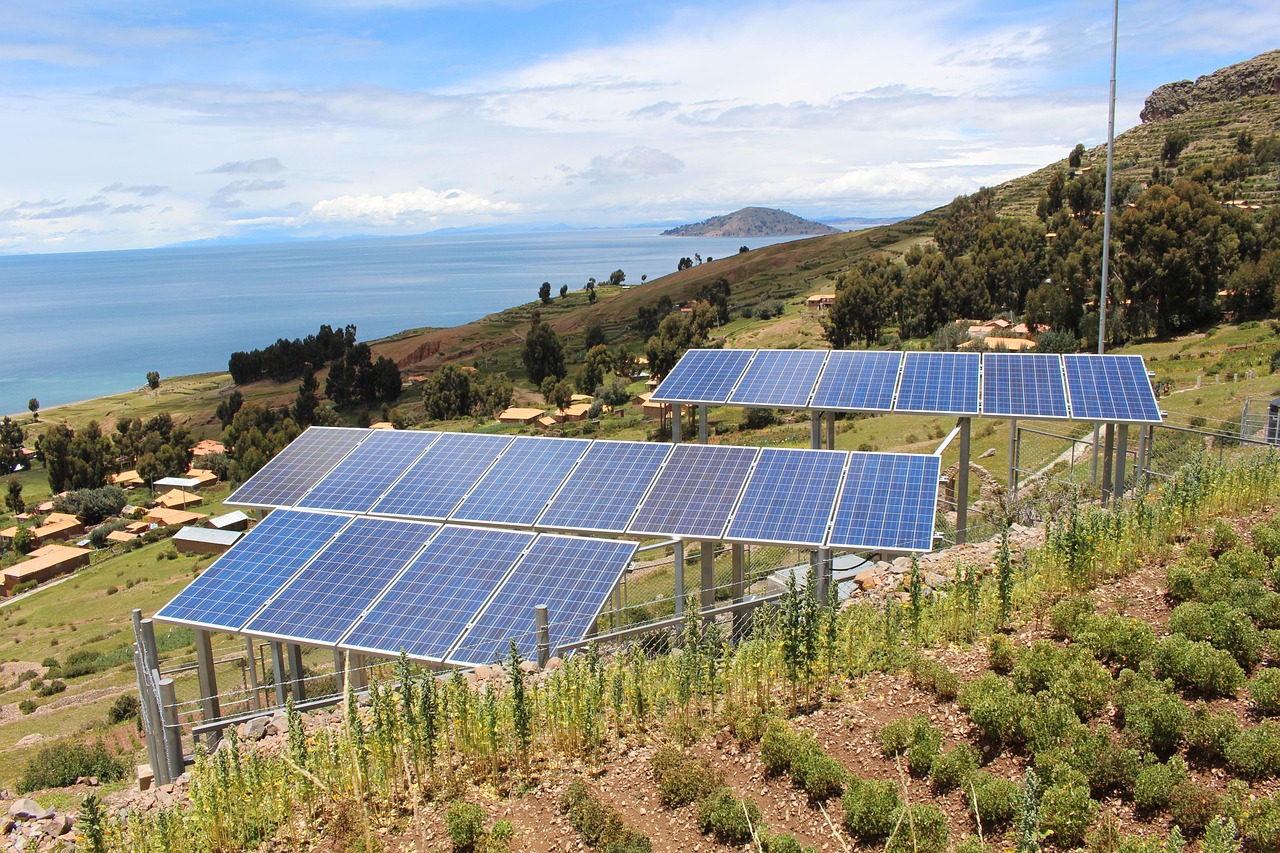
Ground-mounted systems make orientation, cleaning, cable routing, and later expansion easier. They also need land preparation, fencing, drainage, and sometimes vegetation control. For farms and industrial parks, this route can be easier than forcing panels onto crowded roofs with vents, skylights, and shadow lines.
Hybrid Solar and Storage for Critical Loads
If your site cannot afford downtime, solar plus storage may support priority loads such as cold rooms, telecom equipment, security systems, or medical devices. The design should separate critical loads from non-critical loads. Otherwise, the battery may drain into ordinary lighting and office plugs when you need it most. See also: clean energy.
How Can You Compare Suppliers Without Getting Lost?
A good supplier does not only sell panels. It gives clear documents, stable specifications, honest lead times, and useful help when something goes wrong. This matters even more for importers, installers, and project owners buying across borders.
Bankable Bills of Materials
Ask for the exact module model, inverter brand, mounting material, cable type, connector type, protection devices, and monitoring system. If the quote says “or equivalent” too many times, your final shipment may not match the design. A clear bill of materials reduces arguments after deposit, before loading, and during site installation.
Clear Test Reports and Certificates
Look for current IEC test reports, factory inspection records, flash test data, packaging details, and serial number traceability. Certificates should match the exact model being shipped. It sounds picky, but one wrong model code can create customs delays or warranty confusion.
Practical Shipping and After-Sales Support
For overseas orders, packaging strength matters. Broken glass, wet pallets, and mixed serial numbers are not small logistics issues when a project crew is waiting. A useful supplier can explain container loading, spare parts, claim photos, replacement timing, and who answers technical questions after installation. These details are easier to check before the order than after the goods arrive.
What Mistakes Make Solar Panels Underperform?
Most solar disappointment comes from ordinary mistakes, not dramatic failures. Panels need sun, airflow, strong mounting, correct wiring, and regular checks. Skip those basics, and even premium modules can look average.
Poor Shading Checks Before Design
A chimney, parapet, tree line, water tank, or nearby building can cut production more than expected. Shading changes by season, so a noon visit in summer is not enough. A proper shade study catches small problems before they become monthly losses on the monitoring screen.
Weak Mounting in Harsh Weather
NREL’s PV Fleet study found a national median performance loss of 0.75% per year across a large U.S. dataset, and hotter zones showed higher loss than cooler zones. It also found that hail above 25 mm, winds above 90 km/h, and deep snow could raise long-term performance loss. Mounting design is not the place to save a few dollars. On exposed roofs or open ground, clamps, rails, ballast, and roof fixings need to match local wind and snow data. (nrel.gov)
Skipping Monitoring and Maintenance
Solar panels do not need daily attention, but they should not be left alone for years. Monitoring can catch inverter faults, string mismatch, dirt buildup, and sudden drops after storms. A quick quarterly check is not exciting. Still, it is cheaper than finding six months of weak output by accident.
FAQ
Q1: How Long Do Solar Panels Usually Last? A: Many modern modules are built for 25 to 30 years of service, and some may keep running longer with lower output. The key points are slower degradation, good installation, and a warranty process that is clear before purchase.
Q2: Are Higher-Watt Solar Panels Always Better? A: Not always. Higher wattage helps when space is limited, but the better choice also depends on efficiency, degradation, temperature behavior, dimensions, shipping safety, price per watt, and inverter match.
Q3: Do Solar Panels Work on Cloudy Days? A: Yes, but output drops because sunlight is weaker. Cloudy-region projects can still work when the design uses realistic local irradiance data, suitable inverter sizing, and a tariff that rewards self-consumption.
Q4: Should You Add Batteries to a Solar Panel System? A: Add batteries when they solve a clear need, such as backup power, high peak rates, weak export value, or load shifting. If your grid is stable and daytime self-use is high, PV alone may be the cleaner financial choice.
Q5: What Should You Check Before Ordering Solar Panels from a Supplier? A: Check the exact model, certificates, warranty terms, flash test data, packaging plan, delivery schedule, payment terms, after-sales contact, and spare parts policy. A low price with vague documents is rarely a bargain.