
Why Co-Located PV-Plus-Storage Is the Best Dispatchable Renewable Energy Source
Co-located PV-plus-storage systems have emerged as the most effective way to make solar power dispatchable and grid-reliable. By combining photovoltaic generation with energy storage at the same site, these hybrid assets transform intermittent solar output into a controllable, on-demand resource. The shared infrastructure minimizes costs, while advanced control systems enhance flexibility and efficiency. As renewable integration accelerates under global decarbonization goals, co-located PV-plus-storage stands out as one of the best renewable energy sources for achieving both sustainability and reliability.
Understanding Co-Located PV-Plus-Storage Systems?
Co-located PV-plus-storage systems represent a pivotal shift in how renewable assets are designed and operated. They merge two complementary technologies—solar photovoltaics and energy storage—into one integrated facility capable of supplying power when it’s needed most.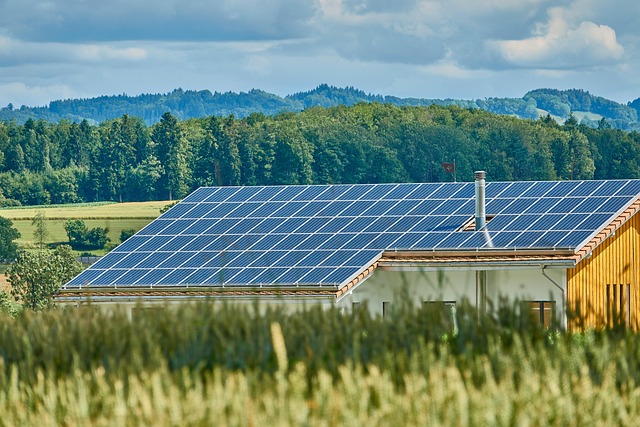
Defining Co-Located PV-Plus-Storage
A co-located PV-plus-storage system places photovoltaic panels and batteries at the same physical location, sharing grid interconnection and operational control. This setup differs from standalone plants where solar generation or storage operates independently. Co-location allows both systems to use shared transformers, switchgear, and communication networks, reducing capital costs and simplifying permitting. The result is a unified asset that can store excess daytime generation for evening peaks or grid support services.
Distinction Between Co-Located and Standalone Configurations
Standalone solar or battery projects serve specific roles—solar for generation, storage for balancing—but lack mutual optimization. In co-located setups, power flows between PV arrays and batteries can be managed dynamically through DC or AC coupling architectures. For instance, DC-coupled systems connect batteries directly to the PV array before inversion, improving conversion efficiency but requiring more complex controls. AC-coupled designs use separate inverters for each subsystem yet offer greater operational flexibility.
Integration Benefits From Shared Infrastructure and Grid Interconnection
Shared infrastructure reduces redundancy: one interconnection point instead of two lowers transmission losses and eases congestion management. Centralized control also simplifies maintenance scheduling and enables coordinated dispatch strategies that respond to real-time market signals or grid frequency deviations.
The Evolution of PV and Storage Integration
The integration of solar PV with energy storage has evolved from experimental pilot projects into mainstream utility-scale deployments driven by cost declines and policy incentives.
Historical Development of Solar PV and Battery Technologies
Solar technology has matured over decades—from early silicon cells with single-digit efficiency to today’s bifacial modules exceeding 22%. Similarly, lithium-ion batteries have benefited from advances in electric vehicle manufacturing, cutting prices by nearly 90% since 2010 according to IEA data. These parallel improvements made hybridization economically feasible.
Transition From Independent Systems to Hybridized Energy Assets
Initially, solar farms sold all output directly to the grid while batteries operated separately for frequency regulation or backup. Integration began when developers realized that curtailment during midday oversupply could be avoided by storing excess electricity onsite. Hybrid plants now routinely participate in capacity markets as fully dispatchable resources.
Policy and Market Drivers Encouraging Integrated Renewable Solutions
Supportive frameworks such as investment tax credits in the United States or capacity remuneration mechanisms in Europe have accelerated hybrid project adoption. Regulators increasingly recognize that combining generation with storage enhances reliability without fossil backup—a critical step toward achieving net-zero targets.
Technical Foundations of Co-Located PV-Plus-Storage Systems
Building a co-located system requires careful coordination across electrical design, control logic, and operational strategy to balance efficiency with cost-effectiveness.
System Architecture and Design Considerations
System architecture defines how energy flows between components. Inverters convert DC output from panels into AC power suitable for grid export; their configuration determines whether storage connects on the DC side or post-inversion on the AC side. Control software governs charge-discharge cycles based on real-time irradiance forecasts, electricity prices, or grid conditions. Designers aim to maximize round-trip efficiency while minimizing degradation over time through intelligent cycling strategies.
Role of Inverters, DC Coupling vs AC Coupling, and Energy Management Systems
Inverters act as the nerve center of hybrid plants. DC coupling offers higher efficiency during charging since energy bypasses an additional conversion stage but limits independent operation of subsystems. AC coupling provides modularity—each unit can run separately—though at slightly lower overall efficiency. Modern energy management systems (EMS) integrate weather prediction models with machine learning algorithms to optimize dispatch timing across both configurations.
Optimization Strategies for Round-Trip Efficiency and Lifecycle Performance
Round-trip efficiency depends on inverter quality, battery chemistry, temperature control, and depth-of-discharge management. Operators often trade off maximum throughput against longevity; shallow cycling extends battery life but reduces immediate revenue potential. Lifecycle modeling tools simulate degradation pathways under varying load profiles to guide asset management decisions.
Energy Storage Technologies in Co-Located Applications
Different storage chemistries suit different operational needs depending on discharge duration, cost profile, and environmental constraints.
Comparison of Lithium-Ion, Flow Batteries, and Emerging Chemistries
Lithium-ion remains dominant due to high energy density (100–250 Wh/kg) and proven scalability across gigawatt-hour installations worldwide. Flow batteries such as vanadium redox offer longer lifespans—up to 20 years—with minimal capacity fade but require larger footprints. Emerging options like sodium-ion or solid-state cells promise safer operation at lower material cost though remain pre-commercial.
Performance Metrics: Energy Density, Degradation Rate, Thermal Stability
Key performance indicators include cycle life (typically 3 000–10 000 cycles), thermal stability under high ambient temperatures, and degradation rate per cycle