
Advancing Solar and Wind Penetration in China Through Energy Complementarity
China’s path toward deep decarbonization depends on how effectively it integrates solar and wind power into its national grid. The complementarity between these two renewable sources offers a practical way to balance intermittency and stabilize supply. By combining solar photovoltaic (PV) systems with wind turbines, hybrid configurations can deliver more consistent output, reduce curtailment, and support the country’s carbon neutrality goals. The following sections explore the technical, economic, and policy dimensions shaping this transition.
The Strategic Context of Renewable Integration in China
China’s rapid energy transformation is reshaping global renewable markets. Yet behind the impressive capacity numbers lies a complex interplay of policy ambition, grid constraints, and regional disparities.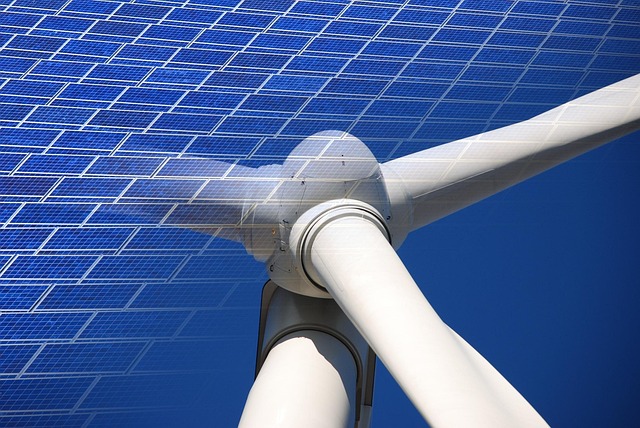
China’s Renewable Energy Transition Pathway
China has pledged to peak carbon emissions before 2030 and achieve carbon neutrality by 2060. These national targets drive massive investments in renewables, which already account for over 40% of installed capacity. However, coal remains dominant in generation share due to reliability needs. Policy frameworks such as the Renewable Portfolio Standard and the 14th Five-Year Plan emphasize grid modernization, flexible dispatch, and digital energy management to accommodate variable renewables.
Challenges in Achieving High Renewable Penetration
The expansion of wind and solar power introduces grid stability challenges. Intermittent output causes frequency fluctuations and voltage instability. Northern provinces often face curtailment because local grids cannot absorb excess generation during off-peak hours. Economic barriers include high storage costs and limited interprovincial transmission capacity. Technical issues such as weak forecasting accuracy further complicate integration at scale.
The Concept of Solar Wind Turbine Systems
Hybrid solar-wind systems are emerging as a promising solution to mitigate intermittency while improving land-use efficiency.
Defining Hybrid Solar-Wind Systems
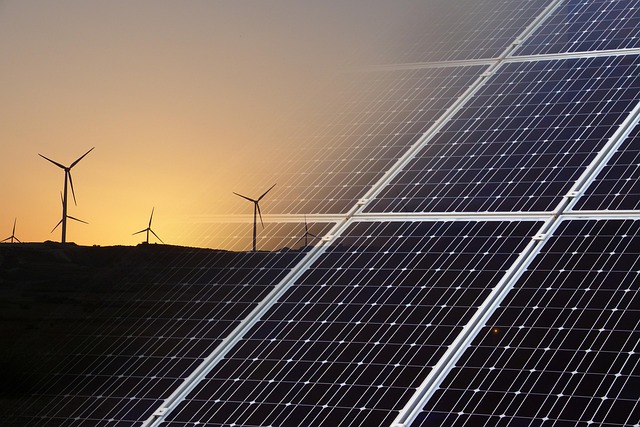
A solar wind turbine system combines photovoltaic panels with wind turbines within a single infrastructure platform. Both sources share converters, controllers, and sometimes storage units. The principle relies on complementarity: when sunlight is abundant but winds are calm during daytime, PV dominates; at night or cloudy periods, wind generation compensates.
Technological Configurations and System Architectures
Two main configurations exist: vertical-axis turbines integrated with PV modules on towers or rooftops, and horizontal-axis turbines co-located with ground-mounted arrays. Hybrid controllers perform real-time optimization through algorithms that manage load sharing between sources. Modular designs allow scalability from small rural systems to multi-megawatt industrial installations.
Energy Complementarity Between Solar and Wind Resources in China
The synergy between solar irradiance and wind speeds across China provides a foundation for hybrid project planning.
Temporal and Spatial Resource Correlation Analysis
Solar radiation peaks during summer months while wind resources are stronger in winter, creating seasonal complementarity. Spatially, northern regions like Inner Mongolia exhibit high wind potential whereas southern provinces benefit from strong solar irradiance. Statistical analyses using correlation coefficients help identify optimal hybrid zones where resource variance offsets naturally.
Implications for Grid Reliability and Energy Smoothing
Hybrid generation smooths power fluctuations by balancing day-night cycles and seasonal shifts. This reduces ramping pressure on thermal plants and improves load matching during evening peaks when demand rises but sunlight declines. Integrated meteorological forecasting enhances scheduling accuracy for grid operators managing variable inputs.
Technical Performance of Solar Wind Turbine Systems
Performance evaluation focuses on how efficiently these systems convert fluctuating natural energy into stable electrical output.
Power Conversion Efficiency and Control Strategies
Maximum Power Point Tracking (MPPT) algorithms adapt dynamically under multi-source conditions to extract optimal energy from both PV panels and turbines. Intelligent controllers coordinate inverter operations to maintain voltage stability even under partial shading or turbulent airflow conditions that affect yield consistency.
Storage Integration and Energy Management Optimization
Hybrid systems often pair with lithium-ion batteries or hydrogen storage units to buffer supply gaps. Advanced Energy Management Systems (EMS) prioritize dispatch based on price signals or demand forecasts. Optimization models reduce operational costs by adjusting charging cycles according to real-time market dynamics.
Economic Viability and Deployment Potential in China’s Market Context
The financial feasibility of hybrid projects depends on capital costs, policy incentives, and regional infrastructure readiness.
Cost-Benefit Analysis of Hybrid Installations
Although initial investment exceeds standalone PV or wind projects due to shared control hardware complexity, lifecycle economics can be favorable through higher utilization rates. The Levelized Cost of Electricity (LCOE) for hybrids continues to decline as component prices fall. Carbon credit trading further improves project returns under national emission schemes.
Regional Suitability Assessment for Large-Scale Deployment
Regions such as Xinjiang, Gansu, and Inner Mongolia demonstrate ideal hybrid potential due to vast open land, strong resources, and proximity to high-voltage transmission corridors. Local governments align hybrid projects with broader strategies like the Western Development Plan to stimulate economic growth while advancing clean energy adoption.
Integration into China’s Smart Grid and Energy Internet Frameworks
Digitalization is redefining how distributed renewable assets interact with the national grid ecosystem.
Role in Distributed Generation Networks
Solar wind turbine hybrids contribute significantly to microgrids serving industrial parks or remote villages where centralized power access is limited. Their decentralized nature supports local balancing through demand response mechanisms that adjust consumption patterns based on real-time supply availability.
Enhancing Flexibility Through Digitalization
Artificial intelligence enables predictive maintenance by analyzing vibration or temperature data from turbines before faults occur. Blockchain-based trading platforms facilitate transparent peer-to-peer energy exchange among distributed producers while maintaining cybersecurity standards compliant with IEC protocols across connected networks.
Environmental and Societal Implications of Hybrid Adoption
Beyond technical benefits, hybrid systems carry measurable environmental gains and social impacts across communities.
Lifecycle Environmental Impact Assessment
Hybrid installations reduce total carbon footprint per kilowatt-hour compared with separate sites due to shared infrastructure use. Co-locating PV panels beneath turbine towers maximizes land efficiency while minimizing habitat disruption. Recycling programs for composite blades and silicon modules are being developed under emerging ISO sustainability standards.
Socioeconomic Benefits from Hybrid Renewable Expansion
Expanding hybrid projects creates skilled employment opportunities in manufacturing hubs like Jiangsu for PV modules or Guangdong for turbine components. Rural electrification initiatives using small-scale hybrids enhance living standards while reducing reliance on diesel generators—an important social dividend aligned with national poverty alleviation policies.
Future Research Directions and Policy Recommendations
Continued innovation will determine how quickly hybrid solutions scale across diverse Chinese regions.
Technological Innovations Needed for Scaling Hybrid Systems
Research priorities include lighter composite materials improving turbine aerodynamics, bifacial PV cells capturing reflected light from snow-covered ground in northern climates, and adaptive control algorithms integrating weather prediction models for preemptive dispatch planning.
Policy Mechanisms to Accelerate Adoption
Policy reforms should simplify licensing procedures for hybrid projects while granting priority grid access similar to standalone renewables. Financial incentives such as feed-in tariffs tailored for mixed-source systems can attract private capital participation. Collaborative R&D programs linking universities with state-owned utilities would accelerate commercialization of next-generation solar wind turbine technologies.
FAQ
Q1: What makes solar wind turbine systems suitable for China?
A: Their ability to balance variable resources matches China’s diverse climate zones where sunlight intensity differs seasonally from wind strength across regions like Inner Mongolia or coastal provinces.
Q2: How do hybrid systems improve grid stability?
A: They provide smoother output profiles that reduce sudden ramping needs on backup plants while enhancing predictability through integrated forecasting tools.
Q3: Are hybrid installations more expensive than single-source plants?
A: Upfront costs are higher but long-term returns improve through better asset utilization rates, reduced curtailment losses, and shared maintenance infrastructure.
Q4: What role does storage play in these systems?
A: Batteries or hydrogen tanks store surplus electricity generated during peak periods then discharge it when production drops or demand spikes.
Q5: How do digital technologies support hybrid operation?
A: AI-driven analytics optimize performance monitoring while blockchain ensures secure decentralized energy trading within smart grid environments.