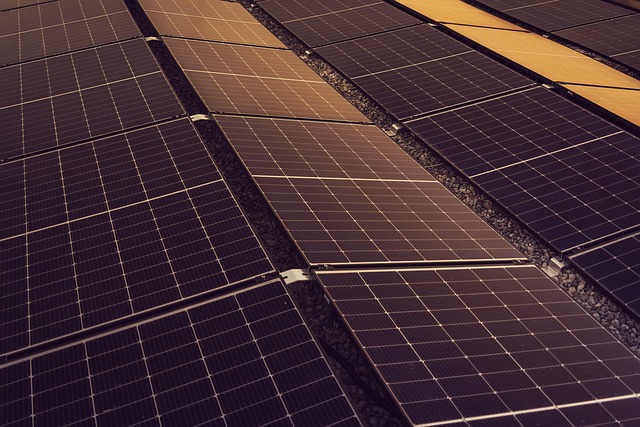

JinkoSolar Tiger Neo 3.0 Hits 20 GW Backlog as 670 W Module Pushes Efficiency Frontier
The rapid rise of high efficiency solar panels has redefined competitiveness in the photovoltaic industry. JinkoSolar’s Tiger Neo 3.0 series, achieving a 20 GW backlog and 670 W output, marks a pivotal point in this transition. The module’s N-type TOPCon architecture not only enhances conversion rates but also signals a shift toward mass adoption of next-generation PV technologies. For project developers and investors, these advancements translate into higher yield per square meter and improved bankability metrics across utility-scale deployments.
The Evolution of High-Efficiency Solar Panels in the Photovoltaic Industry
The past decade has seen a steady climb in module efficiency standards, driven by both material innovation and manufacturing precision. The evolution from P-type to N-type architectures reflects how physics and economics have converged to push performance boundaries.
Shifting Efficiency Standards in Modern PV Technology
Module efficiencies once capped around 18% now routinely exceed 22%. This leap results from refined passivation layers, thinner wafers, and enhanced metallization patterns. Technologies such as TOPCon (Tunnel Oxide Passivated Contact), HJT (Heterojunction), and IBC (Interdigitated Back Contact) have become central to this progress. Each reduces recombination losses differently but collectively raises the ceiling for commercial production lines.
The Role of Advanced Cell Architectures Such as TOPCon, HJT, and IBC in Pushing Conversion Limits
TOPCon employs an ultra-thin oxide layer that reduces carrier loss while maintaining conductivity. HJT integrates amorphous silicon layers for superior temperature behavior, whereas IBC maximizes light absorption by relocating contacts to the rear side. Together they represent the technological triad driving high efficiency solar panels toward their theoretical limits.
Market Implications of Surpassing 22% Module Efficiency Thresholds
Crossing the 22% threshold alters project economics significantly. Developers can reduce land use intensity per megawatt installed, while financiers gain confidence through predictable energy yields. As modules like Tiger Neo 3.0 achieve these benchmarks at scale, market differentiation increasingly depends on reliability rather than pure efficiency numbers.
The Competitive Landscape Among Tier-1 Manufacturers
Competition among global Tier‑1 manufacturers now centers on how fast each can industrialize advanced cell structures without inflating costs. JinkoSolar’s strategy exemplifies this balance between innovation and manufacturability.
Comparison of JinkoSolar’s Tiger Neo 3.0 with Competing High-Efficiency Series from Other Global Manufacturers
Tiger Neo 3.0 competes directly with other premium lines such as LONGi’s Hi-MO 7 or Trina’s Vertex N series. While all employ N-type cells, JinkoSolar distinguishes itself through early mass production readiness and consistent yield verification across multiple climates.
How Manufacturing Scale and Technology Choices Influence Cost-to-Performance Ratios
Large-scale automation enables cost amortization across gigawatt capacities. By standardizing wafer dimensions—often M10 or G12 formats—manufacturers reduce variation losses during lamination and stringing processes, improving cost-to-performance ratios even as technology complexity rises.
Strategic Positioning of JinkoSolar Within the Global High-Efficiency Solar Panel Segment
JinkoSolar positions itself not merely as a component supplier but as a technology platform provider for utility-grade systems. Its sustained R&D investment in N-type processes secures long-term competitiveness against rivals still transitioning from PERC-based lines.
Technical Insights into the JinkoSolar Tiger Neo 3.0 Series
Beyond marketing claims, the technical underpinnings of Tiger Neo 3.0 reveal why it stands at the forefront of PV engineering evolution.
Architecture and Cell Technology Advancements
The module integrates N-type TOPCon cells featuring symmetrical passivation layers that minimize electron recombination at both surfaces. Larger wafers enhance current collection while maintaining manageable resistive losses through optimized metallization grids.
The Influence of Wafer Size, Passivation Layers, and Metallization on Efficiency Gains
Using G12 wafers increases active area per cell without proportionally raising shading losses. Advanced passivation stacks—typically silicon oxide combined with polysilicon—improve open-circuit voltage metrics beyond what traditional PERC designs can achieve.
Reduction in LID (Light Induced Degradation) and LeTID Effects Through Material Optimization
N-type substrates inherently resist boron-oxygen complex formation responsible for LID in P-type cells. Coupled with hydrogenation control during firing, LeTID effects are further suppressed, ensuring stable output over decades of exposure.
Power Output and Module Configuration Analysis
Translating laboratory performance into real-world consistency requires careful attention to electrical configuration and environmental response factors.
Breakdown of the 670 W Module Design Parameters and Electrical Characteristics
A typical Tiger Neo 3.0 panel comprises 132 half-cut cells wired to optimize current flow while minimizing mismatch losses. Its nominal operating voltage aligns well with modern inverter MPPT windows used in large-scale solar farms.
Impact of Bifaciality Factor and Temperature Coefficient on Real-World Performance
With bifaciality factors approaching 85%, rear-side generation contributes significantly under reflective ground conditions like sand or snow fields. A low temperature coefficient around −0.29%/°C ensures minimal power drop during hot summer peaks—a key advantage for desert installations.
Comparison Between Laboratory-Rated Efficiency and Field-Deployed Energy Yield Data
Field data often show slightly lower yields due to soiling or shading; however, bifacial gain compensates much of this loss over time, narrowing the gap between rated efficiency and actual delivered energy per year.
Redefining Performance Benchmarks: From Laboratory to Utility Scale
As laboratory results mature into mass production outputs, backlogs become tangible proof points for market validation rather than mere sales metrics.
The Significance of a 20 GW Backlog in Market Validation
A confirmed backlog exceeding 20 GW indicates strong developer confidence in both product reliability and supply assurance—critical parameters when financing multi-hundred-megawatt projects through international banks.
Correlation Between Production Capacity Expansion and Long-Term Supply Chain Stability
Expanding capacity close to raw material sources stabilizes logistics costs while reducing exposure to polysilicon price fluctuations that periodically disrupt global supply chains.
Implications for Project Developers and EPCs Evaluating Module Bankability
Bankability assessments now weigh manufacturer track record alongside warranty coverage terms; modules with proven degradation rates below 0.4% annually rank higher during tender evaluations by EPC contractors worldwide.
Efficiency Frontier: Practical vs Theoretical Limits
Even as efficiencies climb beyond 23%, physical constraints rooted in semiconductor physics remain unavoidable challenges for future research directions.
Discussion on Physical Constraints Affecting Further Efficiency Improvements Beyond Current Levels
Optical reflection losses at interfaces, recombination at grain boundaries, and contact resistances define diminishing returns once most parasitic mechanisms are minimized through process refinement.
Influence of Optical Losses, Recombination Rates, and Contact Resistances on Overall Performance Ceilings
Reducing front surface reflectivity via nano-texturing or advanced anti-reflective coatings offers marginal but valuable gains; still, each additional percentage point demands exponentially higher process precision.
Research Directions Aimed at Integrating Tandem or Perovskite Layers with N-Type Architectures
Emerging tandem configurations combining perovskite top cells with crystalline silicon bottoms could theoretically surpass 30% efficiency if stability hurdles like moisture sensitivity are overcome—a target several institutes under IEC testing frameworks continue exploring intensively.
System-Level Implications for High-Efficiency Modules in Large Projects
At system scale, module choice affects not just energy yield but overall capital allocation across civil works, electrical balance components, and maintenance cycles.
Energy Density Optimization in Utility Deployments
Higher wattage panels mean fewer strings per megawatt installed capacity; this reduces racking footprints by roughly 5–10%, freeing land resources particularly valuable in constrained geographies such as Japan or Europe’s brownfields.
Effects on BOS (Balance of System) Costs Including Racking, Cabling, and Inverter Selection
Reduced string counts cut cabling length requirements while enabling larger inverter block sizes without exceeding voltage limits—collectively trimming BOS expenses by several cents per watt installed.
Comparative Analysis Between Conventional P-Type Modules and N-Type High-Efficiency Systems in LCOE Reduction
When modeled over a 25-year horizon using IEA benchmark assumptions for irradiance degradation rates, N-type systems deliver up to 6% lower Levelized Cost of Energy due to slower aging curves despite slightly higher upfront prices.
Operational Reliability and Long-Term Performance Metrics
Real-world durability determines whether theoretical advantages translate into sustained financial returns over decades-long operation cycles typical of utility assets.
Field Data Insights into Degradation Rates Under Varying Climatic Conditions
Empirical monitoring across tropical humidity zones shows annual degradation below 0.35%, outperforming legacy multicrystalline panels that often exceed 0.6% under identical stress conditions recorded by IEC 61215 testing protocols.
Advances in Encapsulation Materials Improving PID Resistance and Moisture Tolerance
Modern encapsulants based on polyolefin elastomers exhibit superior resistance against Potential Induced Degradation (PID) compared with traditional EVA sheets—an incremental yet crucial factor maintaining insulation integrity under high-voltage arrays.
Predictive Modeling Approaches for Yield Forecasting Over 25–30 Year Lifespans
Machine-learning models trained on satellite irradiance datasets now forecast lifetime yields within ±2% accuracy margins—a precision level increasingly required by institutional investors underwriting green bonds tied to PV assets.
Future Directions in High-Efficiency PV Manufacturing and Market Strategy
Continuous advancement depends equally on process automation innovations as on new material research pipelines guiding future commercial releases beyond 2025 timelines projected by IRENA scenarios.
Integration of Smart Manufacturing for Yield Enhancement
AI-driven inspection systems already detect microcracks during wafer slicing stages before lamination occurs; such early-stage quality control minimizes downstream rework rates across gigawatt factories operating round-the-clock shifts globally.
Automation Trends Enhancing Consistency Across Gigawatt-Scale Production Lines
Fully automated stringing robots maintain uniform solder joint profiles critical for current balance between half-cells—tiny variances here can cascade into measurable power mismatches at array scale if left unchecked.
Global Market Outlook for High-Efficiency Modules Beyond 2025
Policy incentives promoting carbon neutrality targets accelerate demand concentration within regions reaching grid parity thresholds first—China’s western provinces, India’s Rajasthan corridor, parts of MENA deserts—all poised for rapid adoption once local financing aligns with falling module ASP trajectories projected by BloombergNEF analyses through late decade forecasts.
FAQ
Q1: What distinguishes N-type TOPCon from traditional PERC technology?
A: N-type TOPCon eliminates boron-related defects found in PERC cells while adding tunnel oxide layers that improve carrier lifetime, resulting in higher efficiency stability over time.
Q2: How does bifacial design contribute to overall system yield?
A: Rear-side generation captures reflected light from ground surfaces or nearby structures, adding up to 10–15% extra energy depending on site albedo conditions.
Q3: Why is a low temperature coefficient important?
A: It means less power loss during high ambient temperatures common at desert sites where module surface heat can exceed 60°C frequently throughout summer months.
Q4: What factors drive the cost advantage of large-format wafers?
A: Larger wafers increase active area without proportionally increasing handling costs since automation mitigates breakage risk previously limiting wafer scaling efforts.
Q5: Are tandem perovskite-silicon modules commercially viable yet?
A: Not fully; while lab prototypes exceed 30% efficiency under controlled settings verified by independent IEC labs, long-term durability remains unresolved before mass deployment begins later this decade.