
Establishing Baselines for Echolocating Bat Activity at Wind Farms in Mainland Southeast Asia
Wind energy development in mainland Southeast Asia is accelerating, yet its ecological footprint remains under scrutiny. Establishing baselines for echolocating bat activity is essential to balance renewable energy goals with biodiversity conservation. The interaction between bats and different types of wind turbines depends on local geography, turbine structure, and atmospheric conditions. Accurate baseline data allow developers to design mitigation strategies that reduce collision risks while maintaining energy yield efficiency.
Overview of Wind Energy Development in Southeast Asia
The rapid expansion of wind power across Southeast Asia is reshaping the region’s renewable energy mix. However, the ecological context—particularly concerning bats—requires careful examination before turbine deployment.
Regional Growth of Wind Farms
Mainland Southeast Asia, including Vietnam, Thailand, and Laos, has witnessed a surge in wind farm installations over the past decade. Coastal plains and elevated ridges offer consistent wind resources suitable for large-scale generation. Policy incentives such as feed-in tariffs and national renewable energy targets have accelerated private investment. Yet, the variability in monsoon patterns and terrain complexity demands localized turbine placement studies to optimize both output and environmental safety.
Ecological Context of Bat Populations in the Region
Southeast Asia hosts one of the world’s richest bat faunas, with hundreds of echolocating species adapted to diverse habitats—from karst caves to mangrove forests. Many species exhibit seasonal migration or altitudinal shifts that align with insect abundance patterns. These behaviors intersect spatially with wind farm zones, particularly during nocturnal foraging peaks. Establishing acoustic baselines before turbine installation helps identify high-activity corridors and informs curtailment schedules during sensitive periods.
Classification and Characteristics of Wind Turbine Types
Selecting between horizontal-axis and vertical-axis designs affects not only power efficiency but also ecological outcomes. Each turbine type interacts differently with atmospheric flows and wildlife movement.
Horizontal-Axis Wind Turbines (HAWTs)
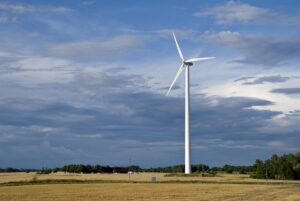
HAWTs dominate commercial installations due to their high conversion efficiency. They feature three-blade rotors mounted atop tall towers ranging from 80 to 150 meters. The rotor-swept zone often overlaps with typical bat flight altitudes, increasing collision potential. Blade-tip speeds generate aerodynamic noise that may interfere with echolocation calls within certain frequency bands. Turbulence behind HAWTs can also alter insect distribution patterns near nacelles.
Vertical-Axis Wind Turbines (VAWTs)
VAWTs operate with blades rotating around a vertical shaft, allowing them to capture wind from any direction without yaw mechanisms. Their compact structure results in lower hub heights—often below major bat flight layers—and reduced spatial footprint. Because VAWTs rotate at slower speeds, they produce less turbulence and mechanical noise compared to HAWTs. These attributes make them promising alternatives for sites near bat-rich habitats or migratory routes.
Mechanisms Linking Turbine Type to Bat Activity Patterns
The relationship between turbine design and bat behavior arises from acoustic interference and airflow dynamics that influence prey density around turbines.
Acoustic Interference and Echolocation Efficiency
Mechanical components emit low-frequency sounds that can mask returning echoes from bats’ ultrasonic calls, reducing detection range of obstacles or prey. Rotating blades modify sound propagation through Doppler shifts and fluctuating air pressure fields. Differences between HAWTs and VAWTs in operational frequency spectra result in distinct acoustic environments; VAWTs generally cause less masking due to lower rotational noise intensity.
Airflow Dynamics and Insect Aggregation Near Turbines
Turbulent wakes behind turbines can trap or disperse flying insects depending on local humidity and temperature gradients. Since many insectivorous bats follow prey concentrations, these microclimatic effects indirectly attract bats toward rotor zones. Studies show that HAWTs’ strong wake vortices tend to concentrate insects near tower bases at night, whereas VAWTs create more diffused flow fields that limit such aggregation.
Spatial and Temporal Factors Affecting Bat-Turbine Interactions
Beyond turbine mechanics, spatial altitude patterns and temporal cycles shape how frequently bats encounter operating turbines across landscapes.
Height Stratification of Bat Flight Paths
Different bat guilds occupy distinct vertical strata: open-air hunters often fly above 50 meters while clutter-adapted species remain closer to vegetation canopies. When rotor-swept areas coincide with these altitudes—as seen in tall HAWT installations—the likelihood of collision increases significantly. Terrain elevation further modulates risk; ridgeline turbines may intersect migratory corridors even if nominal hub heights are moderate.
Temporal Variation in Bat Activity Around Turbines
Bat activity peaks seasonally during migration or breeding when food demand rises. These cycles often overlap with stable nighttime winds favorable for turbine operation, intensifying interaction potential. Meteorological factors like temperature inversions or rainfall suppress flight behavior temporarily but rebound sharply afterward, creating short-term spikes in acoustic detections near turbines.
Monitoring Techniques for Assessing Bat Activity at Wind Farms
Accurate monitoring frameworks are indispensable for quantifying baseline activity levels before construction begins and evaluating post-installation impacts over time.
Acoustic Monitoring Approaches
Full-spectrum ultrasonic detectors capture echolocation calls that allow identification down to species level when reference libraries exist. Detectors should be placed at multiple elevations—ground level, mid-tower, and nacelle height—to map vertical activity gradients around different types of wind turbines. Data analysis involves calculating call rates per unit time as proxies for relative abundance or behavioral intensity across nights.
Complementary Observation Methods
Thermal imaging cameras provide visual confirmation of flight trajectories invisible to acoustic sensors, especially under strong winds or overlapping call frequencies among species. Radar tracking extends detection beyond immediate turbine zones by mapping broader movement patterns across landscapes. Integrating meteorological datasets enables correlation between weather variables and observed behavioral shifts, while statistical models link these findings directly to turbine characteristics such as rotor diameter or rotational speed.
Implications for Sustainable Wind Farm Planning in Southeast Asia
Integrating ecological baselines into project design ensures that renewable energy growth aligns with biodiversity conservation objectives across the region’s rapidly developing markets.
Design Considerations Based on Turbine Type Selection
Developers must weigh trade-offs between maximizing capacity factors and minimizing wildlife disturbance when selecting turbine types. Adjustments like lowering hub height or spacing turbines farther apart can reduce overlap with primary bat flight layers. Temporary curtailment during peak migration months may further mitigate mortality without major production loss if scheduled strategically using baseline data insights.
Policy and Conservation Integration
Regional governments increasingly embed biodiversity safeguards within environmental impact assessments for new energy projects. Incorporating standardized bat monitoring protocols into these assessments promotes consistency across borders while supporting compliance with international conventions on migratory species protection. Long-term collaboration among developers, academic researchers, and conservation agencies strengthens adaptive management frameworks capable of responding to evolving ecological knowledge.
FAQ
Q1: Why is baseline monitoring crucial before wind farm construction?
A: It identifies high-activity zones for bats so that turbine placement avoids critical habitats or migratory paths early in project planning.
Q2: Which types of wind turbines pose higher risks to bats?
A: Horizontal-axis models generally present greater collision potential due to taller structures intersecting common flight altitudes.
Q3: Can operational adjustments reduce bat fatalities?
A: Yes, curtailing operations during low-wind nights when bats are most active has proven effective without significant energy loss.
Q4: How do weather conditions influence monitoring results?
A: Rainfall or strong winds dampen acoustic detectability; thus long-term datasets covering multiple seasons provide more reliable baselines.
Q5: Are there regional guidelines specific to Southeast Asia?
A: While no unified standard exists yet, several countries are developing national frameworks aligned with international best practices from IRENA and IEA reports on sustainable wind development.