
Is U.S. Clean Energy Manufacturing Booming or Busting?
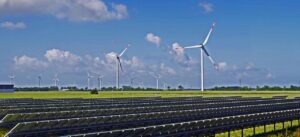
U.S. clean energy manufacturing, particularly among solar panel manufacturers, is experiencing a measured boom rather than an unsustainable bubble. Federal incentives and technological breakthroughs have revived domestic production, yet cost pressures and supply chain constraints continue to test the sector’s resilience. The industry stands at a turning point—rapid growth is evident, but structural challenges could determine whether this momentum matures into long-term sustainability or fades under global competition.
The Current Landscape of U.S. Solar Panel Manufacturing
The American solar manufacturing sector has undergone a transformation in the past five years, driven by both policy and private investment. Expansion projects across the Midwest and Southeast are reshaping the industrial map, while new entrants compete with established global players for market share.
Market Overview and Growth Trends
Domestic production capacity for solar panels has surged as companies announce gigawatt-scale factories in states like Georgia, Texas, and Ohio. These facilities aim to reduce reliance on imports from Asia by producing wafers, cells, and modules locally. Despite this growth, the U.S. still sources much of its raw material from overseas suppliers, creating vulnerability to trade disruptions.
Analysis of Supply Chain Dependencies and Regional Manufacturing Hubs
Regional hubs have emerged near logistics corridors and renewable energy clusters. However, the supply chain remains fragile due to limited domestic production of polysilicon and specialty glass. Manufacturers are working with local suppliers to create vertically integrated operations that can withstand international volatility.
The Influence of Federal Incentives on Scaling Production
Federal support through tax credits and grants has been pivotal in scaling up new facilities. The Inflation Reduction Act (IRA) introduced incentives for every stage of solar panel manufacturing—from raw materials to finished modules—encouraging firms to expand capacity faster than before.
Competitive Dynamics in the Global Solar Industry
While domestic growth is strong, U.S. producers face fierce competition from Asian manufacturers who dominate global supply chains through lower costs and mature ecosystems.
Comparison Between U.S. Manufacturers and Leading Asian Producers
Asian manufacturers maintain a cost advantage through economies of scale and established supplier networks. In contrast, U.S. firms focus on quality assurance, advanced technology adoption, and compliance with strict environmental standards to differentiate themselves in premium markets.
Examination of Cost Structures, Technology Adoption, and Export Competitiveness
Cost structures remain a central challenge for American producers as labor and energy expenses are higher compared to Asia. Yet automation and AI-driven production lines are narrowing this gap by improving throughput and reducing waste.
Role of Trade Policies and Tariffs in Shaping Market Positioning
Tariffs on imported modules have provided temporary relief for domestic producers but also raised project costs for developers. The balance between protectionism and competitiveness remains delicate as trade policies evolve under shifting political priorities.
Policy and Economic Drivers Behind the Clean Energy Boom
Government action continues to define the trajectory of clean energy manufacturing in the United States. Both federal programs and state initiatives have created fertile ground for capital inflows into solar technologies.
Federal and State-Level Incentives for Solar Manufacturing
The IRA’s advanced manufacturing tax credit offers up to 30% support for new solar facilities, while loan guarantees reduce financing risks for large-scale projects. States such as New York and California complement these measures with renewable portfolio standards that drive local demand for domestically made panels.
Investment Trends and Capital Flow in the Solar Sector
Venture capital firms are increasingly targeting solar startups developing next-generation materials like perovskites or high-efficiency tandem cells. Institutional investors view clean energy infrastructure as a stable long-term asset class aligned with ESG mandates.
Financial Challenges in Scaling Advanced Manufacturing Operations
Despite strong investor interest, scaling remains capital-intensive. Delays in equipment procurement or permitting can strain cash flow even for well-funded companies. Access to skilled labor also limits how fast new plants can ramp up production.
Technological Innovation and Production Efficiency
Innovation defines competitiveness in today’s solar landscape. Continuous improvement in efficiency metrics has become essential for survival against price compression from imports.
Advances in Photovoltaic Technology
The shift from traditional silicon-based panels toward thin-film alternatives offers flexibility in installation design while reducing material intensity. Perovskite-silicon tandem cells are now achieving record efficiencies above 30%, signaling potential leaps in output per square meter.
Integration of Automation and AI in Production Lines to Reduce Costs
Automation technologies optimize assembly precision while AI systems monitor defects at micro levels during fabrication. These tools help minimize human error, cut operational costs, and improve consistency across large batches of panels.
Supply Chain Modernization and Material Sourcing
Manufacturers are investing heavily in recycling systems that recover silver, glass, and silicon from end-of-life modules to meet circular economy goals. Domestic sourcing initiatives seek to reduce dependence on imported critical minerals like indium or gallium essential for advanced photovoltaic layers.
Market Pressures Threatening U.S. Solar Manufacturers
Even amid expansion announcements, structural headwinds persist that could slow progress if not addressed strategically by both policymakers and industry leaders.
Cost Competitiveness and Margin Compression
Low-cost imports continue to erode margins across the value chain. While some U.S. producers emphasize superior durability or warranty terms as differentiators, others explore hybrid business models combining manufacturing with installation services to stabilize revenue streams.
Labor Costs, Energy Prices, and Logistics as Structural Disadvantages
Higher wages and electricity rates inflate domestic production costs relative to Asian benchmarks. Furthermore, inland logistics add complexity when moving bulky panels across long distances within North America.
Regulatory Uncertainty and Trade Policy Risks
Frequent changes in tariff regimes create uncertainty around pricing forecasts for raw materials such as aluminum frames or encapsulant films. This unpredictability complicates long-term planning for both manufacturers and project developers relying on stable input costs.
The Outlook for U.S. Clean Energy Manufacturing Sustainability
The future of American clean energy manufacturing will depend on diversification beyond photovoltaics alone—integrating storage solutions, grid modernization components, and hydrogen technologies into broader industrial strategies.
Pathways Toward Long-Term Industry Resilience
Collaborations between universities, research labs, and private firms are accelerating innovation pipelines from concept to commercialization. Workforce development programs funded by state governments aim to train technicians capable of operating highly automated factories efficiently.
Assessing Whether the Sector Is Booming or Facing a Bust Cycle
Indicators suggest sustained growth rather than speculative overheating: rising capital expenditure commitments from major corporations; steady job creation; consistent policy backing; yet consolidation is likely as smaller players struggle against scale-driven giants dominating module output worldwide.
FAQ
Q1: What factors currently drive growth among U.S. solar panel manufacturers?
A: Expansion is primarily driven by federal incentives under the Inflation Reduction Act combined with strong private investment targeting domestic capacity expansion.
Q2: Why do Asian producers still dominate global markets?
A: Their advantage lies in lower labor costs, mature supply networks, massive scale efficiencies, and government-backed export policies supporting aggressive pricing strategies.
Q3: How does automation affect cost competitiveness?
A: Automation reduces manual labor needs while improving yield consistency across production lines, helping narrow cost gaps between American factories and Asian counterparts.
Q4: What risks threaten continued growth?
A: Key risks include volatile trade policies, high input costs for materials like polysilicon or aluminum frames, and uncertainty over long-term subsidy continuity after political transitions.
Q5: Can recycling really make solar manufacturing sustainable?
A: Yes—recycling recovers valuable metals such as silver or copper from old panels while reducing waste streams; it also aligns with circular economy targets increasingly required by regulators worldwide.