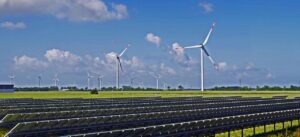

In Conservative Utah, Some Communities Are Ditching Fossil Fuel Power for Clean Energy
Utah’s energy identity is shifting faster than many expected. Once defined by coal and natural gas, the state now sees a measurable rise in solar, wind, and geothermal adoption. This transition is not driven by ideology alone but by economics, technology, and community pragmatism. Even in conservative counties long tied to fossil fuel jobs, local leaders are experimenting with new renewable energy sources to secure economic resilience and energy independence. The change is uneven but unmistakable: Utah’s future grid will look cleaner and more decentralized than its past.
The Shifting Energy Paradigm in Utah
Utah’s energy story reflects both tradition and transformation. For decades, fossil fuels powered its industries and communities. But new market realities and federal incentives are rewriting the script.
Historical Overview of Utah’s Power Landscape
For much of the 20th century, Utah relied heavily on coal mining in Carbon, Emery, and Sevier counties. Coal once supplied over 80% of the state’s electricity generation. Natural gas joined later as a flexible complement to coal plants. State policies favored fossil fuel infrastructure because it provided reliable jobs and tax revenues for rural areas. Conservative political culture reinforced this dependency through resistance to regulation and environmental mandates. Rural towns viewed energy self-sufficiency through the lens of resource extraction rather than diversification.
Emerging Drivers Behind the Transition to Renewables
The economics of renewable energy have changed dramatically over the last decade. Solar module prices have fallen by more than 80% since 2010, while wind turbines have become more efficient at lower wind speeds. Federal tax credits under programs like the Inflation Reduction Act further accelerate investment in clean technologies. Utilities such as Rocky Mountain Power face growing pressure from corporate clients demanding clean electricity for data centers and manufacturing facilities. Cities like Salt Lake City and Park City have adopted renewable portfolio goals that push utilities toward carbon-free generation by mid-century.
The Growth of New Renewable Energy Sources in Utah
The emergence of new renewable energy sources is reshaping Utah’s physical landscape as well as its political debates. Once-empty desert tracts now host solar fields visible from highways, while wind mapping projects target ridgelines across the state’s central corridor.
Solar Energy Expansion Across the State
Southern Utah has become a hotspot for utility-scale solar development due to high solar irradiance levels exceeding 6 kWh/m² per day. Projects near Beaver County feed directly into regional transmission lines serving Nevada and California markets. Rooftop solar adoption has also surged in suburban Salt Lake Valley neighborhoods where homeowners seek lower bills and grid independence. However, integrating intermittent solar power introduces grid management challenges during peak production hours. Battery storage systems—particularly lithium-ion arrays co-located with solar farms—are being deployed to stabilize output and reduce curtailment losses.
Wind and Geothermal Potential in Utah’s Geography
Utah’s geography provides diverse renewable opportunities beyond solar alone. High-elevation corridors along the Wasatch Plateau exhibit consistent wind speeds suitable for large-scale turbines exceeding 3 MW capacity each. Meanwhile, geothermal resources concentrated near volcanic zones such as Roosevelt Hot Springs offer baseload generation potential that complements variable renewables. Universities collaborate with private developers to refine drilling techniques that lower exploration costs, while public agencies streamline permitting for pilot projects combining geothermal heat with hydrogen production.
Policy Dynamics Influencing Energy Transformation
Policy remains both a catalyst and a constraint in Utah’s clean energy evolution. Legislative agendas balance economic pragmatism with growing recognition of environmental responsibility.
Legislative Shifts Toward Clean Energy Adoption
Recent legislative sessions introduced bills supporting renewable infrastructure financing through tax credits and streamlined siting procedures. Lawmakers recognize that attracting investment requires predictable regulatory frameworks even if fossil fuel interests remain influential. Balancing environmental goals with job preservation in coal-dependent regions remains politically sensitive; hence many policies emphasize “energy diversification” rather than “decarbonization.” Federal programs offering billions for grid modernization have nudged state planners toward integrated resource strategies aligning with national emission targets.
Regulatory Barriers and Utility Resistance
Despite progress, entrenched utility monopolies maintain significant control over distribution networks, limiting independent producers’ access to customers. Interconnection procedures often involve costly studies that deter small-scale developers from entering the market. Net metering debates highlight tensions between rooftop solar owners seeking fair compensation and utilities concerned about cost-shifting among ratepayers. These disputes underscore broader questions about who controls future electricity generation—the centralized utility or distributed consumers.
Economic Implications for Local Communities
Economic impacts define how communities perceive this transformation: opportunity for some, disruption for others.
Job Creation and Workforce Transition
Renewable projects generate short-term construction employment followed by long-term maintenance roles requiring technical training rather than manual labor alone. Workforce retraining initiatives aim to transition former coal plant workers into renewable operations or electrical trades aligned with grid modernization needs. Community colleges partner with industry groups to develop certification programs focused on photovoltaic installation or turbine maintenance skills.
Investment Opportunities and Market Response
Private equity funds increasingly view Utah as an attractive market for clean infrastructure due to abundant land availability and favorable sunlight conditions. Local governments issue green bonds to finance community solar gardens or microgrid installations serving municipal buildings. Corporate procurement agreements—especially from data center operators—guarantee long-term demand stability that reduces investor risk exposure while supporting local tax bases previously reliant on extractive industries.
Cultural and Political Dimensions of the Energy Shift
Cultural narratives influence how policy translates into practice across conservative regions where skepticism toward federal intervention runs deep.
Reconciling Conservative Values with Renewable Adoption
Framing clean energy through economic self-reliance resonates strongly among conservative audiences who value independence from volatile fuel markets. Faith-based stewardship arguments emphasizing care for creation also gain traction within church communities advocating responsible resource use without government coercion. Grassroots movements led by local ranchers or small business owners promote distributed renewables as tools for local control rather than ideological statements about climate change.
Public Perception and Community Engagement Strategies
Effective communication strategies focus on tangible benefits—lower bills, job retention, resilience during outages—rather than abstract global narratives about carbon reduction. Education campaigns hosted by extension services dispel myths about reliability issues associated with renewables by presenting empirical data from operational projects within the state itself. Partnerships between utilities, NGOs, and civic organizations foster transparency around rate design changes while building trust in emerging technologies like battery storage or smart meters.
Technological Innovations Supporting Utah’s Renewable Integration
Technological innovation determines how efficiently Utah can integrate diverse renewable sources without compromising reliability or affordability.
Advances in Energy Storage and Smart Grid Systems
Battery storage plays a pivotal role in balancing supply-demand fluctuations inherent to intermittent renewables such as wind or solar power. Smart grid modernization enables real-time monitoring of distributed generation assets across wide geographic zones using advanced communication protocols standardized under IEEE frameworks. Data analytics platforms improve forecasting accuracy for variable output patterns based on weather modeling inputs drawn from satellite datasets maintained by national laboratories.
Hydrogen, Bioenergy, and Emerging Alternatives
Green hydrogen production using electrolysis powered by excess renewable electricity offers a promising complement to battery storage systems during seasonal imbalances when sunlight or wind availability declines sharply. Agricultural residues from Utah’s farming sector support bioenergy initiatives contributing to circular economy models that valorize waste streams previously discarded or burned inefficiently. Pilot projects explore hybrid configurations combining multiple renewable technologies within single microgrids designed for resilience against extreme weather disruptions increasingly common across arid western states.
FAQ
Q1: Why are conservative communities in Utah embracing renewables?
A: Many see renewables as tools for local control, job growth, and economic diversification rather than purely environmental causes.
Q2: Which renewable source is expanding fastest in Utah?
A: Solar energy leads growth due to declining costs, high irradiance levels, and favorable land conditions across southern counties.
Q3: What challenges hinder wider adoption?
A: Utility resistance to distributed generation models, complex interconnection rules, and limited transmission capacity remain key obstacles.
Q4: How do renewables affect rural economies?
A: They create construction jobs initially but require long-term workforce retraining; they also attract private investment replacing declining coal revenues.
Q5: What role does technology play in this transition?
A: Advances in battery storage, smart grids, hydrogen production, and bioenergy integration make it possible to maintain reliability while scaling renewables statewide.