

Why wind matters in the 2026 power mix
Wind renewable energy has moved from a niche alternative to a core part of electricity planning. The main reason is scale. Industry and agency data now measure global wind capacity in terawatts, not pilot projects. In 2026, the question is less about whether wind power works and more about how fast grids, permitting systems, storage, transmission and electricity markets can absorb more variable renewable generation.
Wind does not replace every other power source on its own. It performs best as part of a clean energy portfolio that also includes solar, hydropower, storage, demand flexibility and firm low-carbon resources. For readers following clean energy trends, wind remains one of the clearest indicators of how quickly power systems can decarbonize while still meeting rising electricity demand.
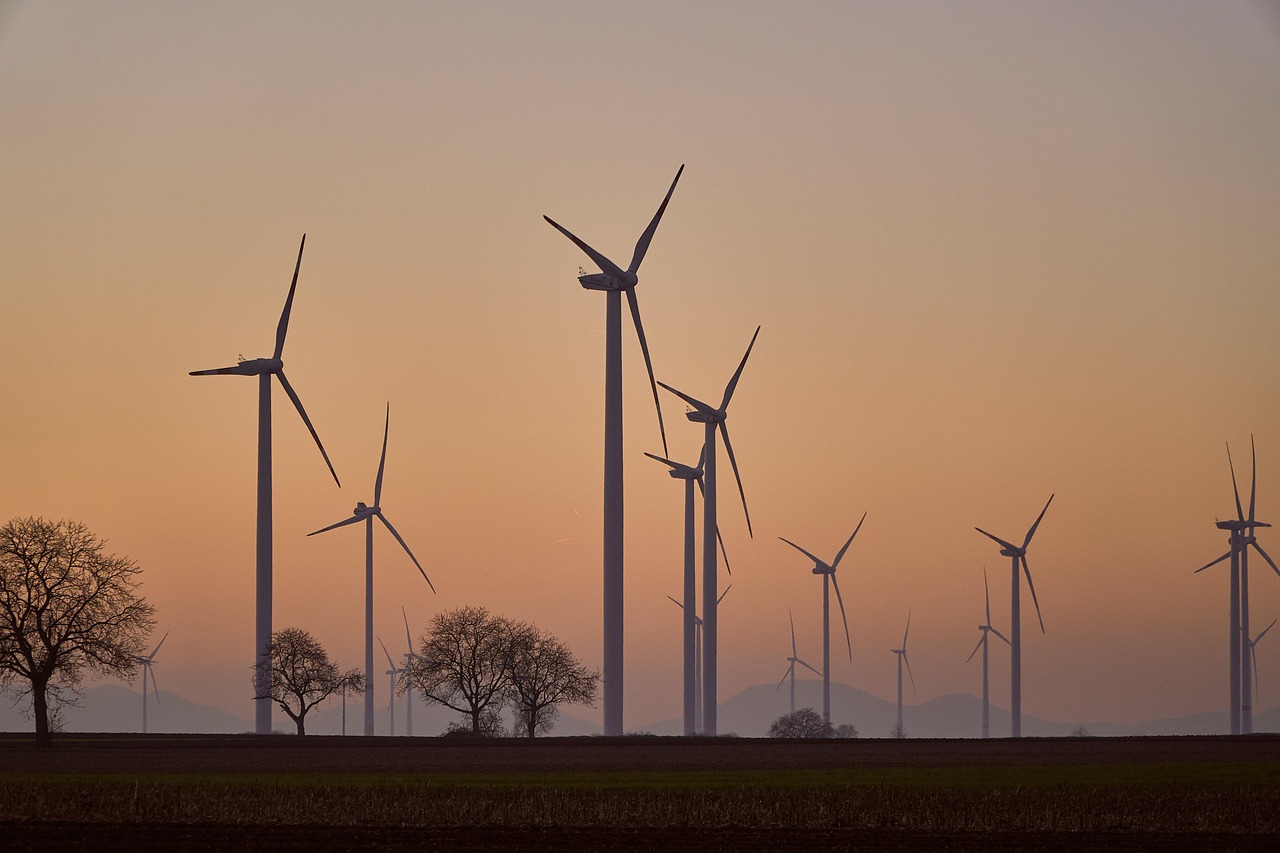
The current wind market is also more complicated than a simple growth story. Onshore wind is mature and often cost-competitive in strong resource areas. Offshore wind can deliver large volumes of electricity near coastal demand centers, but projects face higher capital costs, supply-chain pressure and longer development timelines. At the same time, electrification, data center demand, industrial decarbonization and energy security concerns are increasing the value of reliable clean electricity.
What the latest data shows
Recent public data points to three important trends. First, global wind capacity continues to expand. The International Renewable Energy Agency’s 2026 renewable capacity statistics report global wind capacity at about 1,291 GW at the end of 2025. Second, annual deployment reached a new high in 2025. The Global Wind Energy Council’s Global Wind Report 2026 says wind installations reached a record 165 GW in 2025. Third, forecasts from the International Energy Agency show wind remaining central to renewable electricity growth through the early 2030s, even as solar PV takes the largest share of new capacity additions.
The United States shows how large wind’s role can become in a mature power market. The U.S. Energy Information Administration reported that wind generated about 464 billion kilowatthours of utility-scale electricity in 2025, roughly one-tenth of total U.S. utility-scale generation. EIA also reported wind generation in 43 states. Production is still concentrated in high-resource areas such as the central United States and Texas, but the technology is not limited to one narrow region.
| Indicator | Latest reported figure | Why it matters |
|---|---|---|
| Global wind capacity | About 1,291 GW at the end of 2025, according to IRENA | Shows wind has become a terawatt-scale power technology |
| New global wind installations | 165 GW in 2025, according to GWEC | Indicates a record year for annual deployment |
| U.S. wind generation | About 464 billion kWh in 2025, according to EIA | Shows wind supplied around one-tenth of U.S. utility-scale electricity |
| IEA forecast | Global cumulative wind capacity reaches nearly 2,250 GW by 2031 in the Renewables 2026 outlook | Suggests wind remains a major growth pillar, even as solar expands faster |
The practical takeaway is clear: wind power is already large enough to affect electricity prices, grid planning, transmission needs and clean energy targets. It is no longer useful to describe it only as an emerging technology. The more relevant question is where additional wind capacity can be integrated with the highest reliability and lowest system cost.
Onshore and offshore wind play different roles
Onshore wind remains the workhorse of the sector. It usually has shorter development cycles than offshore wind, relies on a more established global supply chain and can be highly competitive where wind resources, land access and transmission are favorable. Large onshore projects can also be built in phases, helping developers and utilities align new capacity with grid availability and demand growth. The constraints are familiar: local opposition, wildlife concerns, radar and aviation issues, visual impact debates and transmission bottlenecks.
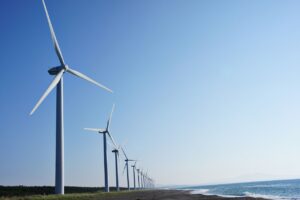
Offshore wind has a different value proposition. It can access strong and steadier wind resources at sea and serve large coastal load centers where land for major power projects is limited. In some markets, offshore projects may also generate more electricity during evening and winter periods, complementing solar production. The trade-off is cost and complexity. Offshore wind depends on specialized vessels, ports, subsea cables, large turbines, complex foundations and long-term offtake contracts. Recent years have shown that inflation, interest rates, supply-chain constraints and contract design can materially affect offshore project economics.
This distinction matters for policy and investment. A country with abundant land-based wind and available transmission may prioritize onshore buildout first. A dense coastal economy with high electricity demand and limited land may still view offshore wind as strategically important, even when costs are higher. The useful comparison is not simply onshore versus offshore. It is whether each project delivers valuable power at the right location, time and system cost.
Why wind supports cleaner and more resilient grids
Wind power’s core climate value is straightforward: turbines generate electricity without burning fuel during operation. The U.S. Energy Information Administration notes that wind turbines do not release emissions that pollute air or water during normal operation and do not require water for cooling, apart from rare exceptions. That makes wind especially relevant in power systems where fossil generation still supplies marginal electricity.
Wind also improves energy diversification. Once a wind project is built, its fuel source is not exposed to gas, coal or oil price volatility. The International Energy Agency’s Renewables 2026 report argues that renewables have already delivered energy security benefits by reducing fossil fuel demand compared with a counterfactual world without the renewable growth seen since 2010. In practical terms, a grid with more wind can be less exposed to imported fuel costs, although it still needs flexibility resources to balance variable output.
Complementarity is another important advantage. Wind and solar often produce at different times, although the pattern varies by region. Solar is strongest during daylight hours, while wind can generate at night and during seasonal weather conditions that differ from solar output. When planned with storage, transmission and demand response, the two technologies can reduce the need for fossil generation across more hours of the year.
For local economies, wind can also create lease payments, tax revenues and construction and operations jobs. The U.S. Department of Energy has reported more than 130,000 people working in the U.S. wind industry in its 2025 employment data. These benefits are not automatic. They depend on project design, local tax structures, supply-chain location and community agreements. Even so, they help explain why many rural regions continue to view wind as both an energy resource and an economic development issue.
The constraints shaping the next phase
Transmission and interconnection
The biggest limit on wind renewable energy growth is often not turbine technology. It is the grid. High-quality wind resources are frequently located far from large demand centers, so new transmission lines, substations and interconnection upgrades are needed. The IEA has warned that transmission development often takes longer than renewable generation projects, creating a mismatch between clean power potential and grid availability. Its 2025 transmission analysis tracked about 1,650 GW of solar and wind projects in advanced development stages awaiting grid connections in 2024.
This does not mean every delayed project should be built exactly as proposed. Some grid queues include speculative or immature projects. But the scale of the backlog shows that planning and interconnection reform are now central to clean energy deployment. More wind capacity without enough transmission can lead to congestion, curtailment and lower project revenues.
Variability and curtailment
Wind output changes with weather, so system operators need forecasting, flexible generation, storage, interregional transmission and demand response. Variability is manageable, but it becomes more important as wind and solar shares rise. The IEA’s Renewables 2026 work highlights curtailment as a growing integration issue in several large markets. Curtailment is not always a failure; some level can be economically efficient if building enough grid capacity for every possible peak would be too expensive. The problem starts when curtailment rises because the system lacks flexibility, storage, market signals or transmission access.
For project developers, curtailment affects revenue expectations. For policymakers, it changes the priority list. Instead of only asking how much wind capacity can be installed, planners need to ask how much useful wind generation can be delivered to consumers at the right time. See also: EVs.
Permitting, communities and ecosystems
Wind projects also need social license. Local concerns can include turbine siting, viewsheds, noise perception, property values, land use, wildlife impacts and decommissioning. Offshore wind adds questions around fisheries, marine ecosystems, port activity and coastal transmission routes. These concerns do not remove the climate and air-quality benefits of wind, but they do require transparent planning and credible mitigation.
Wildlife impacts are particularly important. Government agencies and research organizations continue to study ways to reduce bird and bat collisions through siting practices, operational curtailment during high-risk periods, monitoring technologies and habitat-aware planning. A responsible wind strategy should treat environmental review as part of project quality, not simply as a barrier to speed.
How to read wind growth alongside solar, storage and demand
Wind discussions can become confusing because wind is growing while solar PV is growing even faster. The IEA’s Global Energy Review 2026 reported that wind and solar together reached 17% of global electricity generation in 2025, up from about 5% a decade earlier. Solar’s rapid cost decline and modular construction make it the fastest-growing renewable technology in many regions. That does not make wind less important. It changes wind’s role.
In many power systems, the highest-value clean portfolio will not be solar alone or wind alone. It will combine solar’s daytime production, wind’s complementary generation patterns, hydropower where available, batteries for short-duration balancing, transmission for geographic diversity and dispatchable resources for longer periods of low renewable output. The right mix will vary by region. A windy inland grid, an island system, a coastal industrial hub and a desert solar market all require different planning assumptions.
Rising electricity demand strengthens the case for this portfolio approach. Electrification of transport, heating and industry can reduce direct fossil fuel use, but it also increases the need for clean power. Data centers and advanced manufacturing are adding another layer of demand growth in many markets. If new demand is met mostly with fossil generation, climate progress slows. If it is met with wind, solar, storage and upgraded grids, electrification can become a decarbonization engine.
The realistic view is balanced. Wind renewable energy is proven, scalable and essential to cleaner grids. It is also infrastructure-heavy and location-sensitive. Its next phase depends less on whether turbines can generate electricity and more on whether institutions can build the surrounding system: transmission, markets, storage, permitting, workforce capacity and community trust.
What businesses and policymakers should watch
For energy buyers, the key metric is not installed capacity alone. It is delivered clean electricity during the hours when power is needed. Buyers using power purchase agreements should evaluate production profiles, congestion risk, curtailment history, project location and the credibility of grid connection timelines.
For policymakers, the priority is alignment. Wind targets should be connected to transmission plans, auction design, land-use rules, wildlife protection, workforce training and supply-chain strategy. Policies that reward megawatts but ignore grid readiness can create bottlenecks. Policies that combine procurement with interconnection reform and community engagement are more likely to produce useful clean electricity.
For readers tracking clean energy markets, the signal to watch through 2031 is whether wind additions translate into higher renewable generation shares without sharply rising curtailment. If that happens, wind will remain one of the most powerful tools for cutting power-sector emissions. If grids and permitting lag, headline capacity numbers may overstate real progress.
Frequently asked questions
Is wind renewable energy reliable?
Wind is variable, not unreliable. Individual turbines depend on wind conditions, but grid operators can forecast wind output and balance it with transmission, storage, flexible demand and other generation sources. Reliability depends on system planning, not on any single resource operating at full output all the time.
Why is wind energy important if solar is growing faster?
Solar is growing very quickly, but wind often produces at different hours and seasons. A grid with both wind and solar can reduce dependence on fossil generation across more periods than a grid relying heavily on one variable resource. Wind also has strong value in regions with excellent wind resources and limited winter solar output.
What is the main barrier to more wind power?
In many markets, the main barrier is no longer turbine performance. It is the surrounding infrastructure and approval system: transmission, interconnection queues, permitting, local acceptance, supply chains and market rules that reward flexible clean generation.
Does wind power have environmental impacts?
Yes. Wind power avoids direct fuel combustion emissions during operation, but projects can affect landscapes, wildlife, marine areas, materials demand and local communities. Good siting, monitoring, mitigation and decommissioning planning are essential to reducing those impacts.
Will wind energy keep growing through 2031?
Major energy outlooks expect continued growth. The IEA’s Renewables 2026 forecast sees global cumulative wind capacity reaching nearly 2,250 GW by 2031. The pace will depend on grid expansion, financing conditions, policy stability, supply chains and public acceptance.