

Wind turbine installation cost should be viewed as a complete project cost, not simply the price of the turbine. For a U.S. home or small business system, a practical early planning range is often about $5,000 to $10,000 per kilowatt before incentives. On that basis, a 10 kW small wind system may fall around $50,000 to $100,000. Utility-scale land-based wind is much lower on a dollar-per-kilowatt basis because costs are spread across larger turbines and shared infrastructure. U.S. Energy Information Administration data for generators installed in 2024 put onshore wind at a capacity-weighted average of $1,882/kW, while Berkeley Lab’s 2026 land-based wind update shows preliminary 2025 project costs around $2,100/kW. Offshore wind is a separate cost category and can be several times more expensive.
The figures below are planning benchmarks, not contractor quotes. Actual pricing depends on wind resource, foundation design, tower height, turbine class, crane access, electrical work, interconnection, permitting, financing and local labor. For broader wind industry context, see our wind section.
What installed cost means in a wind project
Installed cost usually refers to the capital cost required to put a wind system into service. It can include the turbine, tower, foundation, roads or site access, crane work, electrical equipment, controls, transformer, interconnection equipment, engineering, permitting, construction management and contingency. For a utility-scale wind farm, it may also include collector systems, a project substation and grid interconnection expenses.
This is different from the turbine equipment price. A turbine can represent a large share of the budget, especially in land-based wind, but it is not the whole project. The U.S. Department of Energy separates wind costs into turbine cost and installed project cost for this reason. In small wind, the balance-of-system portion can be especially important because the tower, foundation, wiring, inverter, permitting and installer labor are spread over far fewer kilowatts.
Cost data also varies by source and reporting method. EIA construction cost data excludes government grants, tax benefits and other incentives, so it reflects gross construction cost rather than the net owner cost after support. Berkeley Lab’s project cost updates combine multiple data sources and are most useful for trend analysis. PNNL’s distributed wind work is more relevant for small and on-site systems, although small sample sizes can make annual averages volatile.
Typical wind turbine installation cost ranges
The table gives practical U.S.-oriented planning ranges based on publicly reported cost benchmarks. Comparing projects on a dollar-per-kilowatt basis is more useful than looking only at the sticker price of one turbine, because a 10 kW home turbine and a 4 MW utility turbine are fundamentally different projects.
| Project type | Typical size | Planning cost benchmark | Example installed cost |
|---|---|---|---|
| Residential or small property wind | 5–15 kW | About $5,000–$10,000/kW; PNNL-reported 2024 small wind average around $6,680/kW | 10 kW: about $50,000–$100,000, or about $66,800 at $6,680/kW |
| Farm, ranch or small commercial distributed wind | 50–500 kW | Often higher than utility-scale wind because of smaller scale and site-specific work | 100 kW at $6,680/kW would be about $668,000; a 500 kW project can move into multi-million-dollar territory |
| Large distributed or community-scale wind | 500 kW–5 MW | PNNL’s 2014–2023 average for projects using turbines above 100 kW was $4,160/kW | 1 MW at $4,160/kW equals about $4.16 million |
| Utility-scale land-based wind | 50 MW and above | EIA 2024 onshore wind average: $1,882/kW; Berkeley Lab preliminary 2025 average: about $2,100/kW | 100 MW: about $188 million to $210 million before incentives, depending on the benchmark used |
| Fixed-bottom offshore wind | Hundreds of MW | NREL’s 2024 review estimated a representative fixed-bottom offshore project at about $5,411/kW in 2023 dollars | 600 MW at $5,411/kW equals roughly $3.25 billion |
| Floating offshore wind | Early commercial scale | NREL’s 2024 review estimated a representative floating offshore project at about $7,349/kW in 2023 dollars | 600 MW at $7,349/kW equals roughly $4.41 billion |
These examples are simple calculations of capacity multiplied by cost per kilowatt. They do not include project-specific revenue, debt costs, production value, curtailment risk, tax treatment or maintenance. For investment decisions, installed cost needs to be considered alongside expected annual energy output.
Why home and farm wind costs more per kilowatt
Small wind systems often look expensive compared with wind farms because nearly every project requires custom site work. A residential turbine still needs a tower, foundation, safe electrical connection, permitting, setback compliance and maintenance access. Those fixed costs do not shrink in proportion to turbine size.
The U.S. Department of Energy says residential turbines can range from 400 watts to 100 kW. A typical home may need roughly 5 to 15 kW to make a significant contribution to annual electricity use, depending on the wind resource. DOE also notes that a good small-wind candidate normally needs enough land, permissive zoning, a suitable wind resource and a tower high enough to reach cleaner airflow.
For small wind, the tower is not optional decoration. Wind speed generally improves with height, and turbulence from trees, buildings and terrain can reduce output and increase wear. DOE guidance says small wind sites should maintain an average annual wind speed of at least 9 mph at hub height, and towers may range from 90 to 140 feet where allowed. A cheaper short tower can produce poor economics if it places the rotor in turbulent air.
This is why a $50,000 turbine package is not automatically a good or bad investment. The key question is how many kilowatt-hours it will produce at that exact site. A 10 kW turbine operating at a 16% capacity factor would generate about 14,000 kWh per year. The same turbine at 8% would generate roughly half that. The upfront cost may be identical, but the payback period would be completely different.
Why utility-scale wind is cheaper per kilowatt
Utility-scale wind benefits from larger turbines, bulk procurement, specialized contractors, optimized siting and shared infrastructure. A 100 MW wind farm may use the same substation, access roads, engineering team and interconnection process across dozens of turbines. A homeowner or single farm turbine cannot spread those soft costs across the same capacity.
EIA’s 2024 generator construction data shows onshore wind at $1,882/kW on a capacity-weighted basis for generators installed in 2024. At that benchmark, a 3.5 MW land-based turbine within a wind farm represents about $6.6 million in installed project cost. Using Berkeley Lab’s preliminary 2025 average of about $2,100/kW, the same 3.5 MW of capacity would be about $7.35 million.
The price gap between small and utility-scale wind does not mean small wind has no role. It means the value case is different. Small wind can make sense where wind is strong, electricity is expensive, there is a rural or agricultural load, or grid extension would be costly. DOE guidance notes that running a power line to a remote site can cost from $15,000 to more than $50,000 per mile, depending on terrain. In that setting, wind paired with solar and storage may be competing against grid extension or diesel fuel, not against wholesale power prices.
Offshore wind has a different cost structure
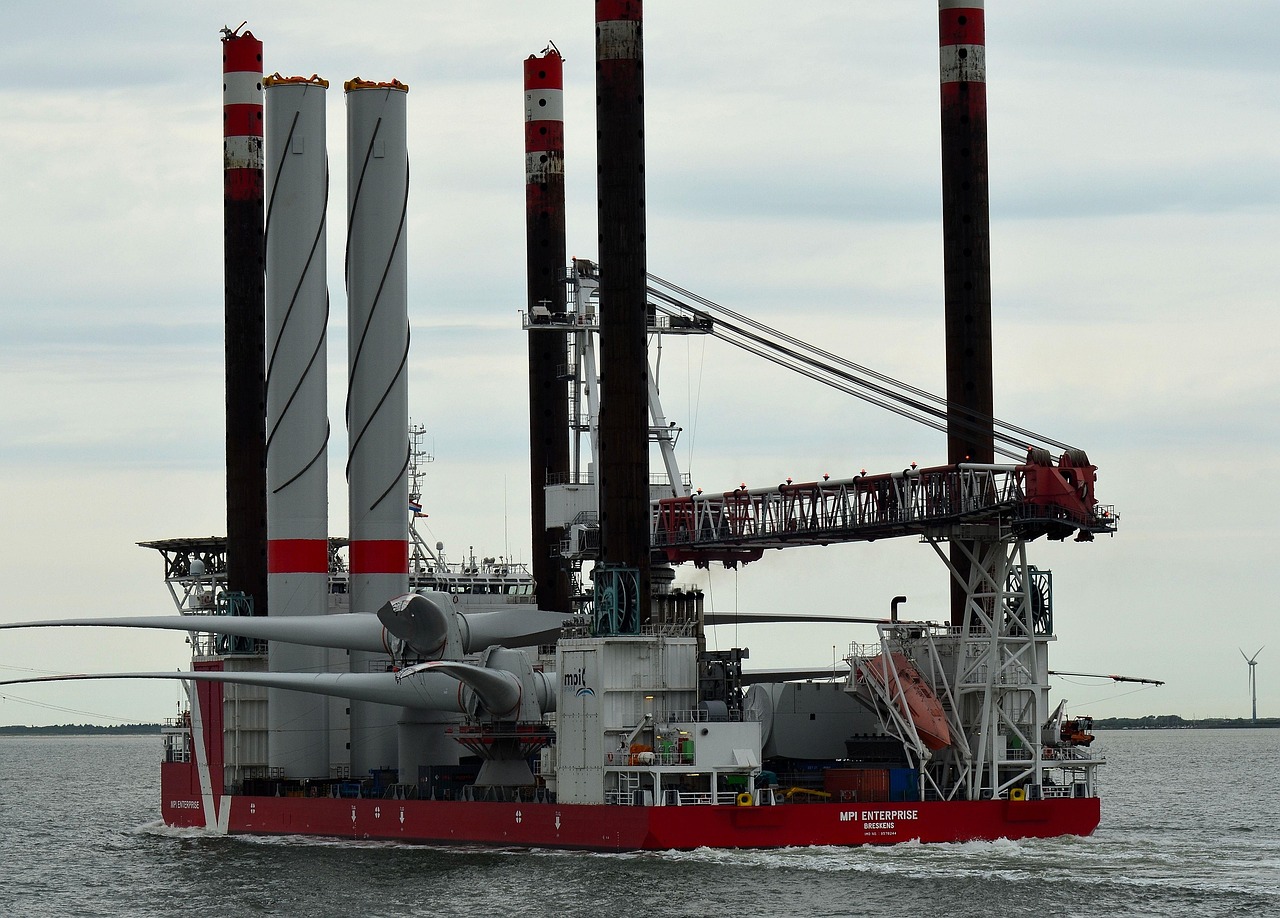
Offshore wind should not be compared directly with a home turbine or a land-based wind farm. Offshore projects involve marine foundations or floating platforms, vessels, offshore substations, export cables, ports, specialized installation windows, more complex maintenance and higher development risk. These factors explain why installed cost per kilowatt is much higher.
NREL’s 2024 Cost of Wind Energy Review estimated total capital expenditure of about $5,411/kW for a representative fixed-bottom offshore project and about $7,349/kW for a representative floating offshore project. In the same review, NREL estimated levelized cost of energy at $117/MWh for fixed-bottom offshore wind and $181/MWh for floating offshore wind, compared with $42/MWh for a representative land-based project. See also: clean energy.
Offshore wind can still be attractive in markets with limited land, strong coastal demand and high-quality offshore wind resources. From a pure installation cost perspective, however, it is a capital-intensive infrastructure project, not just a turbine purchase.
Key factors that change the final installed price
Wind resource and tower height
Wind energy output rises quickly with wind speed, so a better site can support a higher installation cost. Taller towers usually cost more, but they may reach stronger and less turbulent wind. For small systems, tower choice can make or break the economics.
Foundation, soil and access
Soil conditions determine foundation design. Rocky, soft, wet or remote sites can raise civil costs. Crane access is another major factor. If a crane must travel far, use temporary roads or work around difficult terrain, installation labor and mobilization costs can rise quickly.
Interconnection and electrical equipment
Grid-connected projects need electrical protection, metering and utility approval. Larger projects may need transformers, substations, collector lines and network upgrades. Interconnection delays can also increase financing and development costs before construction starts.
Permitting and local rules
Small wind projects face zoning, setbacks, height limits, noise rules and neighborhood acceptance issues. Utility-scale projects face environmental reviews, aviation reviews, transmission studies and local land-use approvals. Time becomes a cost when equipment orders, construction windows and financing commitments are involved.
Incentives and tax treatment
Incentives can reduce net cost, but they should not be confused with installed cost. As of November 2026, the federal residential clean energy credit no longer applies to residential clean energy expenditures made after December 31, 2025, according to IRS instructions. For larger clean electricity projects, federal credit eligibility rules have also changed under Public Law 119-21, including beginning-of-construction and placed-in-service deadlines for wind and solar. Project owners should verify current federal, state and utility programs before relying on any incentive in a budget.
How to estimate a project budget before asking for quotes
A realistic early budget starts with three steps. First, identify the load or project goal. A home trying to offset part of annual consumption has different requirements from a farm pump, a remote telecom site or a 200 MW power project. Second, estimate the available wind resource at hub height rather than relying on ground-level impressions. Third, apply the correct cost category.
- For a home system: use $5,000–$10,000/kW as a first screen, then test whether annual output can justify the cost.
- For a farm or rural business: compare small wind, solar, storage, grid extension and diesel backup on a lifetime cost basis, not just installed price.
- For a community or commercial project: expect engineering, interconnection and permitting to be a larger share of early development work.
- For a wind farm: use recent EIA and Berkeley Lab benchmarks for rough capital cost, then refine for turbine model, site layout, interconnection and financing.
- For offshore wind: treat the project as marine infrastructure, with vessel, port, cable and offshore substation costs included from the start.
A quote should separate at least the turbine, tower, foundation, electrical balance of system, construction labor, crane or erection equipment, permitting, interconnection, monitoring, warranty and maintenance assumptions. If those items are bundled into one number, ask for a breakdown. It will be easier to compare bids and identify whether the cost issue is equipment, civil work, electrical work or project overhead.
Frequently asked questions
How much does a 10 kW wind turbine cost installed?
For a small U.S. wind system, a practical planning range is about $50,000 to $100,000 before incentives, based on DOE’s $5,000–$10,000/kW small wind cost range. Using the PNNL-reported 2024 small wind average of about $6,680/kW, a 10 kW system would be about $66,800.
How much does one large wind turbine cost?
As part of a utility-scale land-based project, a 3.5 MW turbine represents about $6.6 million in installed project cost using EIA’s 2024 average of $1,882/kW. Using Berkeley Lab’s preliminary 2025 average of about $2,100/kW, the same capacity would be about $7.35 million. The turbine equipment alone is only part of that total.
Why is small wind so much more expensive per kilowatt?
Small wind lacks the scale benefits of a wind farm. It still needs a tower, foundation, wiring, controls, permitting, grid connection and installation labor, but those costs are spread over only a few kilowatts. Site assessment and tower height also matter because poor wind exposure can reduce output without reducing the installation bill.
Is offshore wind always more expensive than onshore wind?
Yes, on an installed cost basis, offshore wind is generally much more expensive. NREL’s 2024 review estimated representative fixed-bottom offshore capital cost above $5,000/kW and floating offshore above $7,000/kW, compared with roughly $1,900–$2,100/kW for recent U.S. land-based project benchmarks. Offshore projects may still be valuable where coastal demand, limited land and strong offshore resources justify the higher cost.
What is the most important number besides installed cost?
Annual energy production is the key companion number. A low-cost turbine on a weak or turbulent site can be a poor investment, while a higher-cost turbine on a strong site may produce enough energy to justify the upfront price. Always compare cost per expected kilowatt-hour, not just cost per installed kilowatt.