

The Sun Just Fired Off Two Massive Solar Flares
In recent days, the Sun has produced two powerful solar flares classified among the strongest of the current solar cycle. These events, both in the X-class range, have drawn attention from heliophysicists for their intensity and timing relative to evolving sunspot regions. The data captured by sunlight solar instruments reveal critical insights into magnetic field interactions and plasma energy release mechanisms that drive such eruptions. The flares underscore an active phase in solar dynamics, with implications for space weather forecasting and terrestrial systems affected by geomagnetic disturbances.
Recent Solar Activity and the Emergence of Major Solar Flares
Solar activity has entered a heightened phase, marked by energetic bursts that illuminate the complexity of our star’s magnetic environment. These recent flares demonstrate how rapidly changing magnetic structures can unleash vast amounts of energy within minutes.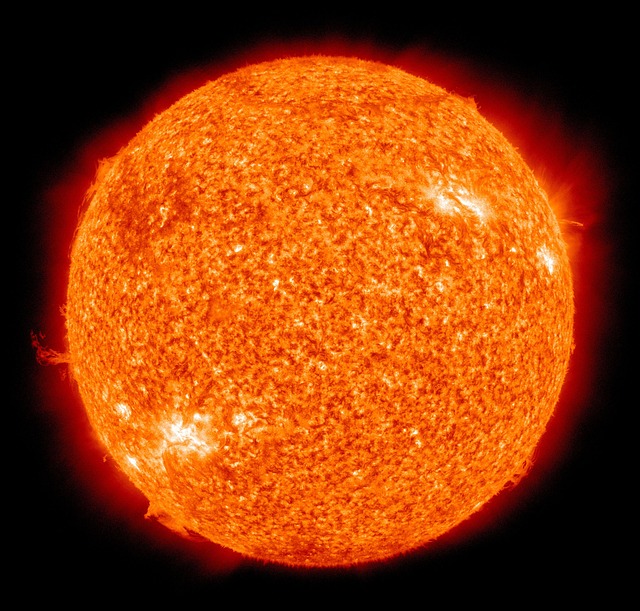
Overview of the Latest Solar Flare Events
The two most recent major solar flares were recorded as X2.8 and X3.4 class events, ranking among the most intense observed this year. Each flare’s classification is based on peak X-ray flux measured in watts per square meter by orbiting observatories. The timing of these events corresponded closely with rapid growth in sunspot region AR3664, whose twisted magnetic configuration indicated a high potential for eruption.
Classification and Intensity Based on X-Ray Flux Measurements
X-class flares represent the highest intensity category on the NOAA scale, exceeding 10⁻⁴ W/m² in soft X-rays. Both recent events reached levels capable of causing shortwave radio blackouts across parts of Earth’s dayside. Continuous monitoring through sunlight solar instruments provided precise flux readings that confirm their classification and help model post-flare decay curves.
Temporal Correlation with Sunspot Evolution and Magnetic Field Complexity
Magnetograms revealed that these flares originated from regions where opposite polarity fields were tightly interlaced—a hallmark of magnetic shear. The correlation between flare occurrence and sunspot evolution indicates how stored magnetic energy accumulates until reconnection triggers its explosive release.
Understanding the Mechanisms Behind Solar Flare Formation
Solar flares arise from complex interactions within the Sun’s magnetized plasma environment. Their formation involves rapid conversion of magnetic energy into kinetic and thermal energy observable across multiple wavelengths.
Role of Magnetic Reconnection in Flare Initiation
At the core of every flare lies magnetic reconnection—the process where oppositely directed field lines break and reconnect, releasing trapped energy. This mechanism accelerates charged particles to near-relativistic speeds, producing bursts across radio to gamma-ray bands.
Influence of Coronal Loops and Plasma Dynamics
Coronal loops act as conduits for plasma movement during flare onset. When these loops destabilize under stress, they collapse or reconfigure, injecting hot plasma into surrounding layers and generating visible emissions captured by sunlight solar imaging systems.
Energy Release Processes and Propagation Through the Heliosphere
The released energy propagates outward as electromagnetic radiation and high-speed particles that travel through the heliosphere. These disturbances can reach Earth within minutes to hours, influencing satellite sensors and geomagnetic conditions.
The Role of Sunlight Solar Data in Flare Analysis
Modern flare analysis depends heavily on continuous spectral data streams from sunlight solar observatories. Such datasets allow scientists to quantify radiative variations before, during, and after flare events.
Key Parameters Measured by Sunlight Solar Observatories
Sunlight solar instruments record spectral irradiance across ultraviolet, visible, and X-ray bands with high temporal resolution—often down to seconds per measurement. Calibration accuracy ensures reliable detection even for subtle pre-flare signatures. Integration with ground-based observatories helps validate measurements against atmospheric effects.
Correlating Sunlight Data with Flare Onset Indicators
Pre-flare brightening patterns often appear as localized increases in UV emission within active regions. Tracking photon flux changes provides early warning signs of impending magnetic instability. Multi-wavelength datasets help identify how energy builds up before sudden release.
Using Multi-Wavelength Data to Track Energy Buildup in Active Regions
Combining data from multiple spectral bands reveals how different layers of the solar atmosphere respond to stress accumulation. For instance, enhanced EUV emission may precede X-ray peaks by several minutes—a sequence crucial for predictive modeling using sunlight solar archives.
Revealing Hidden Patterns Through Advanced Data Analytics
The explosion of high-frequency solar data has made computational analysis indispensable for uncovering patterns invisible to manual inspection.
Application of Machine Learning to Sunlight Solar Datasets
Neural networks trained on time-series irradiance data can identify recurring pre-flare signatures such as subtle flux oscillations or temperature gradients. Clustering algorithms further group similar events to refine statistical confidence in identified precursors.
Clustering Algorithms to Identify Recurring Flare Precursors
By analyzing thousands of recorded events, machine learning models detect clusters representing common physical conditions preceding major eruptions—such as elevated coronal temperatures or rapid field line twisting rates.
Predictive Modeling for Estimating Flare Probability Based on Historical Trends
Predictive models built on historical sunlight solar datasets estimate flare probability using weighted indicators like sunspot complexity index or total unsigned magnetic flux density. Such probabilistic tools enhance operational forecasting accuracy for space weather agencies.
Statistical Methods for Detecting Subtle Correlations
Advanced statistical frameworks complement machine learning approaches by quantifying relationships between variables tied to flare genesis.
Cross-Correlation Between Solar Irradiance Fluctuations and Geomagnetic Indices
Cross-correlation analysis links short-term irradiance fluctuations with subsequent geomagnetic disturbances measured at Earth’s surface—offering empirical validation for predictive relationships derived from sunlight solar records.
Principal Component Analysis (PCA) for Dimensionality Reduction in Spectral Data
PCA simplifies vast spectral datasets into principal components capturing dominant variance patterns, facilitating identification of key wavelengths most sensitive to pre-flare changes without losing critical information content.
Bayesian Inference for Uncertainty Quantification in Pattern Detection
Bayesian methods assign probabilistic confidence levels to detected correlations, allowing researchers to assess uncertainty inherent in noisy observational data while maintaining robust interpretability across multiple observation campaigns.
Linking Solar Flares to Broader Space Weather Dynamics
Solar flares are not isolated phenomena; they interact dynamically with other processes shaping space weather throughout the heliosphere.
Impact of Recent Flares on the Heliosphere and Earth’s Magnetosphere
These recent X-class flares were accompanied by coronal mass ejections (CMEs) traveling at over 1,500 km/s. Upon reaching Earth’s magnetosphere, energetic particles compressed geomagnetic fields causing auroral displays at unusually low latitudes while briefly disrupting satellite communications.
Interaction Between Solar Energetic Particles (SEPs) and Earth’s Magnetic Field
High-energy SEPs penetrate magnetospheric boundaries altering ionospheric conductivity profiles that affect GPS accuracy and HF radio propagation—critical parameters monitored continuously using sunlight solar input data streams.
Effects on Satellite Operations, Communication Systems, and Power Grids
Geomagnetically induced currents triggered by CME impacts can overload power transformers or degrade satellite electronics. Operators rely on real-time alerts derived from sunlight solar observations integrated into global monitoring networks managed under international standards like ISO 15390:2004 for space environment models.
Integrating Sunlight Solar Observations with Space Weather Forecasting Models
To mitigate risks associated with extreme space weather events, continuous integration between observational platforms and predictive models remains essential.
Enhancing Real-Time Prediction Capabilities Using Continuous Solar Monitoring Data
Continuous sunlight solar monitoring supports near-real-time updates to magnetohydrodynamic (MHD) simulations predicting CME trajectories and shock arrival times at planetary boundaries including Earth’s orbit.
Assimilation of Sunlight Spectral Metrics Into Magnetohydrodynamic (MHD) Models
Assimilating measured irradiance variations directly into MHD frameworks improves model initialization accuracy—particularly when tracking evolving coronal structures responsible for large-scale eruptions.
Improving Early-Warning Frameworks Through Adaptive Data-Driven Algorithms
Adaptive algorithms automatically recalibrate thresholds based on incoming data trends allowing early-warning systems greater responsiveness during periods of elevated activity near solar maximum phases predicted by international observatories such as NOAA SWPC or ESA SSA programs.
Emerging Research Directions in Solar Data Interpretation
Research continues toward refining both instrumentation capabilities and analytical methodologies applied within heliophysics disciplines focused on sunlight solar phenomena analysis.
Innovations in Instrumentation and Data Acquisition Techniques
Next-generation spectrographs now achieve sub-angstrom resolution enabling finer discrimination among emission lines associated with flare heating processes. Real-time telemetry systems transmit gigabytes per second ensuring minimal latency between observation capture and terrestrial processing centers equipped with advanced storage arrays optimized for continuous operation cycles typical during peak activity windows.
Future Analytical Approaches for Understanding Solar Phenomena
Integration across multi-observatory datasets creates unified analytical platforms capable of correlating global observations instantaneously—a step toward comprehensive heliophysical mapping frameworks potentially accelerated through quantum computing architectures designed for parallel pattern extraction tasks across petabyte-scale archives maintained under collaborative initiatives linking astrophysics research institutions worldwide.
FAQ
Q1: What defines an X-class solar flare?
A: An X-class flare is defined by peak soft X-ray flux exceeding 10⁻⁴ W/m² as measured near Earth’s orbit using geostationary satellite detectors operated under NOAA protocols.
Q2: How does sunlight solar technology contribute to flare prediction?
A: It provides continuous multi-band irradiance measurements that detect subtle pre-flare variations used as predictors within machine learning models assessing eruption likelihoods.
Q3: Why do some flares produce CMEs while others don’t?
A: CME generation depends on whether reconnection releases sufficient magnetic tension stored within coronal loops; weaker configurations may emit radiation without ejecting mass outward.
Q4: What are typical terrestrial effects following large flares?
A: Effects include radio communication blackouts, GPS signal degradation due to ionospheric disturbances, increased auroral activity, and potential electrical grid fluctuations during geomagnetic storms.
Q5: Which agencies monitor ongoing solar activity globally?
A: Major agencies include NOAA’s Space Weather Prediction Center (SWPC), NASA’s Heliophysics Division, ESA’s Space Safety Programme (SSA), alongside numerous national observatories contributing coordinated real-time data feeds through international partnerships.